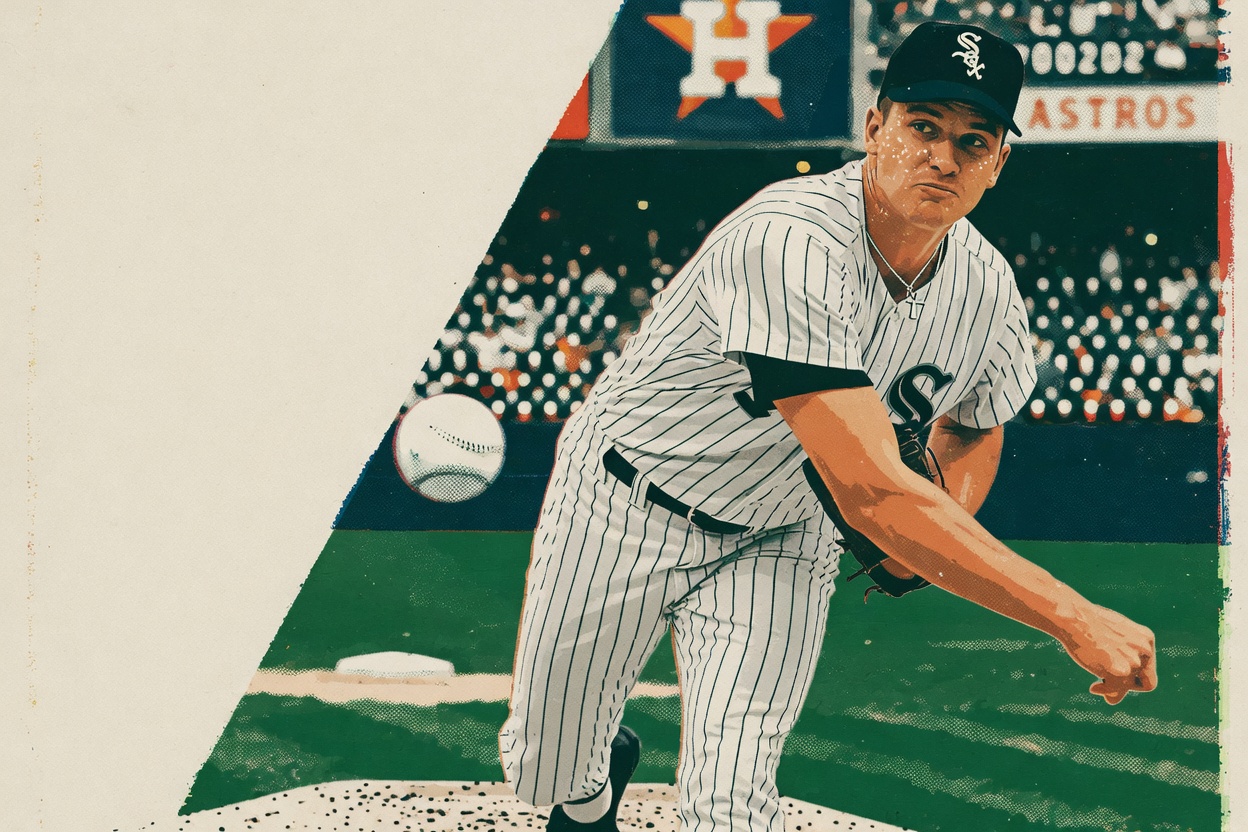
The shorthand going around, that Will Venable got a three-inning save out of Grant Taylor on Tuesday, undersells what actually happened, and the real version is more interesting anyway. Taylor got the last seven outs, 2⅓ innings, spanning the tail of the seventh, all of the eighth and all of the ninth. He threw 54 pitches, a career high by a wide margin for a guy who'd never gone past 40 in a big-league outing. That's the whole decision laid bare: Venable had a two-out mess in the seventh with a three-run lead and a rookie fastball reliever with no track record of pitching that deep into a game, and he decided the kid was getting all of it.
That's the correct call, and anyone arguing otherwise is fighting the scoreboard. Taylor came in with two outs already gone and got Cam Smith to ground out, froze Nelson Velázquez to start the eighth, then watched Jeremy Peña and Yordan Alvarez both rip singles to put runners on the corners with one out. This is the moment a manager either trusts his gut or starts making calls to the bullpen phone. Venable didn't flinch. Taylor struck out Isaac Paredes on a slider, gave up a run on a bang-bang infield play that trimmed the margin to 6-3, then, with two on and Houston's best chance of the night sitting right there, froze Yainer Diaz on a full-count curveball that even Taylor couldn't explain afterward. "I'm being honest, I don't know what I threw," he said. It's the entire case for what Venable did: a pitcher without his best fastball command still found a way to get the out that mattered, because he had the stuff and the poise to survive without his A-game, and his manager had already decided he wasn't walking off that mound with the lead in question.
The complaint making the rounds, that Taylor should have been stretched out as a starter rather than exposed for 54 relief pitches on a night that could have blown up his usage plan, mistakes caution for wisdom. This is winner-take-all baseball in the sense that matters most: a loss here and Chicago is one defeat from the offseason. You don't manage that game the way you manage May 12th. Jordan Hicks was excellent for an inning before Taylor ever took the mound, and none of this happens if the bridge in front of Taylor collapses. But a bridge only matters if something's waiting on the other side capable of finishing the job, and Venable had already decided who that was going to be before the game got dangerous.
The challenge on Jose Altuve's positioning in the fourth inning is a separate conversation, and a much sillier one. Chicago lost it, correctly, since no replay angle conclusively showed a violation, and burning a challenge on a heel that might have grazed the outfield grass is the kind of move that looks clever only if it works. It didn't. That's a mark against Venable's feel for small moments, and it deserves to be needled. It ranks far below the decision that actually won the game.
This is a team that lost 100 games three years running, including a stretch that set the modern low-water mark for futility, now back in the playoffs for the first time since 2021. Its manager already understands the difference between regular-season bullpen management and October bullpen management. The Astros, for all their pedigree, backed into this series with a losing record, and their bullpen burned through eight arms trying to survive a night where their best starters were too tired to go. Chicago's rookie left-hander Hagen Smith gave them three scoreless innings on next to no pitches to open the door, and Venable walked through it by refusing to play it safe with his best arm.
The series is 1-0 but far from finished, and Houston sends its ace out next with a chance to even it. Venable had the nerve to ride a pitcher past his career high in the biggest spot of the season, and it worked because he trusted the player more than the sample. That's the only kind of managing that wins in October.