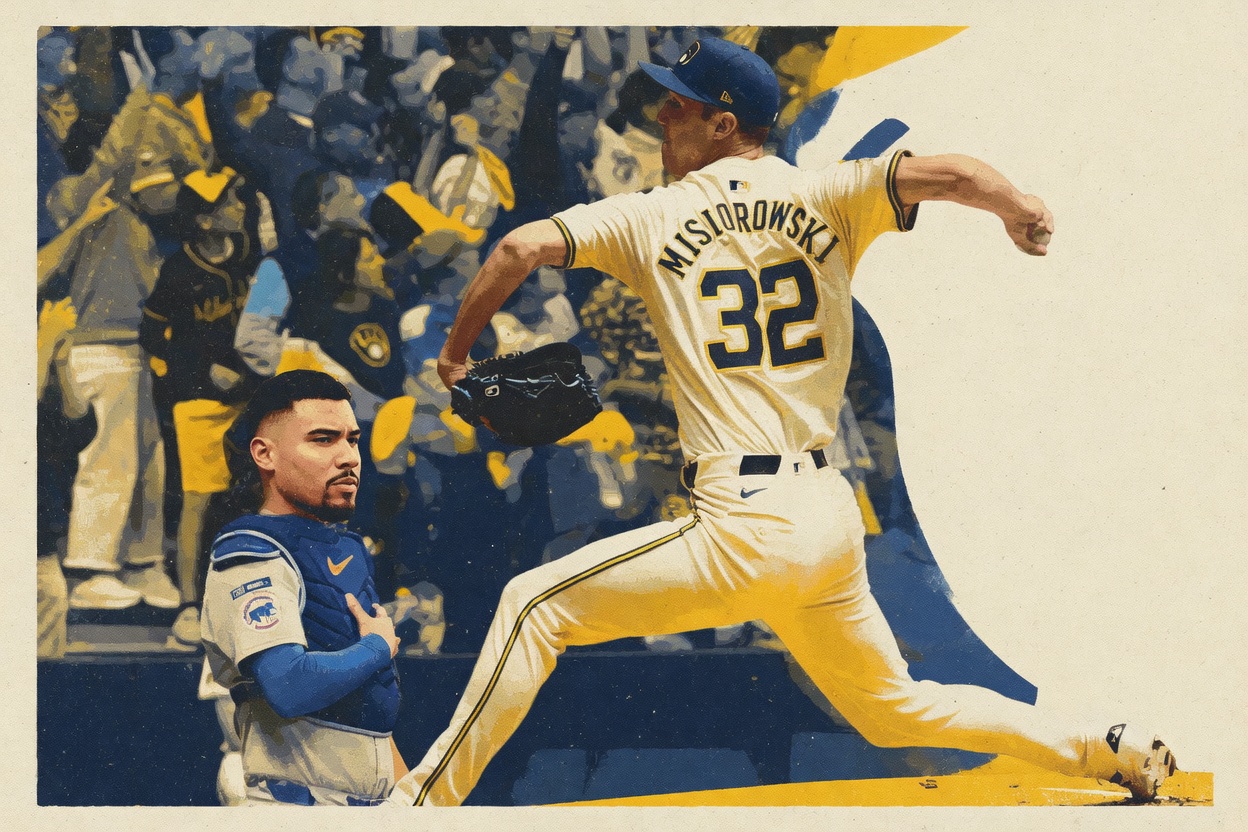
Small markets showed they can avoid a faceplant when the baseball tightens up at the end. That's not the same as matching big markets, and the people telling you otherwise are selling something.
Everyone's quoting the same number: Game 5 of the Milwaukee Brewers' five-game win over the Tampa Bay Rays averaged 14.22 million viewers across Fox and Fox Deportes. Great number. It's also the clincher, the one game where a title was on the line, which is exactly when casual viewers show up no matter who's playing. Lean on the whole series instead and the picture changes fast. The five games averaged somewhere around 11.8 to 12 million. The two most recent World Series, both won by the Dodgers, averaged 15.49 million and 15.1 million. That's a drop of roughly 20 to 25 percent.
This didn't undercut the idea that star power and big markets move the needle. The Dodgers just moved it, twice, and by a wide margin. Milwaukee and Tampa are the two smallest TV markets the sport has, and the audience that came with them was smaller to match. Neither team did anything wrong here. It's just arithmetic about market size.
The spin is the annoying part. Fox's talking point is that this series ran roughly level with 2021 and 2022. Technically true, but conveniently incomplete. Those older numbers were measured under Nielsen's previous, lower-counting system. Beginning in September 2025, Nielsen made its Big Data plus Panel method the standard, folding in more out-of-home viewing from bars, hotels, airports and restaurants, a change Sports Business Journal says adds somewhere in the range of 5 to 8 percent for sports. Strip that boost out and this year's series was probably watched by fewer people than 2021 or 2022, even though they look even on paper. The "parity" is a measurement artifact, and Fox knows it. The ratings commentariat cheering a small-market triumph either doesn't know that or doesn't want to.
There's one thing worth celebrating here. This series beat the floor people feared. A Fox researcher said the teams had "probably surpassed everybody's expectations," and he's right. Before a pitch was thrown, the smart money had Brewers-Rays as the kind of matchup that could crater. It didn't. The opener and the second game opened close to last year's pace, which nobody saw coming.
But look at the shape of the whole series before anyone gets crowned. Game 3 averaged 8.33 million, one of the smallest World Series audiences on record. The games that "popped," Game 4 at 13.48 million and the clincher, popped simply because the series was ending. Drama sells, and a series that's already mostly decided doesn't.
That's the real lesson, and it cuts against both camps. Baseball's problem is that most of these games weren't close enough to be appointment viewing, and small markets give you almost no cushion when the drama sags. A blowout in a Dodgers series still draws. A blowout in Brewers-Rays becomes the second-lowest-rated World Series game ever.
It didn't help that the broadcast gave fans an easy target, with John Smoltz drawing heat early in the series for mixing up the Megill brothers on the call. Fix the product, get a genuinely competitive series, and these numbers climb. Keep pretending a down year was a breakthrough, and you're just doing Fox's PR for free.