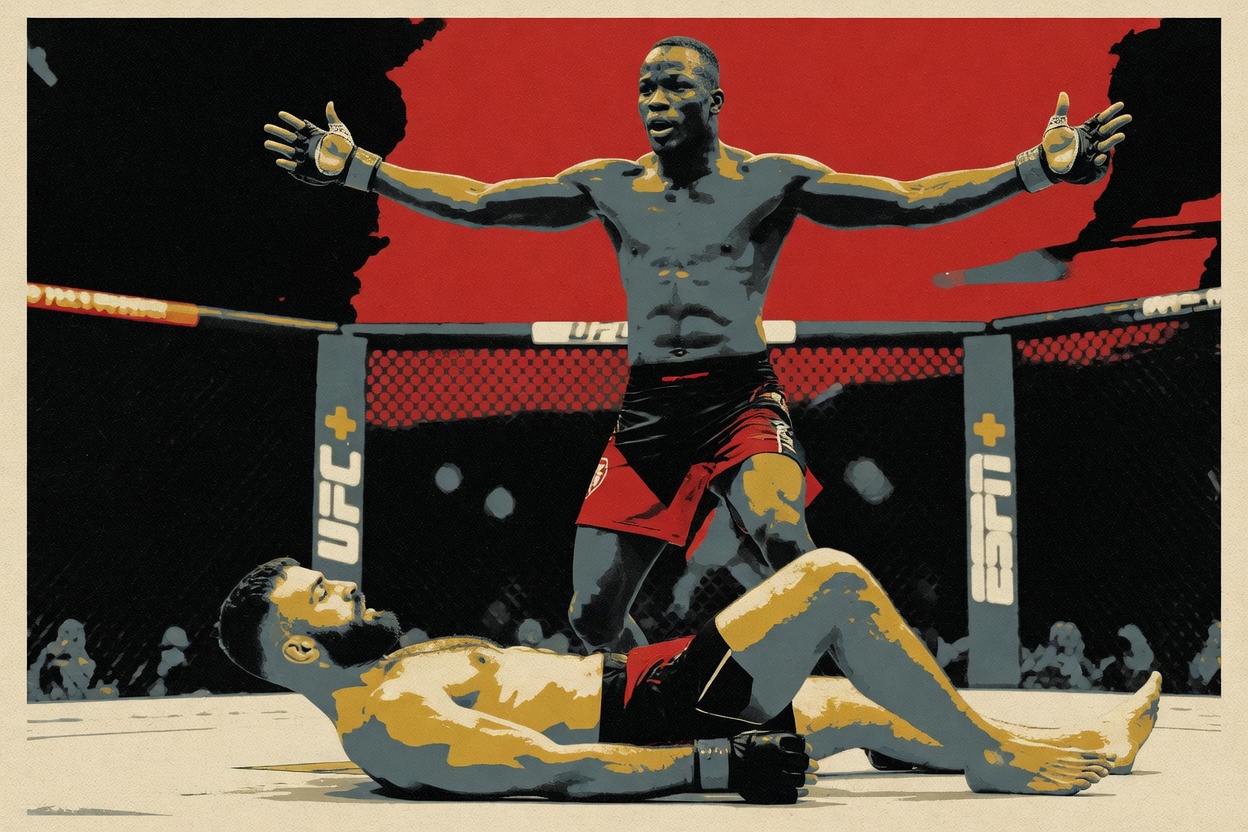
What should bother you about Arnold Allen falling out of UFC 333 isn't the falling out itself. Fighters get hurt. Camps break down. That's the sport.
What's worse is that people with knowledge of the promotion's plans say the UFC knew this matchup could fall through when it was first discussed. Allen's withdrawal was reportedly a possibility before the fight was even booked. The UFC put a ranked featherweight bout on a pay-per-view card knowing one of the two men might not make it to fight night. Within a day of the news breaking, it had a replacement ready, and the fighters weren't the priority in that sequence.
Allen deserves some fairness here. This isn't a fresh injury or a scandal. By every account, he's rehabbing from past treatment and didn't have enough time to be ready for the October 24 card in Abu Dhabi. He's coming off a decision win over Melquizael Costa in May, was in line to climb back toward the top of the division with a win over Pico, and by every indication still hopes to compete again before year's end. When speculation about his status leaked, he shot back online: "Those are not your beans to spill!!!" He's not the problem here. The process is. The honest reading is that the UFC treated a marquee card as a fixed structure to defend, and a fighter's recovery as a variable to manage around. Booking a man whose rehab was already flagged as a concern, then having a backup ready to plug in, is efficient card management. It's not obviously good matchmaking for the health or fairness of the sport. Those are different things, and the UFC keeps blurring them.
Now look at who steps in. Losene Keita is a genuinely exciting fighter and a former two-division champion in Oktagon MMA, so this isn't a hit piece on him. He walked into UFC Paris on September 5 and finished Muhammad Naimov in the first round, dropping him with a jab before closing it out with a one-punch walk-off knockout that earned a Performance of the Night bonus. It was his first UFC win. It was also 48 days before he's now being asked to fight a ranked opponent on a pay-per-view. Even by short-notice standards, that's quick.
The highlight reel skips the fuller picture, though. Keita arrived to real fanfare, then pulled out of his scheduled debut against Patricio Pitbull after his weight cut went wrong, weighing in three pounds over the non-title featherweight limit and getting the bout scrapped. His actual debut came against Nathaniel Wood in March, and he lost a split decision. The résumé: a missed weigh-in that killed one booking, a narrow loss in his first real outing, one spectacular knockout, and now a jump to a ranked name.
Both he and Pico enter this at 1-1 in the UFC, each fighting for the third time in the promotion. Pico himself is coming off his first UFC win, a decision over Patricio Freire at UFC 327 in April, after being knocked out by Lerone Murphy in his debut. So now two fighters with thin résumés in the octagon are being slotted into the spot where a top-of-the-division veteran was supposed to be.
Maybe it's a better fight. Some analysts think Keita's pressure and power make him a nastier stylistic problem for Pico than Allen would have been. That's a defensible take. But "the replacement might be more fun" is not the same as "the system worked." It just means the UFC got lucky that its contingency plan happens to punch hard.
None of this is settled. UFC 333 is still weeks out, headlined by Volkanovski against Evloev with a Yan-Dvalishvili bantamweight trilogy also on the card. The card matters, the money matters, and the incentive to keep every slot filled is enormous. When keeping the card intact is the loudest voice in the room, a fighter's recovery becomes negotiable and an unproven finisher gets fast-tracked, and both of those choices get sold to you as good news.
The fight got saved. Whether that was ever really about the fighters is another question.