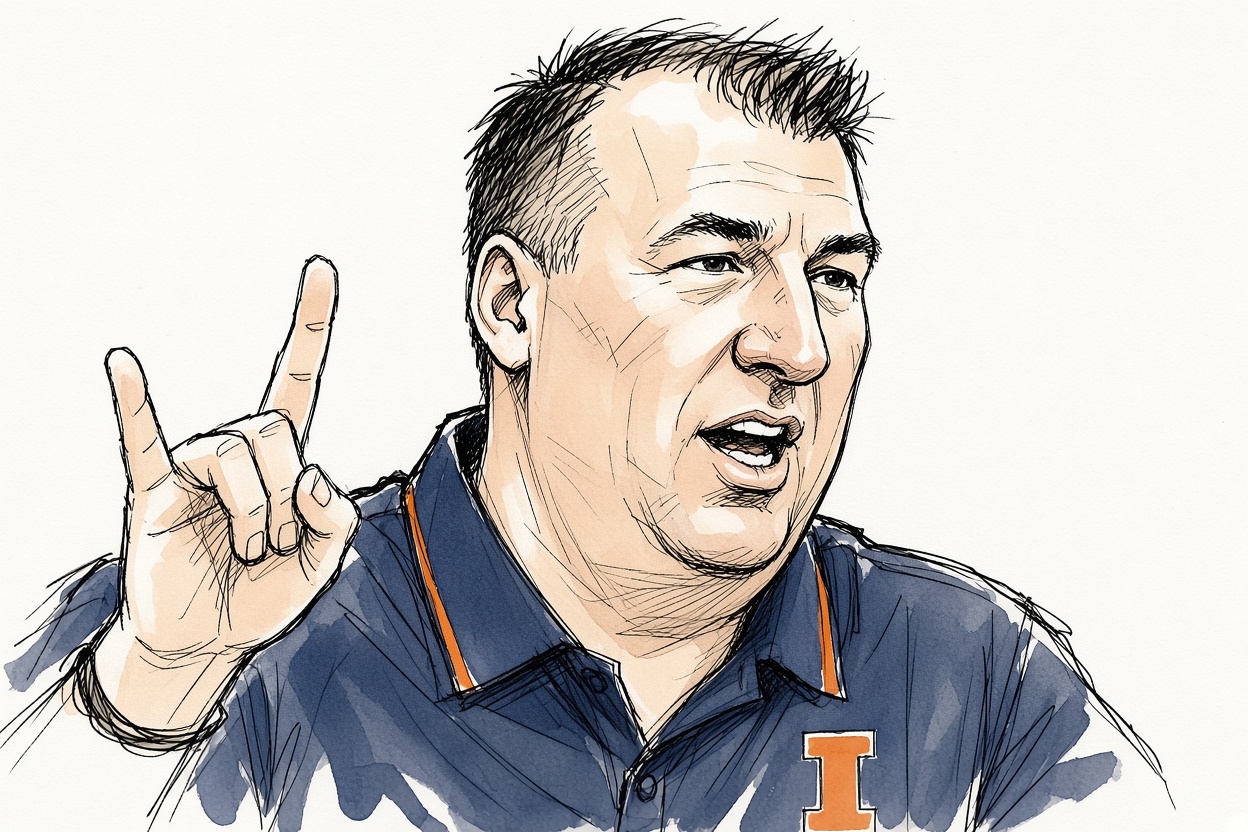
College football just agreed to blow up its postseason again, and this time it took the conference championship games down with it. The College Football Playoff and ESPN signed a five-year deal worth nearly $1.7 billion to expand the field to 24 teams starting in 2027, and the price for all that new inventory was the Power 4 title games. That's a bad trade, and the people who made it told you it was coming.
Start with the man who said it out loud. Big Ten commissioner Tony Petitti, speaking at Big Ten media days in July, put it as plainly as anyone could: "Yeah, I think it's pretty much we won't be playing a championship game if we go to 24." Months before the deal closed, the person pushing hardest for 24 teams was already naming the cost. This was the plan all along.
The format spells out what the sport values now. Nineteen at-large bids, the four Power 4 champions, and the highest-ranked Group of 6 team. With the conference title games gone, the Power 4 leagues will crown champions through regular-season standings and tiebreakers. The games that used to decide a conference in front of a packed neutral site, in December, under the lights, get replaced by a spreadsheet.
In the four-team era, no team with more than one loss ever made the field. Every one of the 40 teams chosen from 2014 to 2023 had one loss or none. Two years into the 12-team format, that discipline is already gone: of the 24 teams in the 2024 and 2025 fields, ten had two losses and two had three, including Alabama as a 2025 at-large pick. Push the bracket to 24 and three-loss teams become routine, four-loss teams plausible. A sport where a September loss once ended your title hopes is building a postseason where it barely registers.
The money explains the whole thing. ESPN is paying an average of $345 million more a year for the expanded playoff, on top of the roughly $1.3 billion annually it already pays under the six-year, $7.8 billion deal struck in March 2024 that runs through 2031. Because the conference championship games are disappearing, ESPN gets back roughly $140 million it had been paying for the SEC, ACC and Big 12 title games. More playoff games, fewer rights fees, bigger margin. A network and a conference commissioner ran that math and decided fewer high-stakes games plus more inventory was the better business. That's smart business and bad football.
More teams means more fan bases with something to play for in November, and more programs with a real shot in December. A fan base that was dead by October now has a bracket to dream about. But opportunity for everyone is the same thing as stakes for no one. When 24 teams get in and three losses don't cost you, December gets bigger while every Saturday before it gets smaller. The CFP's own statement leans on a "desire to increase opportunities for FBS programs, student-athletes and fan bases," and ESPN's Jimmy Pitaro said the move reinforces the network's standing as "the preeminent destination for college sports." Marketing. The thing they actually built is a larger container with thinner contents.
The CFP's Rich Clark even admitted everyone in the room was aware "of the fan sentiment" about an expanded field. They knew. Nick Saban, for one, has said he's not a fan. They did it anyway, because the sentiment that mattered had a dollar sign in front of it.
The FCS has run a true 24-team single-elimination bracket for years. The FBS, the richest version of this sport, is finally catching up to that scale in 2027, except it wraps the whole thing in byes, campus sites and 19 at-large seats decided by committee politics. It took the biggest money in the game to arrive at a number the smaller division had the whole time, and to get there by killing the games that used to settle anything.
Ohio State already shows the cost. Right now the Buckeyes sit outside the projected field after losing to Oregon and USC, with games still left to play. In the old world, that's a fallen giant with work to do and a conference title game as a possible lifeline. In the 24-team world, a two-time ranked contender with that resume probably doesn't sweat much at all. When the punishment for losing softens that much, the reward for winning stops meaning anything.
If you're looking for who to blame, start with the people who wanted this and said so earliest. Tony Petitti wanted 24 teams, understood it meant torching the championship games, and got both. ESPN wanted more inventory at a better margin, and got that too. What the sport traded away to fund it is the simple idea that the games in front of you are supposed to decide something.