Half of English football spent Sunday night arguing about where Chris Kavanagh was born. That's the wrong fight, and it lets the people actually responsible for Anfield walk away clean.
Kavanagh is from Ashton-under-Lyne, in Greater Manchester. That doesn't make him a Manchester City plant. Greater Manchester is a huge chunk of the north west. Point at almost any Select Group referee and you'll find a hometown, a boyhood club, a cousin who supports someone. If a postcode disqualified you, nobody would be left to blow the whistle. Chasing Kavanagh's birthplace is the emotionally satisfying version of this complaint, and it falls apart the second anyone pushes back on it.
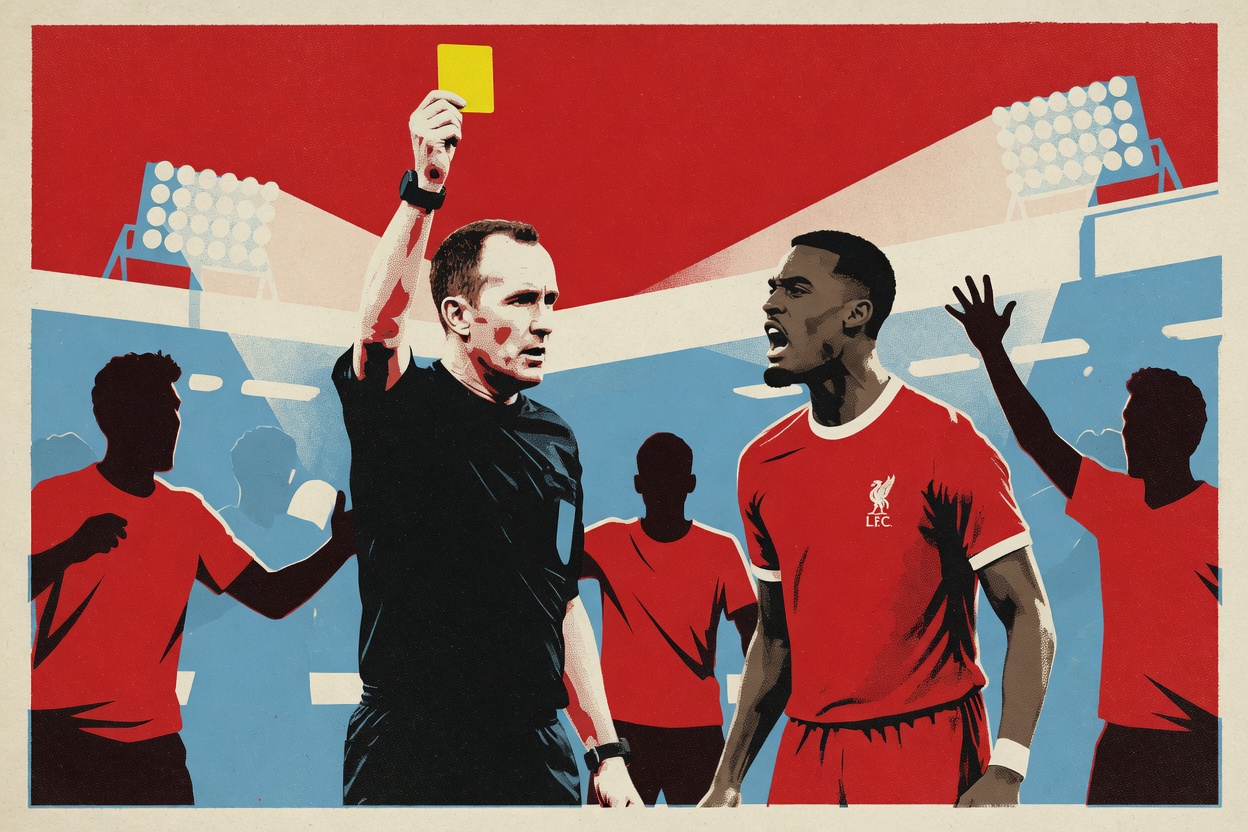
The complaint that actually holds up looks different. Manchester City won 3-0 at Anfield on Sunday, and all three goals came after Ryan Gravenberch was sent off in the 62nd minute. His second yellow was for a foul on Jeremy Doku. His first, the one that doomed him, came for a challenge on Elliot Anderson. That first booking decided the game, and you don't have to take a Liverpool fan's word for it.
Jamie Carragher, on air: "It feels really harsh. The first one is not a yellow card it was so harsh. The referee was far too quick to get the yellow card out." Gary Neville was no happier. Virgil van Dijk: "The first one is not a yellow. [Elliot] Anderson carries on a couple of steps; he wasn't even going to give a foul. I've no idea why he gives a yellow card." Andoni Iraola put it plainly: "I think we played two different games: one until the red card, and one from the red card until the end."
When the ex-pros, the opposing manager and the captain all land in the same place, the complaint is real. The first yellow was a mistake, and it handed City an hour against ten men at Anfield. They took it.
The real question is the body that handed him the match. This was his fourth time refereeing Liverpool against Manchester City, his second in charge of it at Anfield, and last season he took the Etihad meeting that City won 3-0. He also carries a City flashpoint from the other chair, as the VAR on the Rodri handball that Everton never got against City back in 2022. PGMOL knew every bit of that. They appointed him anyway, into the most scrutinised fixture of the weekend.
They did it at the worst possible moment to be careless. City were found guilty of the majority of the 115 charges relating to breaches of the Premier League's financial rules over a nine-season period. That verdict landed in late September. City have appealed, and no sanction has been applied, so the club carries a guilty finding and no punishment into a season where every call involving them gets inspected under a microscope. The one job PGMOL had was to make sure the officiating gave nobody a new reason to scream. They failed on the first contentious decision of the first big City game since.
The fix people keep reaching for is to rip Kavanagh out of Premier League refereeing, or to hand the whole thing to a machine. Neither touches the actual fault. The fault is an appointments process that keeps sending the same official into a fixture where he has repeatedly ended up at the center of the row, and a refereeing standard that can turn a goalless game into a rout on a yellow card that three different experts said wasn't a yellow card.
So stop hunting Kavanagh's hometown on a map. PGMOL is the problem: they looked at his record in this exact fixture and sent him back in anyway.