The penalty was probably wrong. It doesn't change anything that happened after it.
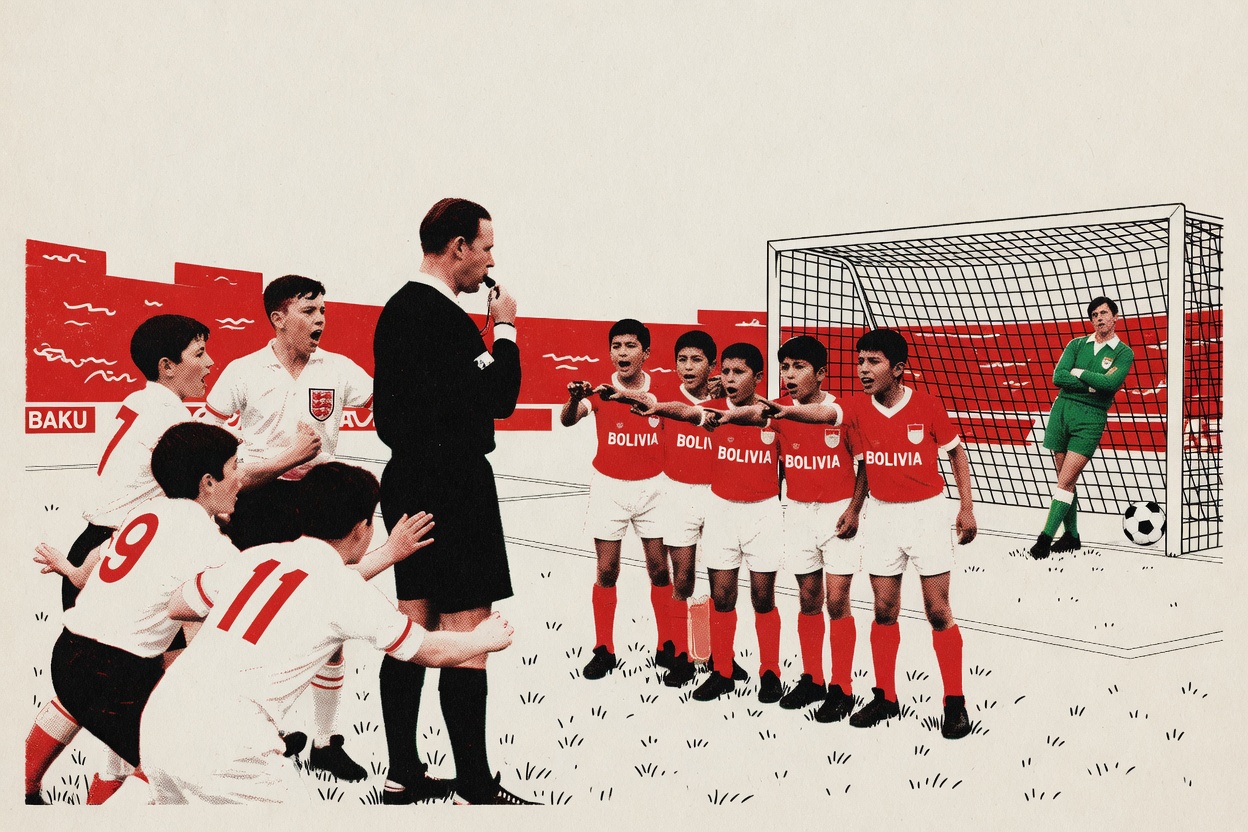
Start with the call. In the 57th-place play-off at FIFA's new Under-15 World Cup in Baku, England were given a 41st-minute spot-kick after West Ham's Emmanuel Famokun went down, and Bolivia's players and coaching staff were adamant the contact happened outside the box. One of their coaches came onto the pitch to point at where he thought it occurred. That's a loud protest without proof behind it. Nobody involved has produced a neutral, frame-by-frame look at exactly where Famokun was clipped. What exists is the referee's on-field judgment against a bench convinced it saw something different from the touchline.
When it's the official's view from right there versus a furious coach's view from the touchline, the official wins that argument until someone shows otherwise. Nobody has. Call it what it is: a tight, arguable call that probably went the wrong way, the kind of thing that happens constantly at a level with one ball, no replay and no VAR. "Probably wrong" is a long way from "provably robbed," and Bolivia spent the rest of the afternoon acting like it was the second.
Whatever you think of the penalty, nothing about it entitles a team to do what Bolivia did next. Their goalkeeper parked himself against his right-hand post and let Famokun roll the ball in unopposed. A staged surrender, aimed at making a point. Fine, make your point. But the second the final whistle went, the protest turned into a mob scene: the referee surrounded, a substitute sent off for going straight at him, FIFA officials physically wading in to pull the two teams apart. That's a team chasing down an official because it didn't like his eyesight, and no disputed penalty justifies that.
The referee did the one thing you'd want. He made a call under pressure, got swarmed, had cards flying before the kick was even taken, and he didn't cave. Reversing a decision because enough angry people get in your face would have been far worse than getting a 50-50 wrong. He stood in it. That's the job.
England don't walk away clean either. Sprinting over to celebrate in front of a bench they knew was incandescent, in a placement game nobody will remember the result of, was petty and needless, and it threw petrol on something already smouldering. The sensible move was to take the three points and get off the grass. They didn't, and they own that.
But taunting after the whistle and trying to confront a match official are not the same offense, and treating them as equal is how Bolivia wriggles off a hook it belongs on. Being classless doesn't make England the party that turned a youth football match into a scene that needed breaking up by hand.
This is the same England junior side that walked off during a different match in Baku earlier in the week over an alleged racist incident, with that game abandoned while Ireland led. FIFA's investigation into that one was still open, and nothing on the Bolivia incident has been adjudicated either, so hold off on verdicts about punishment. This tournament has a temperature problem that reaches past one spot-kick.
On the only question that's actually answerable today: the referee deserves the benefit of the doubt, England deserve a telling-off for the celebration, and Bolivia deserve the book thrown at them for the rest of it. A bad call doesn't license chasing the man who made it.