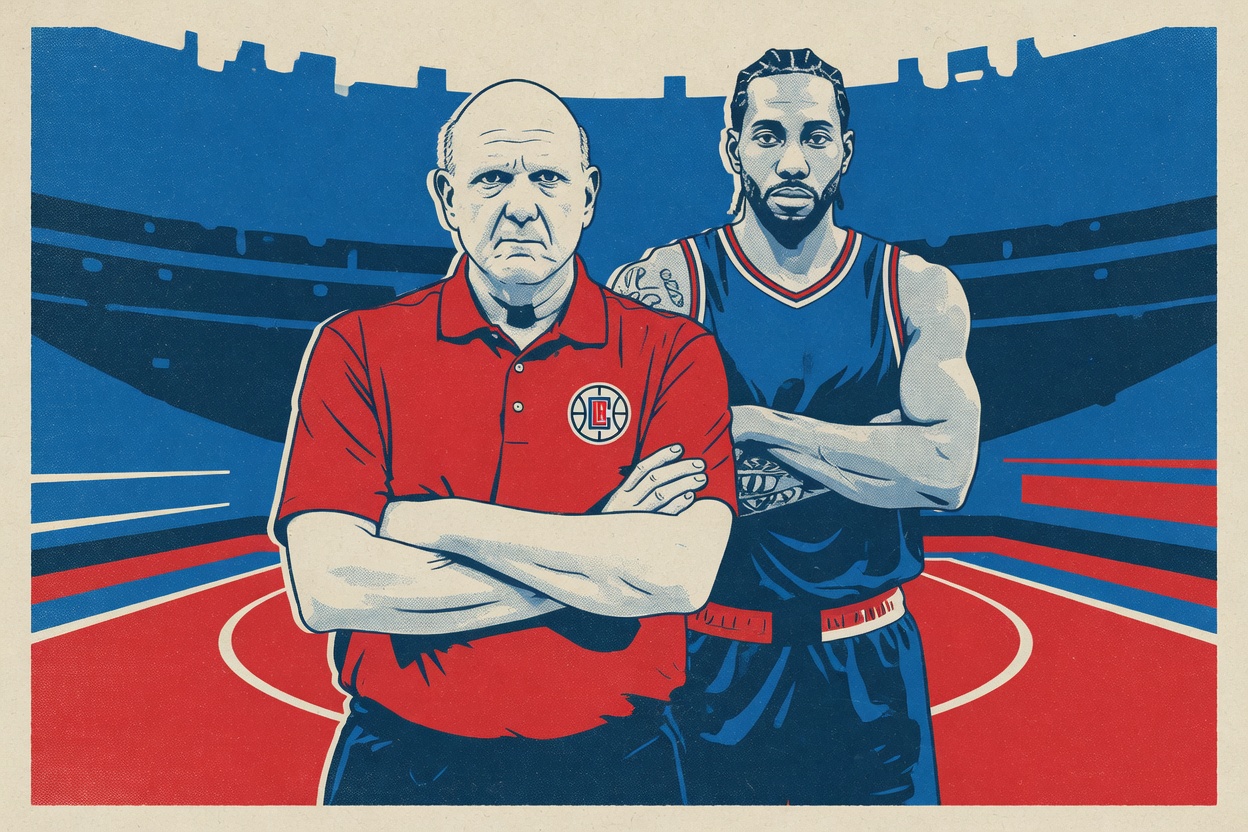
The NBA's punishment of the Clippers felt like the loudest possible statement when it landed. It might end up being the gentle part of this story.
On September 2, the league finished a near-yearlong investigation run by the law firm Wachtell, Lipton, Rosen & Katz and came down hard. The Clippers lost first-round picks in 2029, 2030, 2031, 2032 and 2033. They were fined $30 million. Owner Steve Ballmer was suspended for a year. Team president of business operations Gillian Zucker got a year without pay, president of basketball operations Lawrence Frank got six months without pay, and Kawhi Leonard was ordered to pay $700,000 in restitution while avoiding a suspension. Adam Silver called the violations "flagrant." The Clippers, for their part, said they "vehemently reject the NBA findings" and vowed to pursue "every legal remedy."
That's a serious penalty. The $30 million wasn't picked for show; it's the maximum cap-circumvention fine of $7.5 million, stacked four times, once for each corporate partner the league believes the Clippers used to funnel money to Leonard: Aspiration Partners, Boingo Wireless, Daktronics and Lockton Insurance. The NBA treated it as four separate acts of cheating, not a slap on the wrist.
About a week later, federal prosecutors were revealed to have opened a criminal investigation into the same conduct. It's run by the U.S. Attorney's Office for the Eastern District of New York, based in Brooklyn, and it's in its earliest stages. At least one subpoena has gone out. The scope, the targets and the specific crimes under examination are all still unknown. One detail should make Clippers fans uneasy: the federal interest appears to have begun before the NBA even announced its own penalties. The league's punishment may not have been the finish line; something much bigger could have been unfolding alongside it the whole time.
Some caveats matter here. A criminal probe is not a conviction. It's not even a charge. Investigations get opened and quietly closed without anyone being indicted, and that could happen here. Cap circumvention itself is not a crime. It's a violation of the NBA's constitution, a private contract among the league, its teams and its owners, one that treats the commissioner's rulings as final and binding. Nobody goes to federal prison for beating the salary cap.
But that's exactly why the DOJ angle matters, and why I think Ballmer's suspension could age into the lenient option. For prosecutors to build a case, they'd need something like wire fraud tied to how those endorsement payments were structured, not "he broke a basketball rule." That's a higher bar. It's also squarely in the wheelhouse of this particular office. The Eastern District of New York is the same shop that has prosecuted NBA figures including Terry Rozier, Damon Jones and Chauncey Billups in gambling-related cases involving wire fraud and money laundering, that went after FIFA officials for racketeering and bribery about a decade ago, and that worked the Tim Donaghy referee case. This isn't a symbolic inquiry from a sleepy office. It has a track record of turning sports-business misconduct into indictments.
And fraud has already been proven in the neighborhood of this story. Aspiration co-founder Joseph Sanberg pleaded guilty in October 2025 to two counts of wire fraud, with prosecutors saying he defrauded investors and lenders of more than $248 million. That case is legally distinct from the Leonard endorsement arrangement, so nobody should pretend it settles anything about the Clippers. But it shows the federal system has already looked hard at the company at the center of this and found real crimes.
Ballmer has framed himself as a victim before. Back in 2024, he told ESPN that Aspiration's principals "committed fraud," that they "conned me." That was his story about being deceived, not an admission about the Leonard deal, and the distinction matters. The problem is that a federal prosecutor gets to decide whose story holds up.
The NBA handed down the toughest penalty it's allowed to impose, and it may still be remembered as the mercy option. A year on the sideline and a $30 million check are survivable for a man of Ballmer's means. A wire-fraud finding would not be. We're nowhere near that outcome, and we may never get there. But the gap between breaking a league rule and breaking a federal law is the whole ballgame now, and it's out of the NBA's hands.