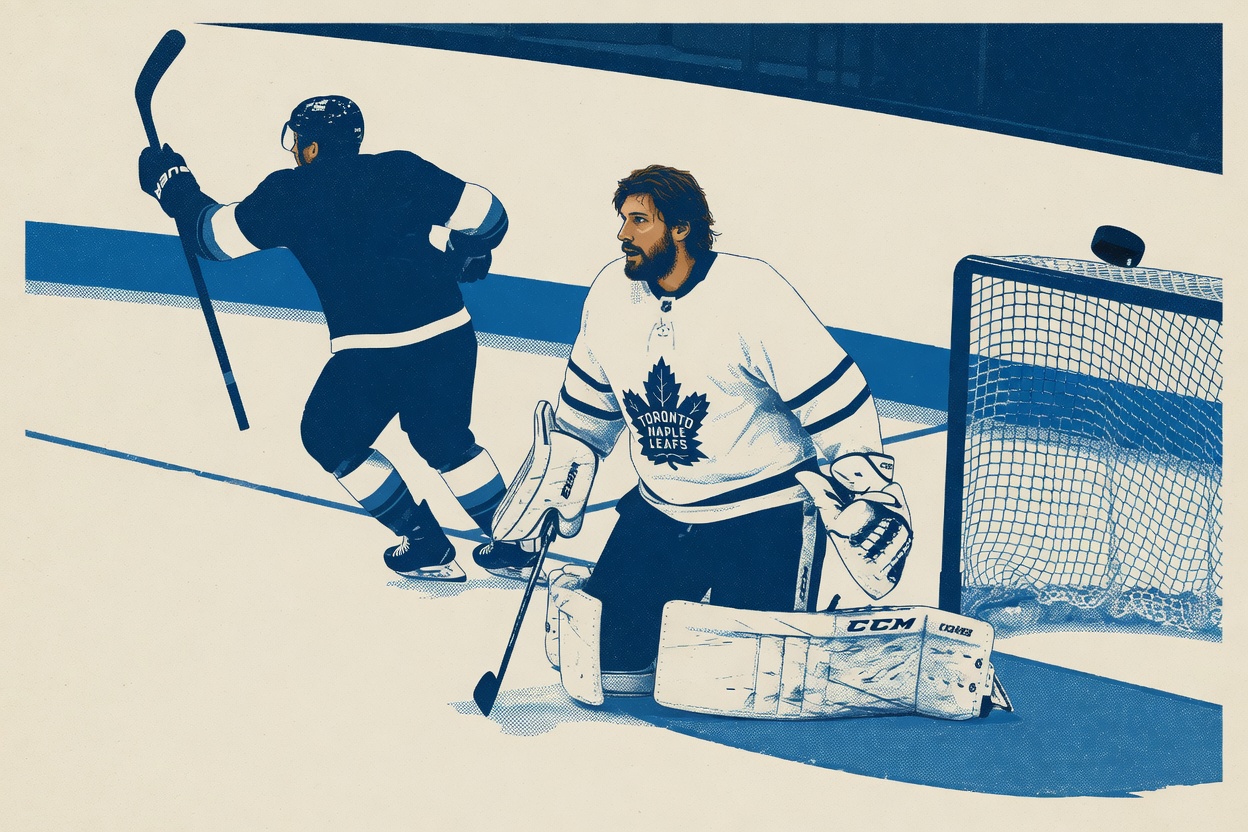

Dylan Larkin is a professional hockey player who has decided he won't play professional hockey until his employer does what he wants. That's the whole standoff, stripped of the spin. Per Elliotte Friedman, the plan is for Larkin to sit out until he's traded, and Red Wings coach Todd McLellan confirmed the former captain wouldn't dress against Chicago, leaving interim GM Shawn Horcoff to explain the rest. He's healthy. He's just using the one thing he still controls, his own availability, as a crowbar.
I don't think that's justified, and I don't think it's close.
Start with what nobody disputes. Larkin signed an eight-year, $69.6 million deal in March 2023, running through 2030-31, with a no-trade clause he wanted. He took the security. Then, roughly a month and a half after Detroit missed the playoffs for a tenth straight season, he asked out. He lost the captaincy over it, said himself that "actions have consequences," and kept playing anyway, logging nearly 22 minutes a night and putting up six points in 10 games before this week. By every account he'd handled the awkwardness like a pro. Now he's out of the lineup, in a sit-out that reports describe as either his call or the team's, aimed at speeding up a deal.
The no-trade clause is already enormous leverage. It lets him hand Detroit a short list, reportedly expanded to around 10 teams, and sit on it as long as he likes. A GM can't move him anywhere he doesn't approve. That's the player empowerment the contract was built to give him. Refusing to play on top of all that tells the front office that the roster spot he signed for is now a hostage. If a disgruntled star can bench himself the second talks stall, every multi-year deal in the league turns into a polite suggestion, and the one form of control a team is supposed to have over a long commitment disappears.
These contracts do come loaded with movement protection that cuts both ways, and when a team drags a trade out for months, a player has almost no practical way to force the issue. But hockey just watched where this road leads. Connor Hellebuyck wanted out of Winnipeg, requested a trade publicly, and didn't report. The Jets suspended him through camp and the first chunk of the season, he forfeited more than $927,000, and only then did he land in New Jersey. Larkin already reported, already played, and now finds himself out of the lineup without anything like the same bill. If he gets to walk away from games with his money and his dignity intact, the lesson every agent takes is that a sit-out is a free lever. Pull it whenever a season goes sideways.
None of that lets Detroit off the hook. This rot started in June and the front office let it set like concrete: a trade request left hanging past the draft and into the season, a captaincy pulled without resolution, a player now benched for a "decision" nobody in the building will put their name to. A franchise that's missed the playoffs ten years running and still can't close a deal for its best center in five months has managed this about as badly as Larkin has weaponized it. Right now, no trade has been announced, and Detroit sits last in the Atlantic at 5-4-3 through games of Oct. 27, now without the guy they're arguing over.
So blame both. But the party the rest of the league should worry about is Larkin. A GM fumbling a trade is just bad management. A $69-million player who stops showing up until he gets his way is a blueprint, and blueprints get copied.