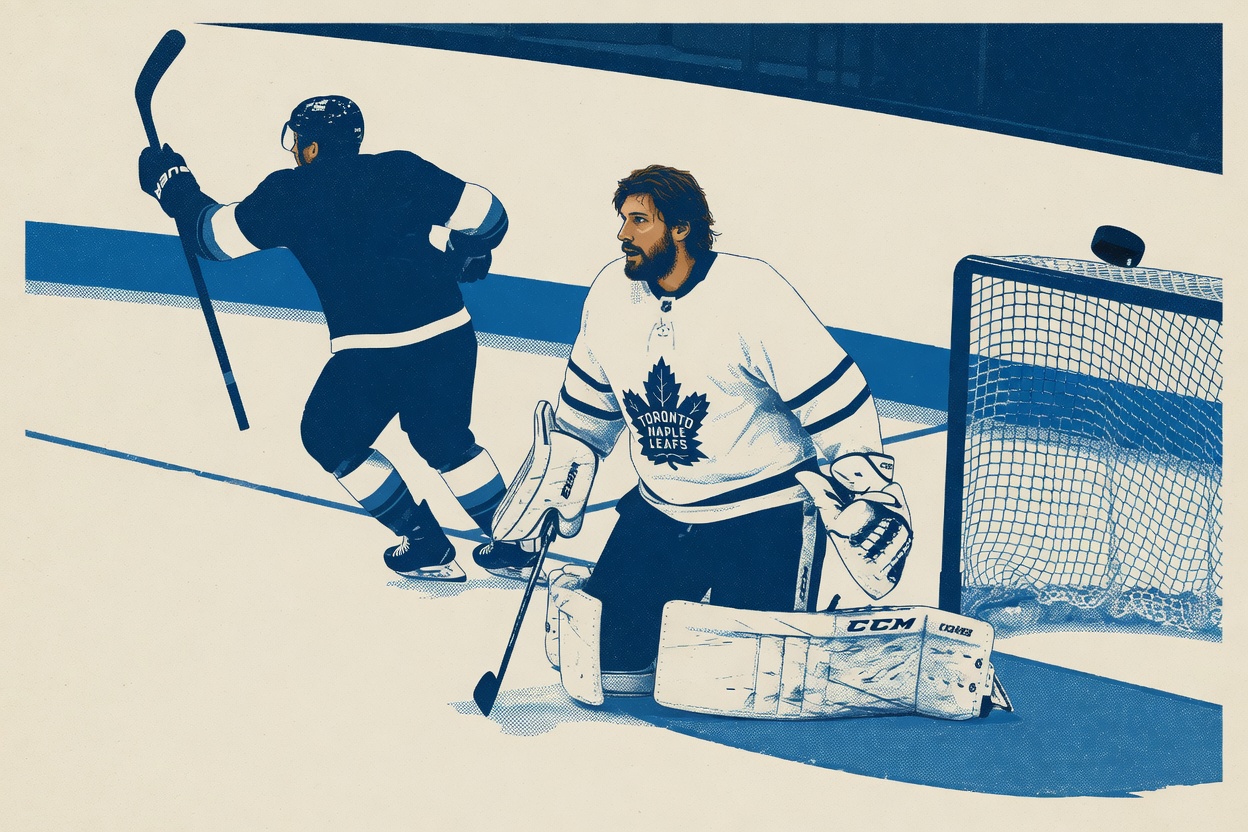

Pat Brisson wants you to believe that walking out on your team and getting suspended without pay is the behavior of a professional and cooperative employee. That is the sell, and you should not buy it.
Brisson, the agent for Dylan Larkin, put it in writing the same day the Red Wings suspended his client: "Dylan's had enough of the situation. We believe he's been very professional and cooperative through this process." That statement landed hours after interim GM Shawn Horcoff announced that Larkin had informed the team he would no longer play while he waits for a trade, and that he'll forfeit $41,237.11 for every day he sits.
The sleight of hand is simple: half of Brisson's résumé holds up. Larkin requested a trade over the summer, got stripped of the captaincy before camp, came back from an upper-body injury to score and take first star against Ottawa on Oct. 6, and kept producing in front of a hostile home crowd. Three days before all this broke open, he scored a last-minute tying goal in Edmonton, a game Detroit went on to win in a shootout. Reporting to a team that clearly doesn't want you there and playing hard anyway is professional. Nobody disputes that.
The word that doesn't hold up is "cooperative." Cooperative players don't get suspended without pay for refusing to play. This is a work stoppage, pure leverage, and no amount of agent-speak changes that. Elliotte Friedman's reporting lays it out plainly: Detroit isn't benching him to protect his trade value. Larkin is applying pressure, betting it'll get the Wings to move faster. Pressure is a tactic a player is allowed to use. But you don't get to break your end of the contract and then brand it good conduct.
The cleanest tell is the player everyone keeps bringing up. Matt Duchene wanted out of Colorado and said so, then went to camp and played well without torching the organization, waiting the better part of a year to get moved. The GM who finally acquired him praised exactly that. That's what "professional and cooperative" looks like all the way through. Larkin matched it for most of October, then stopped. His camp is asking the public to stretch the first part over the second.
Then there's the list. Larkin reportedly handed Detroit just three teams at first, Minnesota, Florida and Vegas, before expanding to ten in October, after the season had already started, adding Carolina, Colorado, Dallas, New Jersey, Tampa Bay, Utah and Washington. An $8.7 million cap hit is hard to move at the best of times. Handing a rebuilding front office a tiny trade list, then timing your walkout for maximum pain, looks like a calculated squeeze.
None of which lets Detroit off the hook. This is a team that let a trade request sit from the summer, through a change at GM, and into the regular season without resolving it, dangling its former captain in front of a booing crowd game after game. An organization that has missed the playoffs for ten straight seasons with Larkin on the roster does not get to act shocked that he finally snapped. The front office owns the delay. That's an institutional failure.
But the front office didn't choose the walkout. Larkin did, and Brisson chose to call it cooperation. We've already seen where this math leads this season. Connor Hellebuyck held out of Winnipeg's camp, bled close to $40,000 a day in forfeited salary, and was traded to New Jersey inside about a week. Larkin's side is almost certainly betting on the same clock. They may even be right that it works.
If you want to force your way out by sitting and swallowing the fines, own it. Say it's leverage. What you don't get to do is stop playing, pocket the pressure, and then ask the fans to put "cooperative" on the plaque.