There's a difference between building a midfield and reacting to one falling apart, and Barcelona have spent this summer window showing you which side they're on.
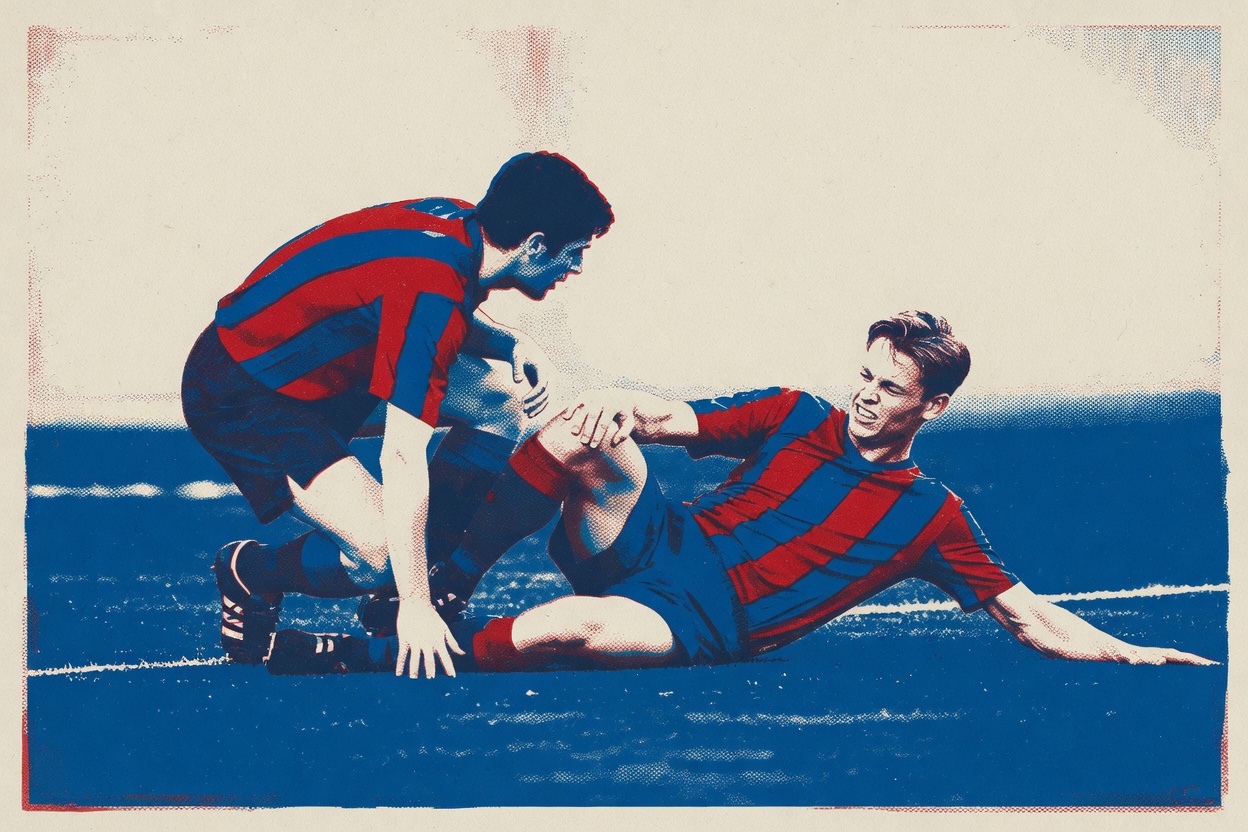
The confirmation that Frenkie de Jong tore the medial collateral ligament in his knee, an injury that will keep him out for months, was bad enough on its own. De Jong revealed he'd played through pain during the World Cup, then pushed back on social media once Barcelona made the diagnosis public. That's a captain grinding through discomfort for club and country, and now the bill has arrived at the worst possible time, deep into preseason with the 2026-27 campaign not yet underway.
What happened next is worth sitting with. Almost immediately, the coverage shifted from de Jong's knee to Barcelona ramping up their pursuit of Rodri, framed plainly as the captain's injury forcing the club to rethink its summer priorities. Manchester City turned down an initial Barcelona offer as too low, and Barcelona are preparing another. Rodri is wanted by Real Madrid too, but he's said to prefer Barcelona.
All of which is fine on its own terms. Rodri is one of the best in the world at what he does. If you can sign him, you sign him. My problem isn't the target. My problem is the timing, because it tells you the pursuit only became urgent once a ligament went.
That's the tell. A club with genuine midfield depth doesn't have its transfer strategy rerouted by a single injury, no matter how good the injured player is. Barcelona's did. This isn't even the first warning sign. Pedri has dealt with his own fitness problems over the past season, to the point where a young midfielder like Marc Casado was the one asked to step up and hold things together. When your engine room leans this heavily on two players staying healthy, the margin for error isn't thin. It's decorative.
It gets worse. Even with de Jong down, Barcelona are reportedly sticking with their plan to move on a La Masia graduate. So the same window that has them scrambling for a marquee holding midfielder also has them comfortable thinning the very depth that just failed them. You can argue the finances demand it, and with this club the balance sheet usually is the deciding voice in the room. But you can't call it a coherent midfield strategy. It's two contradictory instincts sharing a spreadsheet.
The strongest version of the Rodri move is the one where Barcelona wanted him regardless, identified the need in the abstract, and were always going to push. If that were true, the bid would have been serious before de Jong's scan, not after. Instead the sequence runs the other way: player gets hurt, priorities get rethought, offer goes in, gets knocked back for being too low. That last detail matters. A club acting from strength doesn't lowball its top target. A club acting from a fresh panic does, because it's improvising a number instead of committing to one it decided on weeks earlier.
None of this is a prediction that the deal collapses. Rodri may well end up at Barcelona, and if he does, most fans will forget how the pursuit actually started. But the process is the story here, and the process has been reactive from the jump. Barcelona keep confusing having stars with having a squad. De Jong's knee just made the difference impossible to hide.