There's a particular kind of unfairness in being blamed for someone else's crime, and Howard Webb has spent this week living it. PGMOL's chief refereeing officer had one job as the new Premier League season opened: reset the conversation around VAR, promise a lighter touch, sell the idea that the people in the video booth are getting things right more often than not. Instead he found himself talking about a red card shown in a World Cup game he had nothing to do with, in a tournament run by a governing body he doesn't answer to, involving a player who doesn't play in his league.
That's the problem, and to his credit, Webb said so out loud.
Speaking to Sky Sports this week, Webb admitted he's "troubled" by the Folarin Balogun saga because of what it does to the way fans see every contentious call. His worry isn't the card itself. "You can form an opinion about the validity of the red card and I understand why it was given," he said, a refreshingly honest thing for a refereeing boss to concede. His real fear is what came after: the sense that decisions can be quietly rearranged by the right people making the right calls. As Webb put it, when that happens, "it opens up the space for people to think 'this sort of thing is happening all the time behind the scenes' - and it's not." He described the risk of a "snowball" effect and warned the episode feeds the idea that decisions are either "correct or corrupt."
It lands hard because English officiating didn't need any help looking fragile.
A phone call, not a rule change
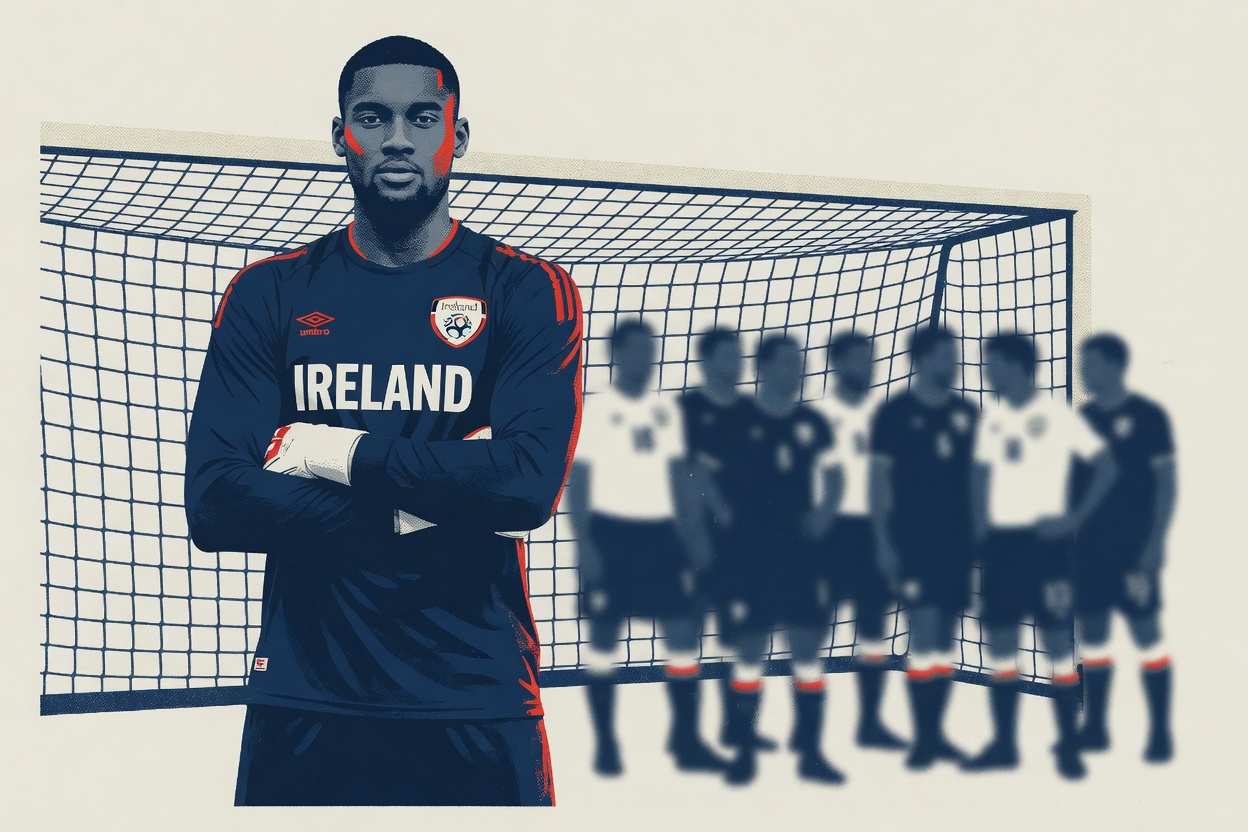
Start with what actually happened, because the details matter more than the outrage. Balogun was sent off for a foul on Bosnia-Herzegovina's Tarik Muharemovic during the United States' 2-0 round-of-32 win on July 1, which triggered an automatic one-game suspension. That ban was then suspended for a probationary year under Article 27 of FIFA's Disciplinary Code, which let him play against Belgium in the round of 16. The card was never wiped. If he steps out of line again, the suspension comes back.
So the popular shorthand, that a red card got "overturned," isn't quite right. What actually moved was the punishment, and the reason it moved is the part that poisons everything. President Donald Trump admitted he'd called FIFA president Gianni Infantino to ask for the ban to be lifted. FIFA insisted the review was independent, though it later emerged the panel had a single official on it. Belgium's federation contested the decision, was rejected on grounds of standing, and called the outcome a "direct contradiction" of the competition's own rules.
Then, in the sort of punchline that writes itself, the United States lost 4-1 to Belgium with Balogun playing almost the whole match. The intervention didn't even change the result. It just changed the story of the tournament, which ended in early July with Spain beating Argentina in the final.
Webb is right, and that's the frightening part
The temptation is to say Webb is overreacting, that a one-off political stunt at a World Cup has nothing to do with a Tuesday-night VAR check at Goodison or the London Stadium. He isn't; he's describing, accurately, how trust actually works. Fans don't file each scandal in a separate folder. They build a general feeling, and once that feeling becomes "the powerful can bend the rules," every marginal offside line and every soft penalty gets read through that lens.
What makes this genuinely dangerous for PGMOL is that the ground was already soft. This is an organization that sacked David Coote in December 2024 over derogatory remarks about Liverpool and Jurgen Klopp. It's faced open club anger this season, with Everton complaining publicly about a penalty they didn't get against West Ham, and former referees' chief Keith Hackett pointing to "over fifty VAR errors highlighted by the Independent Review Panel." Into that already-jittery environment drops a made-for-conspiracy story about a president phoning a football official to spring a player. The Balogun affair didn't invent English football's trust problem. It handed the critics a headline-grade example to hang all of it on.
This is the real story, and it's one PGMOL can't fix by refereeing better. You can run a cleaner video booth than anyone in Europe and it won't matter if the public has decided the whole sport can be fixed with a phone call. Webb's own product is now hostage to scandals produced somewhere else entirely.
The awkward truth Webb can't say
The uncomfortable irony is that Webb, by even engaging with this, is doing the thing he warns against: treating a FIFA disciplinary decision and Premier League officiating as part of one big interconnected system. Critics could fairly note that PGMOL and FIFA are separate bodies, and that lumping them together is exactly the "everything's connected, everything's rigged" instinct he's trying to fight. But he doesn't really have a choice. Silence would look like acceptance, and speaking up drags the mess further into his own house. There's no clean move.
Richard Masters, the Premier League's chief executive, joined the criticism, though his tone was cooler and more institutional. He called the episode a "self-inflicted moment" by FIFA and framed it as something that "stands alone in that isolated incident," a softer read than Webb's snowball warning. Masters also landed a pointed practical jab, asking "why do FIFA not have a red card review process like the one that exists in many other leagues, including the Premier League." It's a smart line, because it flips the story: the body that just embarrassed itself is the one without proper safeguards, not the domestic game.
The outrage went far beyond England. UEFA said the decision "crossed a red line." Sepp Blatter, of all people, offered that "red cards are not overturned by political phone calls. They are overturned by rules, evidence and independent bodies." Bayern Munich honorary president Uli Hoeness called it one of Infantino's biggest mistakes and warned that letting a figure like Trump influence a suspension is "the beginning of the end, of the competition."
This is still unfolding
None of the bigger consequences are settled. Masters has made clear the Premier League backs the FA's decision to withdraw support for Infantino ahead of a FIFA presidential election scheduled for March. As of this writing, no candidate has come forward to stand against him before the November 18 deadline, and Infantino has publicly defended his review process as independent. This is a live political fight, not a resolved one, and anyone predicting Infantino's downfall is guessing.
What isn't a guess is the mood Webb walked into as Arsenal prepared to host promoted Coventry to open the new season. He wanted to talk about a lighter, smarter VAR. He ended up talking about a foreign scandal he can't undo, apologizing in advance for damage he didn't cause. If you want to see how little control referees actually have over their own credibility, look no further than kickoff week: the man in charge of English officiating spending it answering for a decision made on another continent, in another competition, by people who never had to sit in his chair.