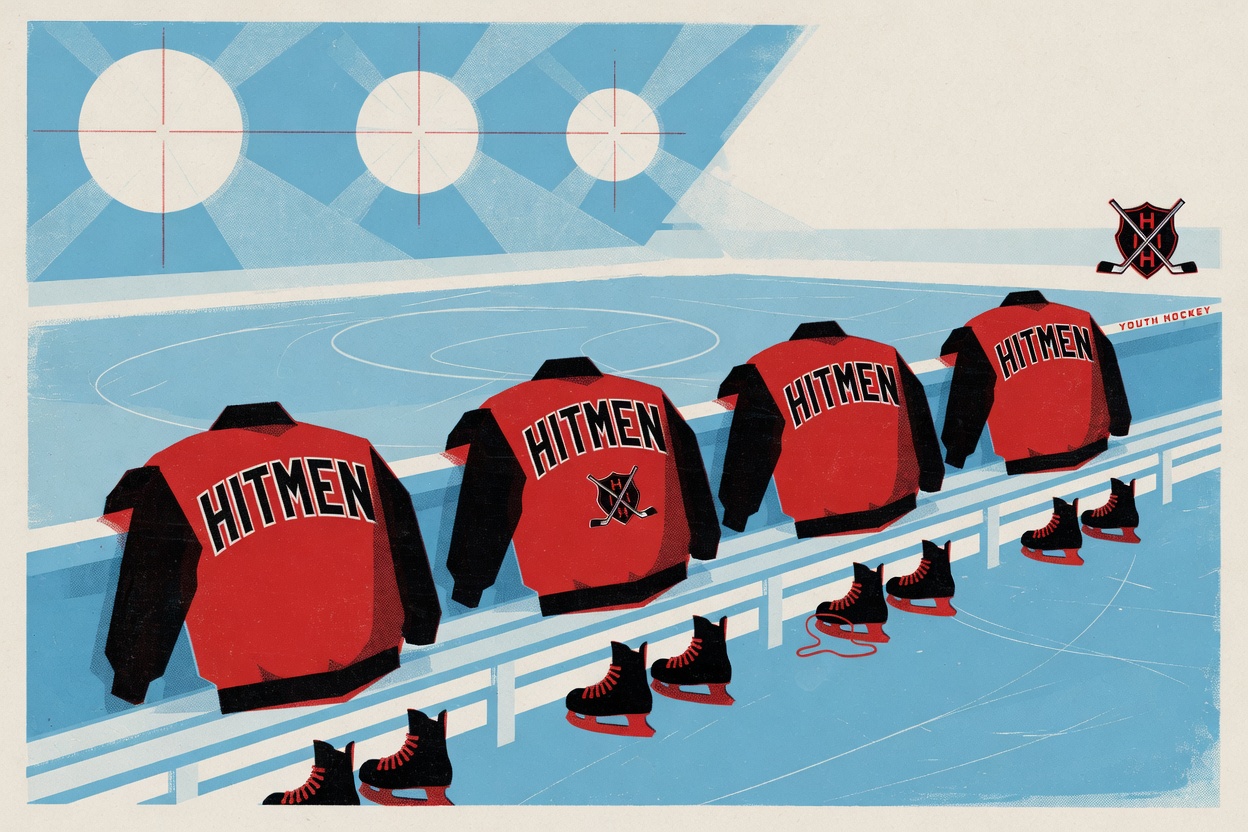
Why would the owner of a youth hockey league suspend a bunch of 10-year-olds because their moms had matching jackets made? Nobody sold them. Nobody profited. They were worn to games so parents could cheer for their own kids, and Reiss wanted a 15% cut he never got. There's no good answer to that, and there's only one name attached to it: Bobby Reiss, owner of the Jersey Hitmen and Ice Vault Arena in Wayne, New Jersey.
It started with four moms who turned up in custom letterman jackets in an Instagram photo posted September 20. Reiss emailed the families and told them their kids were suspended from practices and games until restitution was paid, over what he called unauthorized use of the team's branding. The restitution included a 15% royalty. Nobody's published the exact dollar figure, so I won't guess at one, but the shape of it is clear: a percentage, aimed at parents, enforced by benching their kids.
Reiss called it, in his own words, "one of the most egregious violations in recent memory of someone taking upon themselves to violate this policy in our contracts." Then he wrote the line that should end any sympathy for him: "I don't relish taking it out on the players, but I cannot see any other way to deal with this in the immediate time." He knew punishing children was the wrong move and did it anyway because it was the fastest lever available. He put a trademark line-item on a 10-and-under travel team ahead of the kids actually playing hockey.
Look at the scale. These were homemade spirit jackets. No reporting, not in the original coverage or in Reiss's own email, shows they were ever offered for sale to anyone. Four women made them to wear in the stands at youth hockey games. The offense was loving their kids loudly in matching outerwear, and the punishment was threatening a 10-year-old's ice time.
The strongest case for Reiss is that trademark law is real. The Hitmen have held a federal trademark for over a decade, and brand owners who don't police their marks can lose them. That's a genuine institutional interest. But protecting a trademark comes with options that don't involve a child: a letter to the parents, a phone call to the rink. Suspending 10-year-olds is leverage pointed at adults, with the kids used as the pressure point, because squeezing them is the quickest way to make the parents pay.
Reiss's own organization's leadership bio says he spent decades in New York's Garment District and built a career in branded apparel and licensing before opening Ice Vault Arena in 2003. That's a single-source claim, from his own side's bio page, unconfirmed elsewhere. If it's close to true, it explains the instinct: someone who looks at four moms in homemade jackets and sees "one of the most egregious violations in recent memory," a phrase that belongs pointed at a warehouse of bootleg jerseys, and he aimed it at women in the bleachers instead.
Blame belongs to one person: the man who owns the building, owns the mark, wrote the email, and chose to bench children over a royalty he never collected.
It's October 7, 2026, and this is barely a day old. A prominent sports-business reporter says Reiss told him the suspension is over and the kids were back on the ice when they talked, about seven hours after the story broke. That hasn't been confirmed elsewhere, and Reiss hasn't said more publicly. If it holds, that's good news, but it doesn't count as accountability. Reversing course hours after the internet notices is a cleanup job, done because people were watching. An adult with a licensing background ran a kids' hockey team like a royalty desk and threatened 10-year-olds to collect on his contract. He only blinked once strangers started calling him exactly what he was.