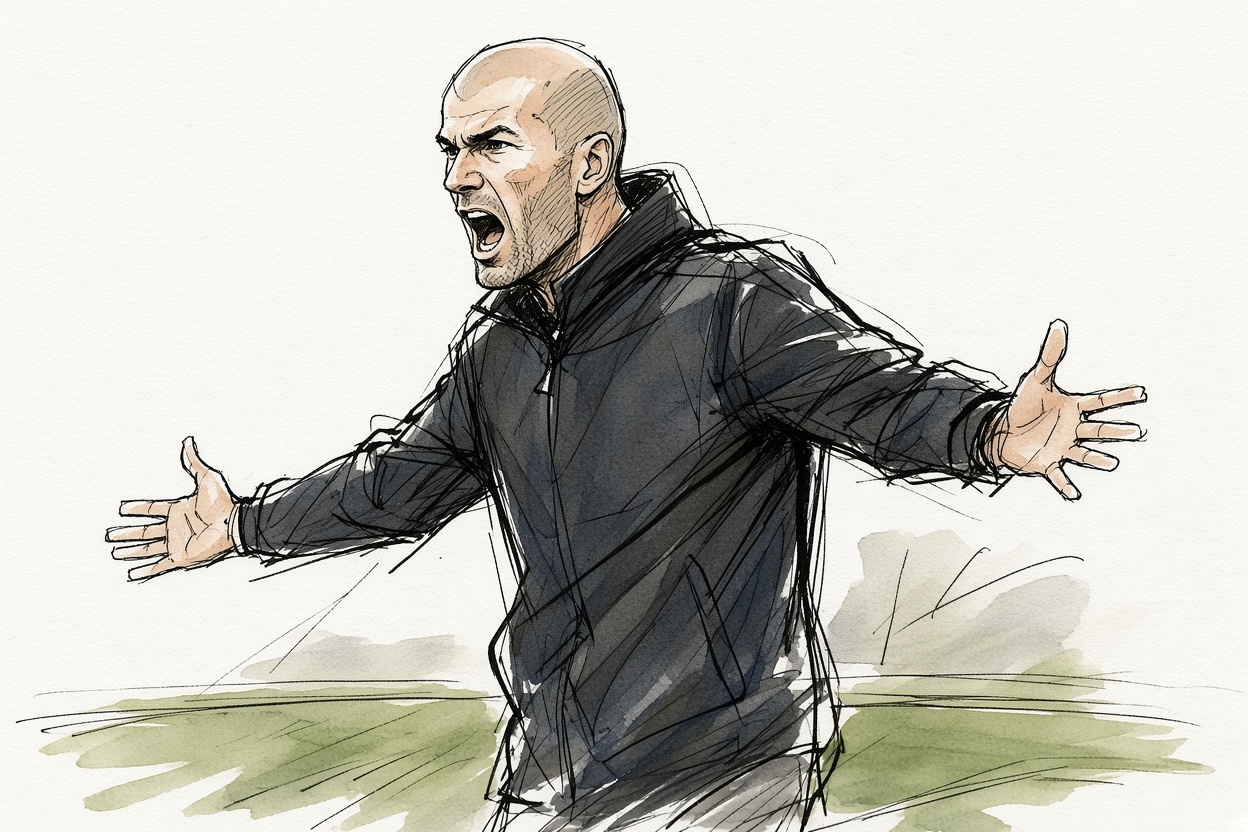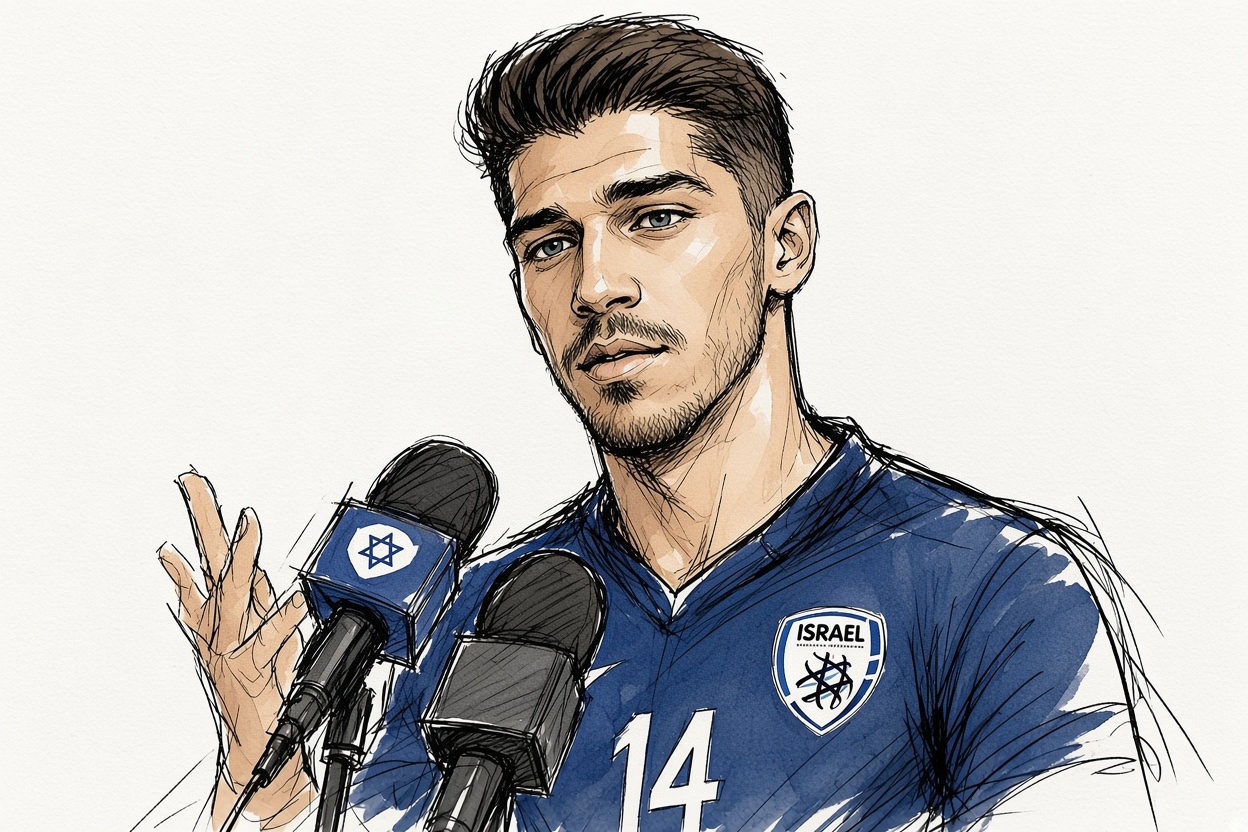
Political questions get asked around everybody's matches this fall, and this UEFA Nations League window turned into one long press-conference war. The real double standard is who gets to walk away clean.
Put a war-crimes allegation to an Israeli player and he shrugs it off, the governing bodies treat it as background noise, and nothing happens to anyone. Point a loaded political question at an opposing coach and watch it become a live diplomatic incident the target nation spends days managing. One direction gets tolerated as hardball journalism. The other gets written off as a distraction from the football.
This week an independent Kosovo outlet confronted Israel's delegation ahead of a Nations League fixture and challenged its footballers on playing international football while war-crimes allegations hang over the country. The exact wording is murky in the English-language coverage, so treat the specifics carefully. The pattern around it is clear enough, though. We've watched it play out match after match.
Start with Israel's own side of the microphone. When an Austrian journalist put his own president's "war crimes" accusation to striker Manor Solomon, Solomon said he'd never heard about it and didn't care, he was there to play football. There was no federation statement, no UEFA sanction, no minister weighing in. The player dodged and the whole machinery let him.
Now run the tape on Ireland. Across their two meetings with Israel in this window, a 3-0 Ireland win in Debrecen on September 27 and a 1-1 draw in Bačka Topola on October 4, Israeli journalists hammered manager Heimir Hallgrímsson on everything except football. One asked him about the people Ireland "support," tying the country's Palestine sympathies to a flydubai flight attack that Emirati and Israeli officials called a "terrorist act." Others dug up Ireland playing Nazi Germany in the 1930s. A separate Israeli TV journalist accused the Irish players of calling Israel's team "monkeys" during a match, an allegation the FAI said it found no evidence for because it wasn't in the referee's report.
Then Israel's foreign minister Gideon Sa'ar took the 87-year-old history item national, pointing to the Irish squad's 1939 trip to Bremen where players gave the Nazi salute before the German anthem, and signing off: "Almost 90 years have passed. Ireland's unique talent for finding itself on the wrong side of history remains intact." When Hallgrímsson made a far milder remark, that his team was "playing against genocide, not with genocide," he got grilled over it and eventually called it a "mistake." The Irish coach walked it back. The Israeli minister did not.
The only time UEFA actually stepped in was to bar the Israeli journalists who pushed the unproven racism claim from the post-match pressers. They punished one false accusation. They never touched the practice of turning a sports press conference into a geopolitical cudgel, and they've sat on requests from their own member federations, Ireland's among them, to even debate Israel's participation. The Irish federation voted to ask UEFA to suspend Israel. Nothing moved.
Press conferences are supposed to be for sport, and dragging an athlete into his government's conduct turns him into an unwilling proxy. That's a real principle, but it's not the one UEFA enforces. Israeli-aligned journalists did exactly that to Hallgrímsson, over terrorism-by-association and a prewar football tour, and no one in a UEFA blazer called it out of bounds. The rule against politics in football only shows up when the politics point back at Israel.
Spread the blame where it belongs. UEFA and FIFA hide behind "no politics" and then enforce it by picking which direction the fire comes from. This is the same FIFA that stripped Indonesia of the 2023 U-20 World Cup after it balked at hosting Israel, citing "current circumstances." Sa'ar turned a press conference into a propaganda thread and was never treated as the distraction Kosovo's or Austria's questions were. A good chunk of sports media calls a UN-sourced war-crimes question a smear the moment it's aimed at Israel, while treating a decades-old guilt-by-association question aimed at Ireland as a righteous follow-up.
None of this requires the Kosovo journalist to have been a model of decorum, and plenty of the junk attached to this story online doesn't survive a look. The double standard underneath it does. The scandal is that the people who run the game decided, match by match, that only some teams have to answer the questions.