Manchester United is manageable. Saying the job is cursed is easier than admitting the people running the place keep failing to do theirs. The club has spent years cycling through big-name coaches, blaming each one in turn, while the structure above them sits untouched. The sickness is in the ownership.
Start with how Ruben Amorim left. United dismissed him this past January, with the hierarchy saying it had "reluctantly made the decision that it is the right time" for a change. Reports pointed to his "emotional and inconsistent behaviour" and his refusal to adapt his system. What actually triggered it: Amorim insisted he'd come to Manchester to be the club's "manager," a bigger job than "head coach," and he challenged those above him to "do their jobs," aiming squarely at the scouting department and sporting director Jason Wilcox. A coach publicly accusing the football department of failing him is a direct hit at the people above him, the same complaint that has trailed nearly every United manager since Ferguson walked out the door.
Darren Fletcher took interim charge, then United turned to Michael Carrick, a club legend with one modest Championship job behind him and none of the glamour of the names the club had already burned through. Carrick made United good again. He won 11 of his 16 league matches, losing only twice, and his side banked more league points than anyone else over that run. United secured Champions League qualification for the first time in three years. They beat Manchester City, Arsenal, Liverpool and Chelsea. In May, the club made him permanent on a deal through 2028.
The club got managed, successfully, within months, by a man with a fraction of the pedigree of the superstars who'd failed before him. If United were genuinely unmanageable, Carrick's run doesn't happen.
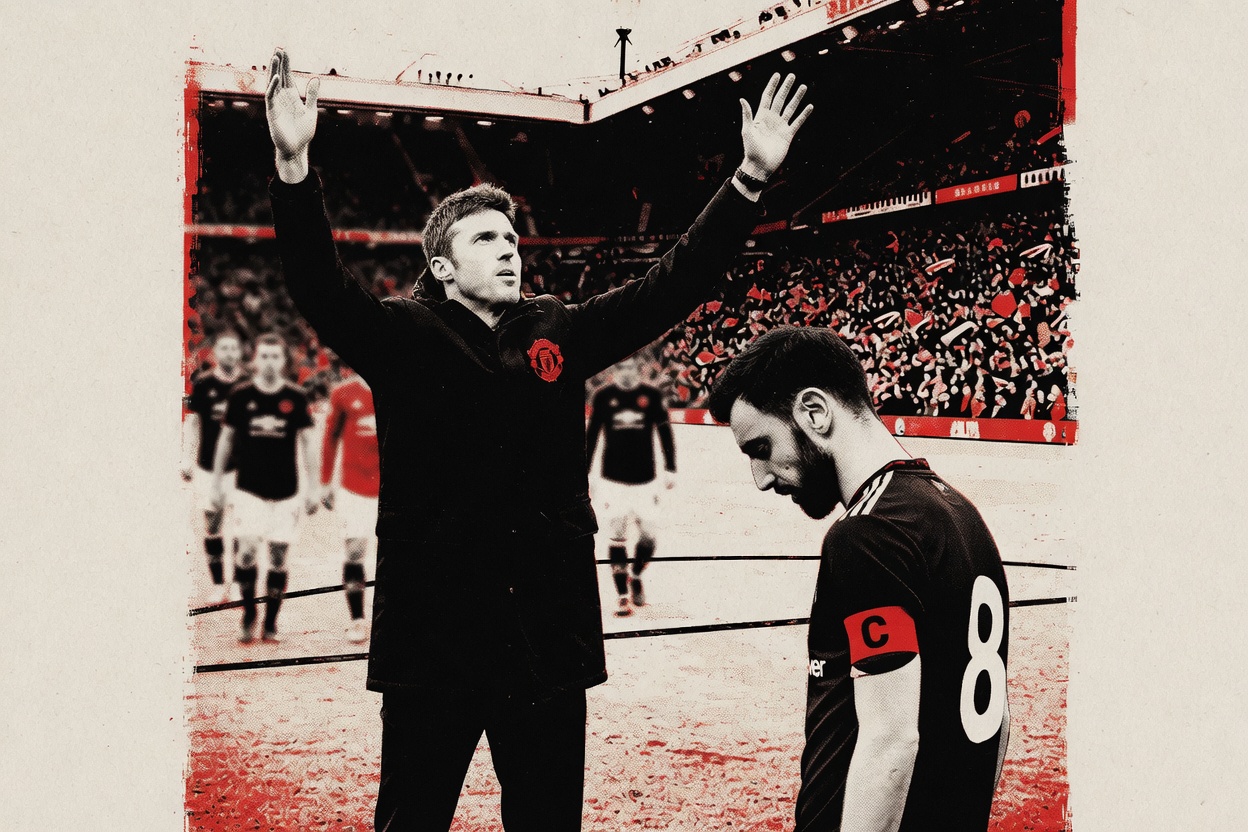
Then the season that followed fell apart. As of mid-October, United sit 13th in the Premier League with a single win from their opening seven games, their fewest after seven matches of a top-flight campaign since 1986-87. A 2-0 loss to Atlético Madrid was their first Champions League defeat this campaign, and a 4-1 loss to Como followed. Carrick called his team's performance "not acceptable," and Jamie Carragher publicly criticised Bruno Fernandes for questioning the manager's tactics. They ended a rotten week with a 1-1 draw at Leeds on October 18, and Carrick's job security has been live speculation since.
In the middle of it came the tell. After the Atlético defeat, Lisandro Martinez took aim at the hierarchy, saying Carrick had been handed an under-strength squad after an underwhelming summer window. He apologised and was back in the side for Leeds. What he said is Amorim's complaint, word for word in substance, now coming from inside the current dressing room about the current manager, nine months later. Different coach, identical grievance. It's a structural failure repeating, because nothing structural has changed.
The Glazer family is responsible. Their 2005 leveraged takeover left United carrying £604 million in debt, against gross debt of £50 million before the deal. Roughly £1.2 billion has since left the club between 2005 and 2024 through interest, debt repayments, dividends and fees, with interest alone accounting for £815 million. That's twenty years of money flowing out of a club that should have been pouring it back in, and it's the simplest explanation for why United keep making compromises in the market that managers then get hanged for.
Sir Jim Ratcliffe hasn't fixed this. INEOS bought a minority stake, took full control of sporting operations and built a corporate structure, poaching Omar Berrada, Dan Ashworth and Jason Wilcox. That's real operational power. But the Glazers still hold majority ownership and the votes, and Ratcliffe is running the football department on top of a financial foundation the Glazers built to serve themselves. His control over the football side hasn't touched the money behind it.
Accountability never travels upward at United. Every sacking is a release valve that protects the ownership from scrutiny: fire the coach, blame his signings, blame his temperament, hire the next one, repeat. Carrick earned genuine credit with an overachieving run and is now being judged against a squad a United player says he was never properly given.
This collapse could be the rock-bottom that finally forces change, and Carrick deserves time before anyone calls him a failure; he's earned that much. But rock bottom only forces change if the people at the bottom get replaced, and at United they never are. The man in the tracksuit is always the one who goes. Fabian Hürzeler has been floated as the standout name if Carrick is sacked, though he's shown no interest in leaving Brighton. It won't matter who it is. Whoever takes the job inherits the Glazers, the debt, and the habit of pointing down instead of up.
United is unaccountable. Until the Glazers sell, or Ratcliffe's control over the football turns into control over the money, every next man up is just the latest name absorbing blame that belongs several floors above the technical area.