Manchester United are in a real relegation fight. Through nine games of the 2026-27 season they have seven points, which puts them around 16th, level on points with 18th-placed Crystal Palace and just a point or two above the rest of the bottom three. That's the table as of this writing, and the table doesn't grade on reputation.
People keep reaching for the comfort blanket: it's early, the clubs below them are poor, United always pull clear. The first part is true, with 29 games still to play. The rest is a bet. Right now United are winless in nine across all competitions, their worst such run since 1988. Their last league win was a 5-2 over Ipswich back in late August. You don't get to be level with Crystal Palace and just a point above Nottingham Forest at the start of November and call it bad luck.
The sides below United are genuinely weak, and United have the squad to climb out of this. Probably they will. But that doesn't mean they were never in danger, and anyone calling this manufactured hysteria is arguing with a league table that says otherwise. A club this size being within a point or two of 20th in November is the danger. The margin is already gone.
The blame starts at the top. This slump has nothing to do with an empty cupboard. United spent £155 million on first-team players this season under INEOS, and more than £200m across the summer, bringing in Matheus Cunha, Bryan Mbeumo, Benjamin Šeško and Senne Lammens. Gary Neville recently pointed out they have spent close to £1.4bn over 15 years, second only to Manchester City. That money has bought a team sitting in the relegation conversation. When you outspend almost everyone in the country and still assemble a side that can't win for two months, the problem is the people deciding where the budget goes.
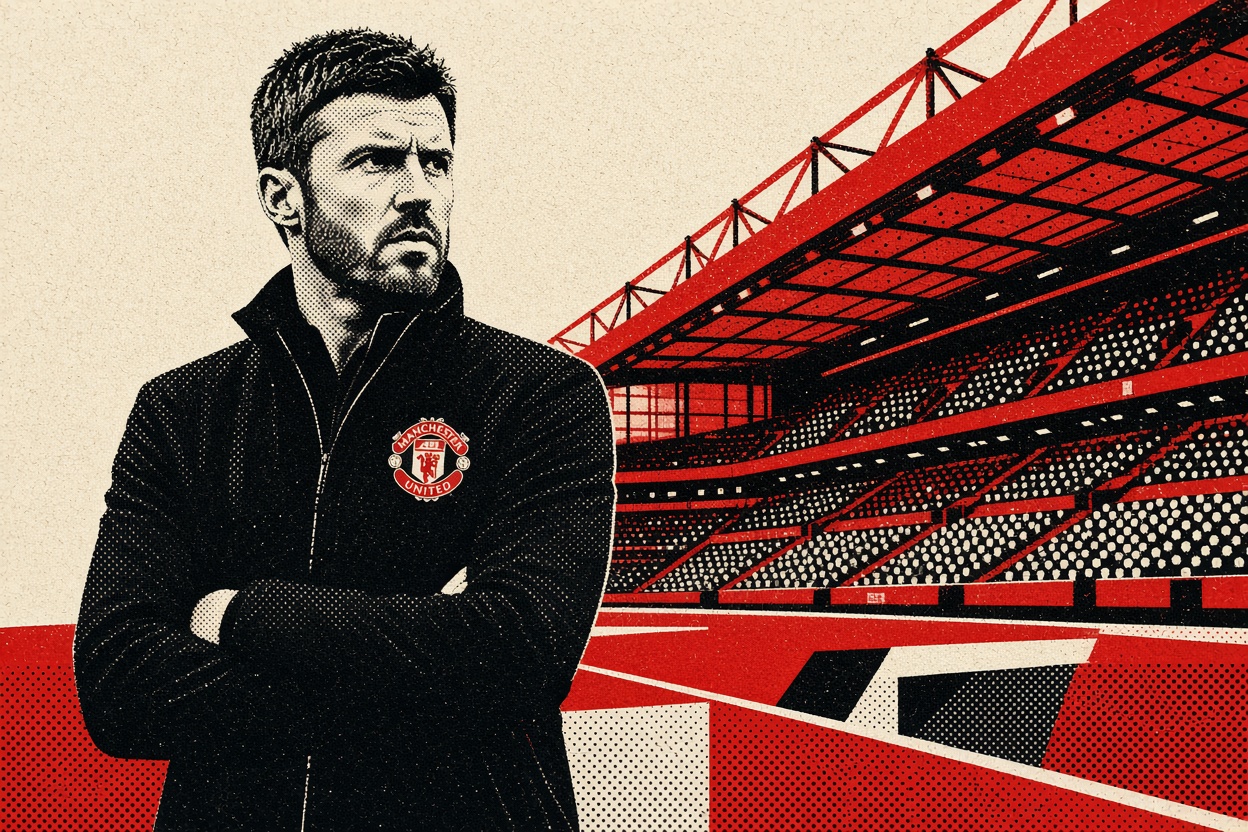
And those people keep changing the manager instead of fixing the football. United are on their second boss of the season already. Ruben Amorim was sacked, and Michael Carrick came in as interim until the end of the season, a man who made 464 appearances for the club and won five league titles as a player. Carrick inherited a mess, but it hasn't improved on his watch. He's described the club as having "lost their identity." When your own interim manager is talking about foundations and values rather than tactics, you're not one team talk away from safety.
Hanging over all of it is the ownership question. United's debt was still above £1bn as of September 2026, down from £1.3bn at the end of 2025. The Glazers remain, INEOS trims at the edges, and recruitment stays scattergun across regime after regime. Ryan Giggs once insisted United would never collapse the way Liverpool did, confident the structures Ferguson built would hold. That line has come back around while United line up for a 13th managerial change since Ferguson left. The foundations he trusted have been dismantled by the people who own them.
United last went down in 1973-74, six years after a European Cup, decades after the title they won in 1967. Nobody is predicting a repeat. But that it's even a sentence you can type without laughing shows how far this has slid. The owners built this squad. They own its failure too.