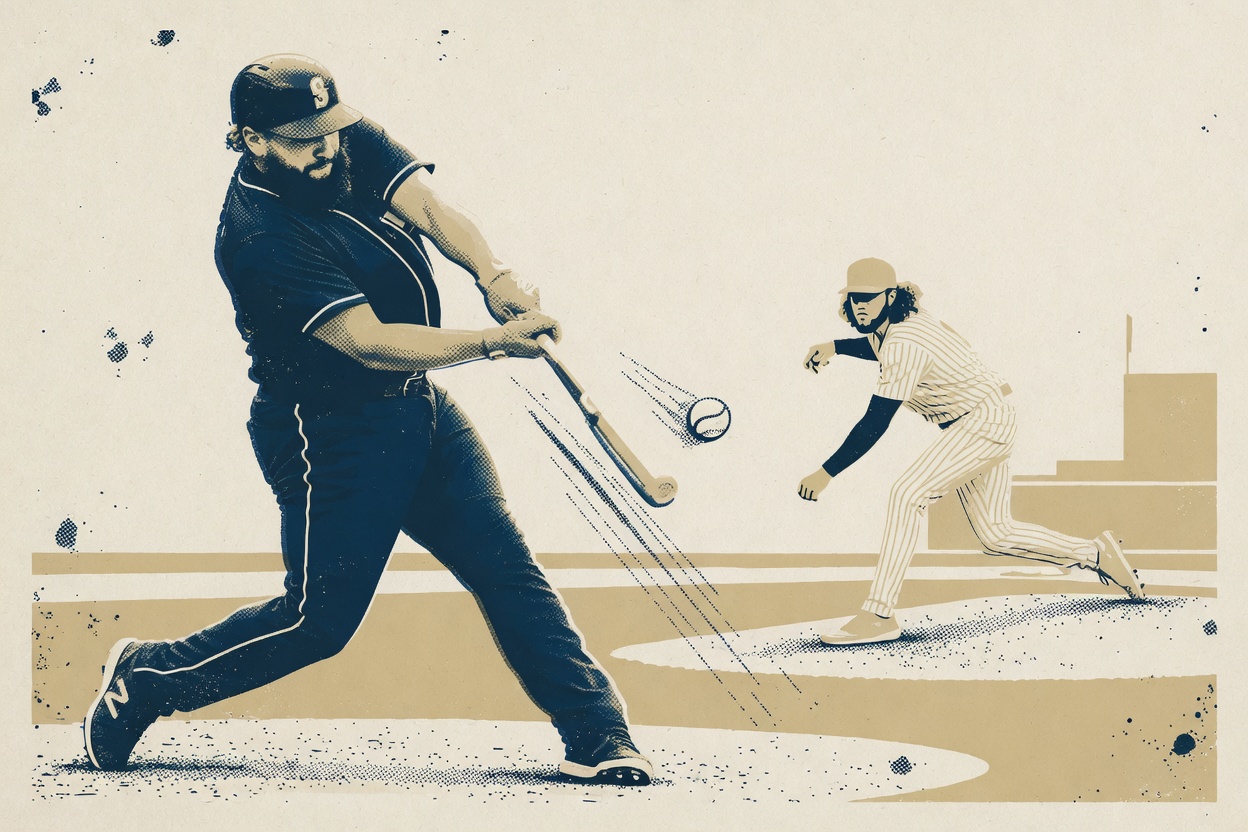
Most teams that get embarrassed 22-0 don't show up the next night looking like themselves. They show up still hearing the score in their heads.
Seattle didn't do that. One night after Milwaukee hung a historic beatdown on them, matching the largest shutout margin in the sport's modern era, the Mariners scored seven runs in the first two innings against Dustin May and held on for a 7-5 win. That's the story here, more than any talent gap or who's better on paper: it comes down to how a team answers getting humiliated in front of everybody.
That response, to me, is the biggest thing to take from this game, bigger than any individual line in the box score. Brendan Donovan and Randy Arozarena led off with singles, Dominic Canzone doubled them home, Taylor Ward drove in two more with two outs, and by the time Josh Naylor added a two-run single in the second, it was 7-0 before Milwaukee had really settled in. Julio Rodríguez chipped in a sacrifice fly. Nobody hit one big home run to swing this game. A team just refused to let the previous night bleed into this one.
If I'm picking a standout, it's Naylor over Canzone or Ward. He went 3-for-5, and his two-run single was the blow that took the air out of the game early. The volume of contact makes him the offensive story of the night for me, even though all three combined for six RBI.
The real turning point, though, came from the bullpen, which shut down a dangerous Milwaukee lineup that kept threatening to claw back. The Brewers loaded the bases with nobody out in the sixth and only scored on a sacrifice fly. Jose A. Ferrer struck out Christian Yelich to strand two in the seventh. Then in the eighth, with runners on the corners and nobody out after Joey Ortiz's RBI single made it 7-4, Cooper Pratt grounded into a double play and Brice Turang grounded out. Andrés Muñoz closed it out with a perfect ninth for his 23rd save in 30 chances this season. Against a lineup that had put up 22 runs the night before, that sequence of escapes is what actually won the game. Ortiz matched a career high with four RBI in the loss, so Milwaukee didn't just roll over.
One caveat, though: I'm not going to pretend this was some seismic shift. Milwaukee entered the series with the best record in baseball, and the very next day the Brewers won the finale 7-4 to take the series, extending their streak of home series wins. Seattle improved to 4-4 on a nine-game road trip, not to some new plane of contention. This was one game.
What I'll say for certain: bouncing back from a 22-0 loss to beat baseball's best team the following night is a real character marker, whatever happens next. Teams that fold after a night like that don't find seven runs in two innings against anybody. Seattle found them against a pitcher who'd otherwise been reliable since Milwaukee acquired him. That matters, even if the standings say Milwaukee is still the better team, and Milwaukee proved it again the very next night.