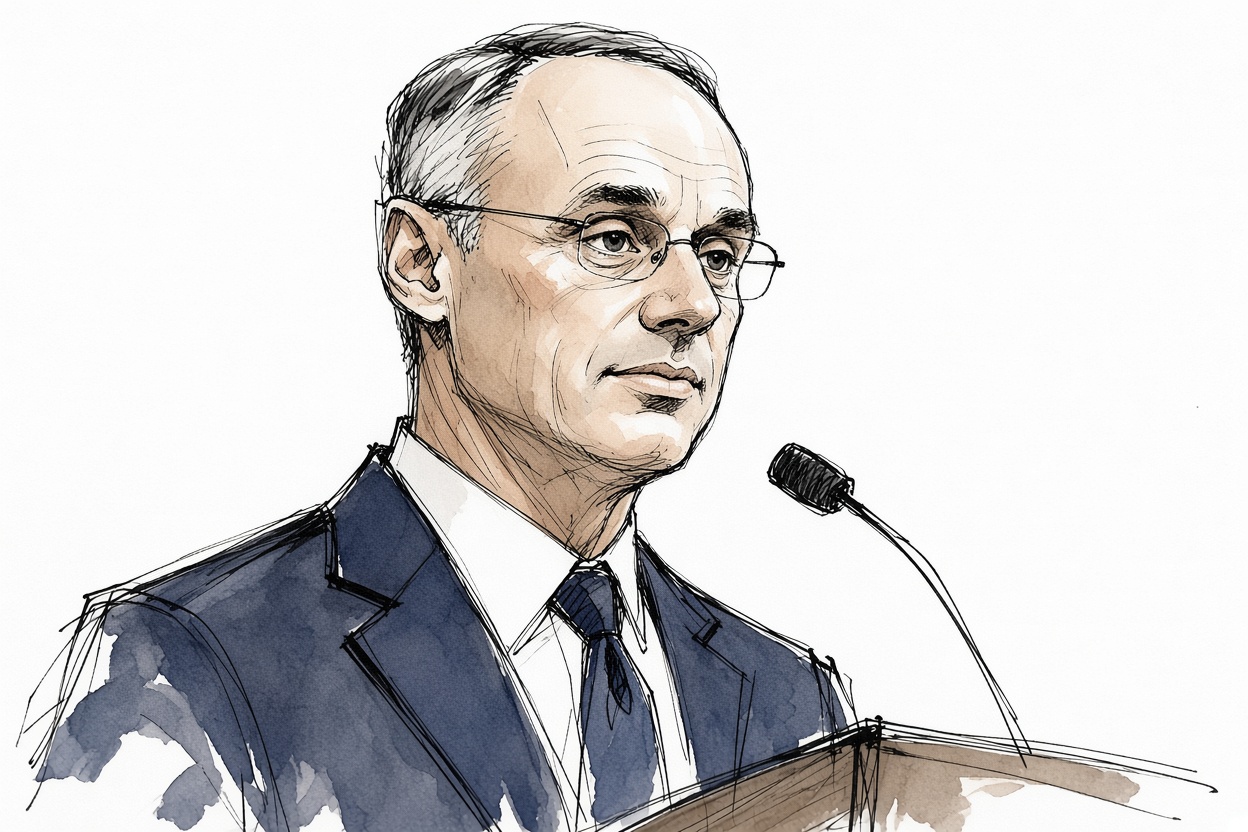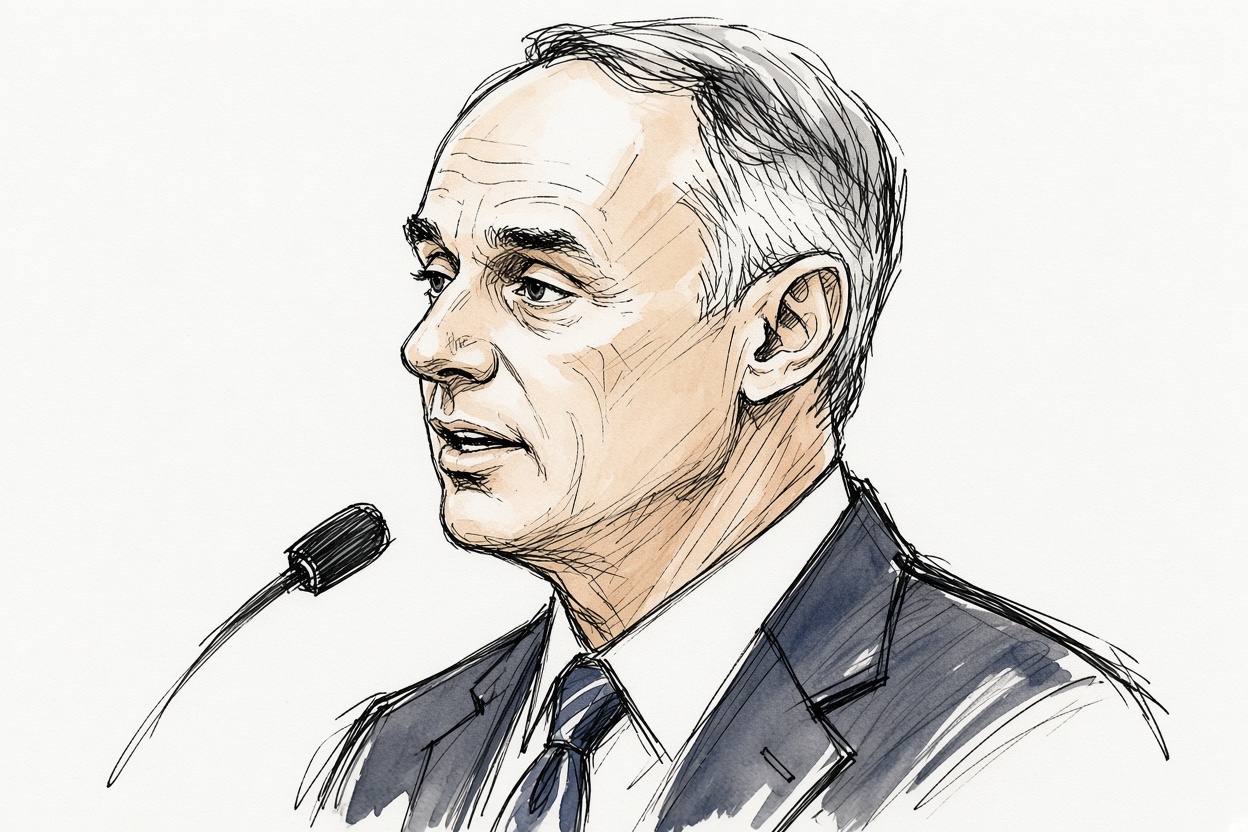
Both sides are posturing, but only one of them owns the lockout that's coming. When Rob Manfred stood up at the owners meetings in New York on November 18 and declared, less than two weeks before the deal expires, the one issue he will never move on, he chose the work stoppage. Everything since has been about who gets blamed for it.
What he said, in full: "But there's one thing that I will not compromise [on], and that's the issue that we're hearing from the vast majority of our fans: They want a salary cap and floor, and on that we will not compromise." He added that he can't "imagine the owners ratifying a deal that does not include a cap and floor."
The collective bargaining agreement expires at 11:59 p.m. ET on December 1. No lockout has been declared yet, but owners are expected to impose one the next day, and neither side has shown any interest in extending the current deal to buy time. If it happens, it'll be the sport's 10th work stoppage since 1972.
The fans as a human shield
Manfred wants you to believe he's doing this for you. He argued that 70% of fans support a cap and floor, and there's a Morning Consult poll from November 2025 showing 79 percent of avid fans and 69 percent of casual fans backing a salary cap system. Fine. Those same fans also want baseball in April. Nobody in an owners' suite is citing a poll about that.
The competitive balance complaint is real. The Dodgers' local TV deal is worth well over $300 million a year, the biggest in the sport by a wide margin. But the league's own first counter proposed fully sharing local television revenue, which gives away where the owners think the real imbalance sits: between owners. Capping what players earn is a separate wish, and the owners have welded the two together on purpose.
Every gift comes stapled to the cap
The league points to its movement: free agency after five years of service instead of six (though only for players 30 and older), scrapping the qualifying offer (something the union itself asked for), and a higher minimum salary. On November 3 it pushed the cap's start back to 2028 and raised the numbers to a $258.2 million cap and a $180.2 million floor, up from the $245.3 million and $171.2 million it opened with in late May.
All of it arrives packaged with the cap. Take the cap, get the goodies. Refuse the cap, and you're the unreasonable one. A side that builds the table that way has decided the ending before anyone sits down.
Then there's the line Manfred probably thought helped him: "In the last round of bargaining, we never proposed a cap and floor, and yet we came within inches of losing games." He's telling you the last fight nearly cost games without a cap on the table, and this time he put one there and called it non-negotiable. That's the commissioner describing the fire and handing you the match.
The union has earned some of the eye-rolls
The MLBPA answered within about an hour through interim executive director Bruce Meyer, who took over in February after Tony Clark's departure: "There can be no clearer example of the league's lack of seriousness than their insistence that they will not negotiate over the economics outside of a radical change to the system that would dramatically reduce overall player compensation for all categories of players and strip fundamental rights from players like the ability to have truly guaranteed contracts."
That's a good line, written like a press release. Back in June, Meyer called the cap "a form of institutionalized collusion." After the November 3 proposal, the union said owners want a system "designed to line their pockets and increase their franchise values." Manfred's counterpunch, that the union has "engaged in a lot of rhetoric" and that, as he put it, "What the MLBPA has not done is made any meaningful effort to move towards us," lands, because the union's answer to the cap has mostly been the word no, said louder each month.
The best case for the owners is the money. The league's spokesman, Glen Caplin, says the proposal shares baseball revenue with players 50-50 "like the other leagues." Meanwhile the union's loss estimate has climbed from over half a billion dollars, had the cap been in place in 2026, to more than $1 billion over the life of the proposal.
But the 50-50 split means nothing until both sides agree on what counts as revenue, which nobody has settled in public. The union's number grew because the proposal stretched across more years, reflecting the deal's full timeline rather than a single season. Both sides are selling their own math, and only one of them belongs to the people who'd lock the doors.
Who pulls the trigger
A union refusing a cap is the most predictable thing in American sports. It has said so for decades and it said so again in May. A lockout is an owner's decision. The players can't lock themselves out. The only people who can stop December 2 from happening are the 30 owners Manfred speaks for, and he went in front of microphones to tell everyone they won't.
If baseball loses games in 2027, put Rob Manfred's name on it. He told you on November 18 which one he'd pick.