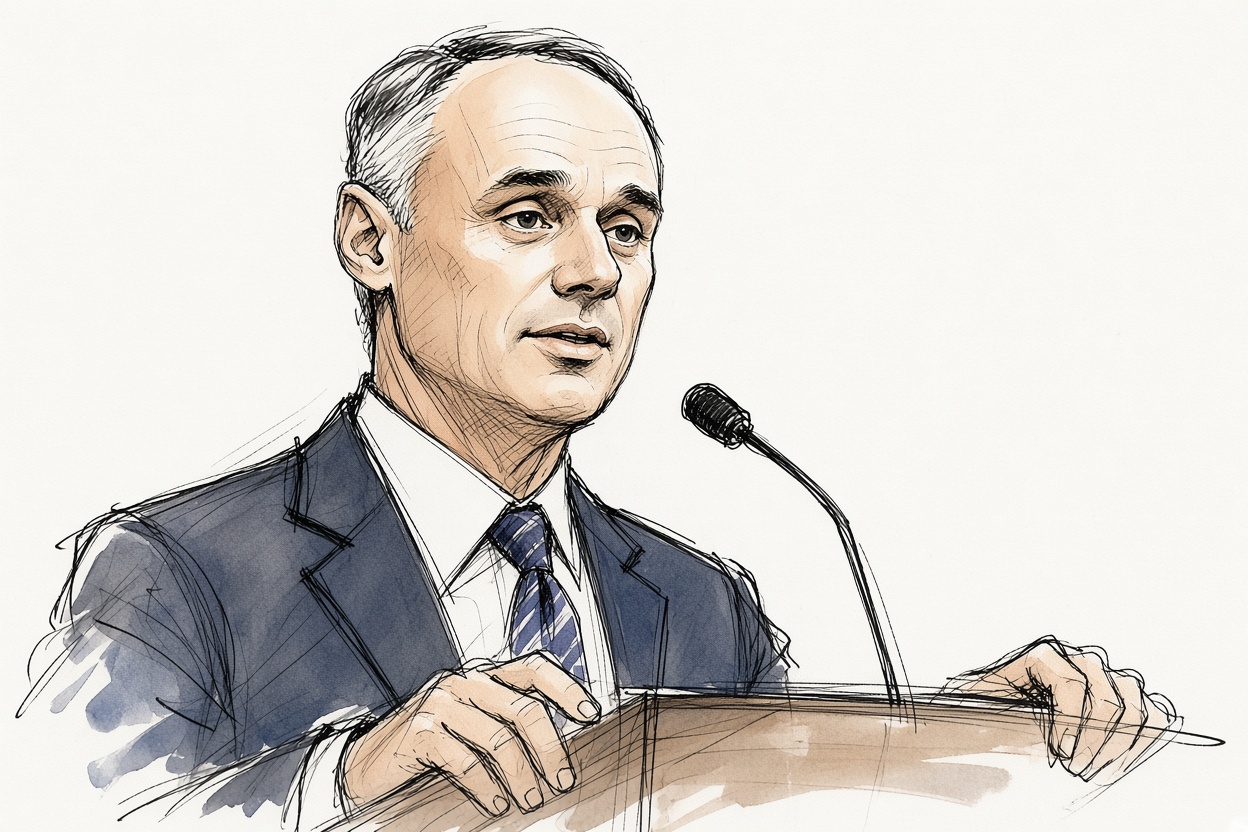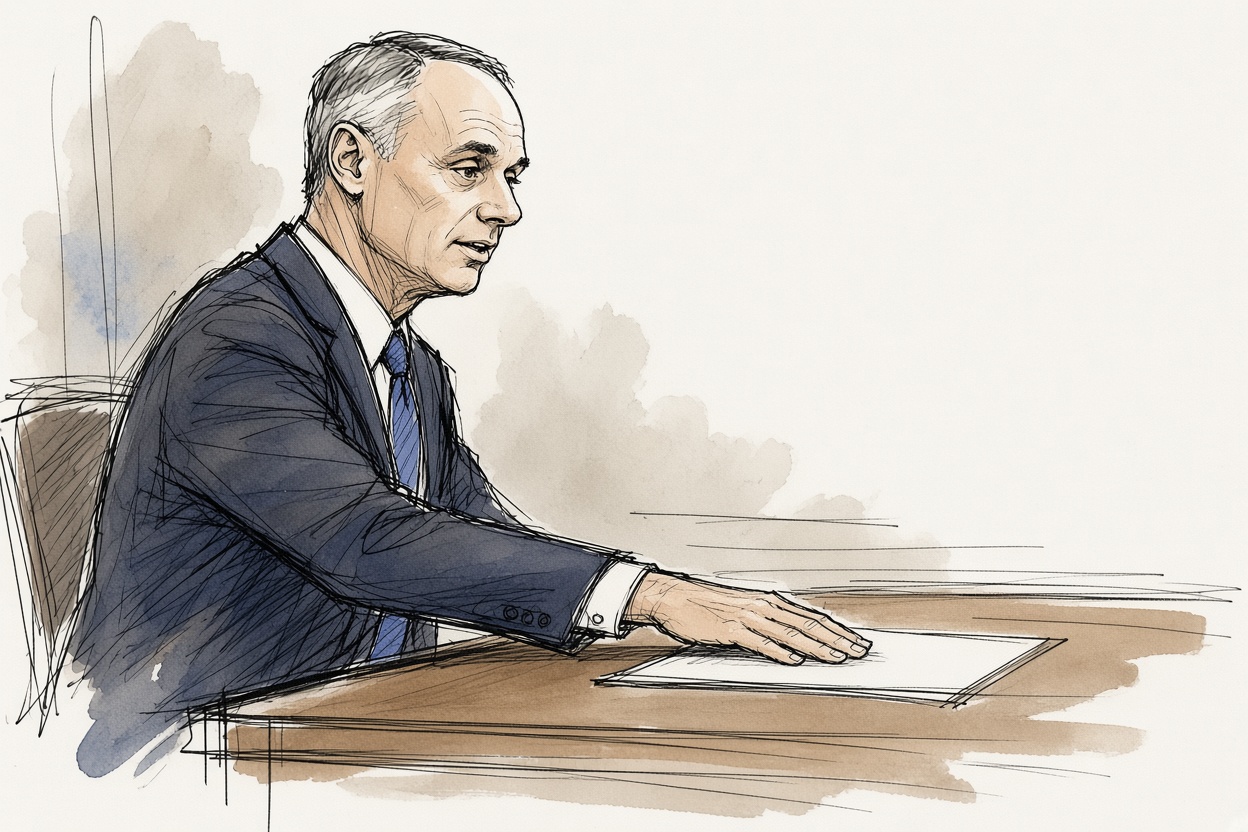
No. The MLBPA should hand back MLB's $1 million minimum and keep refusing the salary cap stapled to it. Rob Manfred and the owners priced this raise to buy a ceiling on every contract in the sport, and the union would be foolish to sell.
What MLB actually put on the table
MLB had been selling a $1 million minimum for weeks. It wasn't one. In the proposal it sent the union on November 23, the number finally became real, for players with at least two years of service. Everyone below that line gets $900,000 in 2027, up from $780,000. Those younger players can reach $1 million through $100,000 from a pre-arbitration bonus pool, but only if they bank a full year of big-league service that season.
But look at who the full $1 million actually reaches. Players hit arbitration at three years. The top 22% of the two-to-three-year group already qualify as Super Twos. So the headline figure applies to 78% of a single service class. That's the group MLB put on the billboard.
MLB's own release calls the $220,000 jump the largest single-season minimum increase in baseball history. It also says 57% of players on 2026 Opening Day 40-man rosters, 715 players, would have benefited. Lovely numbers. Every one of them is conditioned on a cap.
The union's Bruce Meyer put it plainly: "The league's proposals today don't add a single dollar in overall player compensation as compared to prior proposals, and once again are expressly conditioned on accepting their salary cap and other anti-player restrictions."
MLB is moving money around the room and asking the players to say thank you.
The bill comes due at the top
In exchange, the owners want something much bigger. MLB has also proposed limiting the length and pay of individual contracts. For deals starting in 2027, the longest contract a free agent could sign with a new team would be five years, with a max total projected value of $202 million.
Tarik Skubal, a two-time Cy Young winner, just agreed to nine years and $450 million, the richest contract for a pitcher in baseball history and the first $50 million-a-year pitcher. Under a cap with a max, his average annual value would top out at $42.4 million, a 15% haircut. The free market said he was worth more. The owners' system says he isn't, and Meyer just told you none of that trimmed money comes back to the players as a group.
The trade is simple. The players at the bottom get a raise for one negotiation. The players at the top get a lid for every negotiation after it.
The best case for taking it
The strongest argument for the deal is real: a higher minimum plus a salary floor helps the journeymen and fringe roster guys more than anyone, and those are the players who'd feel a lockout first. They don't have a $450 million contract cushioning them.
That's exactly why this offer is built the way it is. MLB aimed the sweetener at the most vulnerable members of the union so they'd be the ones arguing with the stars in the meeting room. A raise for the bottom of the roster is worth having. It's worth nothing if the price is a permanent cap that every one of those fringe players eventually bumps into the day they finally earn a real contract. The guy making the minimum today is the guy who'd get squeezed by a $202 million max later.
The pieces actually worth wanting don't need a cap at all. MLB has offered free agency after five years instead of six. As of November 23, owners also offered a yearly, centrally funded $500,000 signing bonus for one player per team and an end to the qualifying offer and draft pick compensation. Earlier free agency and killing the qualifying offer would be real wins. The union should demand them on their own and laugh at the idea that they cost a ceiling.
Who's responsible
The revenue-sharing fight shows who's stalling. Owners offered to split local media revenue equally among the 30 teams for the first time, but only inside a cap system. The union answered the same day by proposing that teams share all media revenue equally without a cap. That was the smartest move the players have made in this cycle. Revenue sharing is a deal between owners. Making the players swallow a cap so the rich clubs will share their TV money with the poor ones is the owners' problem dumped on the union.
Players have vowed never to accept a cap. Manfred has said owners will only agree to a deal that includes one. With an expected lockout on Dec. 1, as of November 23 the two sides are far apart and nothing is settled. Both positions are fixed. Only one side keeps offering sweeteners and calling it movement.
If baseball goes dark in December, the owners chose it. They decided a ceiling on player pay mattered more than a season, and this $1 million minimum is their attempt to get the cheapest players in the sport to sign off on it. The union is right to keep saying no.