Baseball can lose an entire 2027 season to this fight. The threat is real, and the owners own it. That's the honest answer to the question everyone's arguing about right now. The clearest sign of that: executives inside the sport are already behaving like it could happen.
Jeff Passan laid it out plainly: "There are owners that believe there won't be a single game next season, so they're telling their GMs to price that into their trade deliberations." It's front offices doing the worrying here. They're being told to game-plan around a year with zero games. When organizations start hedging against a specific outcome months out, that outcome has become real enough to plan for.
As of November 16, 2026, the current CBA expires at 11:59 p.m. ET on December 1. No new deal is close, and no lockout has been declared yet, though one is widely expected once the clock runs out. Nothing has actually happened yet. Anyone telling you otherwise, in either direction, is guessing.
This fight is different from the last one because of what's actually being fought over. In 2022, the dispute was the luxury tax, and the league canceled the first two series of the season before a deal landed and those games were made up. Luxury-tax fights get solved at the brink. This one is about a hard salary cap, something MLB has never had, and the union has refused one in negotiation after negotiation for decades. MLB's first formal proposal in May 2026 set a hard cap of $245.3 million and a hard floor of $171.2 million. The league later floated a cap of $258.2 million and a floor of $180.2 million to begin in 2028, bundled with a 50-50 revenue split. The union's answer has been no, and it will keep being no, because a cap is the one concession players have treated as a line in the concrete for a generation.
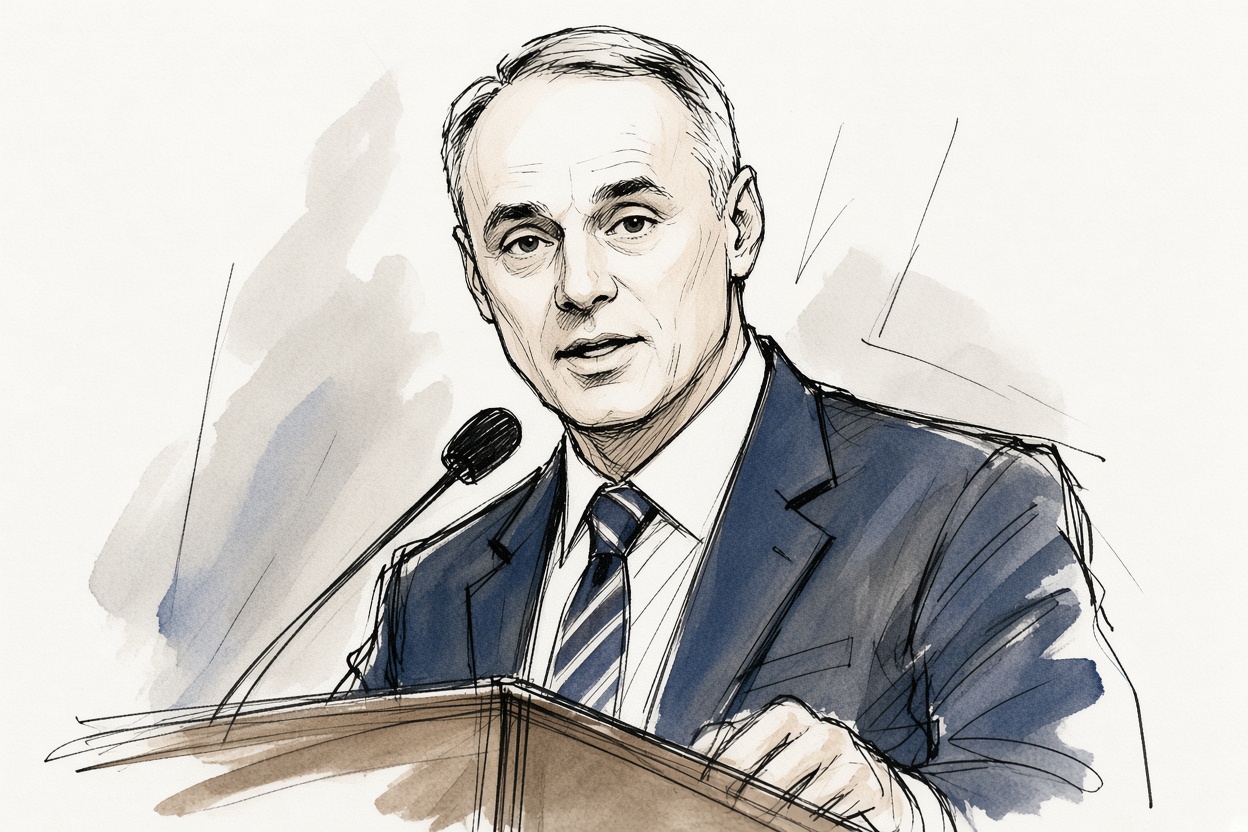
The owners introduced that fight. Baseball ran for over a century without a cap. Rob Manfred's case is that the current system creates "a system of haves and have-nots among the teams," and that a floor would force the cheap owners to actually spend. Fine. But you don't get to pick a fight that history says erases whole seasons and then act stunned when a whole season is on the table.
Look at the two precedents that actually involved a cap. The NHL canceled its entire 2004-05 season over a cap-and-floor standoff, the first time a North American major league ever lost a full year, and the deal that ended it installed a cap, a floor, and a players' share tied to revenue. The owners got exactly what they'd shut the sport down to get. Baseball's own 1994 strike wiped out the postseason and the World Series for the first time since 1904, attendance didn't climb back until 2000, and the wreckage set in motion the chain of events that ended the Expos in Montreal. Cap-shaped fights do this, and everyone involved knows it.
Passan is describing the conditions for a lost season, though it's fair to note a nasty lockout is more likely to cost some April games than wipe out the whole year. A full wipeout is still the worst case, just not the likely one anymore. But that worst case is plausible enough that teams are already budgeting for it, and that's far from overblown.
There's also a cold logic to why the owners might be willing to grind. Their national media rights all expire after the 2028 season. Walk into that negotiation with a cap already locked in and the whole revenue math changes in their favor. That's the prize, and it's why they'll push harder than fans want to believe.
So spare me the idea that this is manufactured panic. The risk is real and rising, and it's entirely self-inflicted by the people who chose to make a cap the hill. If 2027 goes dark, nobody gets to say they didn't see it coming.