Yes, it's a backdoor super league. Anyone telling you a cross-conference "scheduling agreement" between the SEC and the Big Ten is just about giving fans better Saturdays is doing public relations.
Joel Klatt told KTCK-FM 96.7 The Ticket in Dallas: "The next thing that will happen almost immediately is we're going to get scheduling agreements between the SEC and the Big Ten." He said those agreements are already "in place once this thing expands officially," and that they'd cover "top-end matchups, mid-tier matchups, low-end matchups," expanding the valuable non-conference inventory "far surpassing what we have now." Klatt has been previewing this for months. He's a well-sourced guy repeating what league people keep telling him, so don't aim anything at him.
Aim it at the mechanism. The 24-team CFP isn't law yet. As of late October, it's a handshake agreement with ESPN, pending board sign-off, and the start date hasn't been nailed down. But the two conferences that already wield outsized control over the Playoff's format are now planning to wire their schedules to each other the instant the thing they designed to reward themselves gets bigger. Expand the event. Then quietly agree to spend your best non-conference windows on each other. That's one move in two parts.
Think about what a locked-in SEC-Big Ten slate actually does to everyone else. If the two deepest leagues reserve their marquee non-conference dates for one another, the ACC and Big 12 lose the one thing a selection committee needs to rank them: head-to-head evidence against the sport's best. You can't prove you belong in the field if the teams at the top won't play you. Fewer cross-conference games means fewer data points, which means a thinner case every single autumn. The playoff access narrows on its own, no vote required.
Some of these games would be great theater. Nebraska against Oklahoma: fresh blood, big crowds. But two entire conferences that help run this sport are the ones left standing outside the gate when the invitations go out.
The ACC and Big 12 aren't dropping dead tomorrow, and the rivalry-game panic is overcooked. Houston opens the 2027 season against LSU at NRG Stadium. Iowa and Iowa State extended the Cy-Hawk series through 2031. Clemson still has South Carolina on the November slate, and Florida's game with Florida State isn't going anywhere, head coach Billy Napier said as much. Cross-conference football still happens outside this club. It's just losing relevance.
Look at Kansas and Missouri. They finally revived the Border War and played again this September, Missouri winning 38-21. The next scheduled meeting after that isn't until 2031. That's what scheduling scarcity looks like for a middle-brand program even when the game is wanted: a marquee date every half-decade. Now imagine the two richest leagues deciding your opponents are a lower priority than each other, year after year.
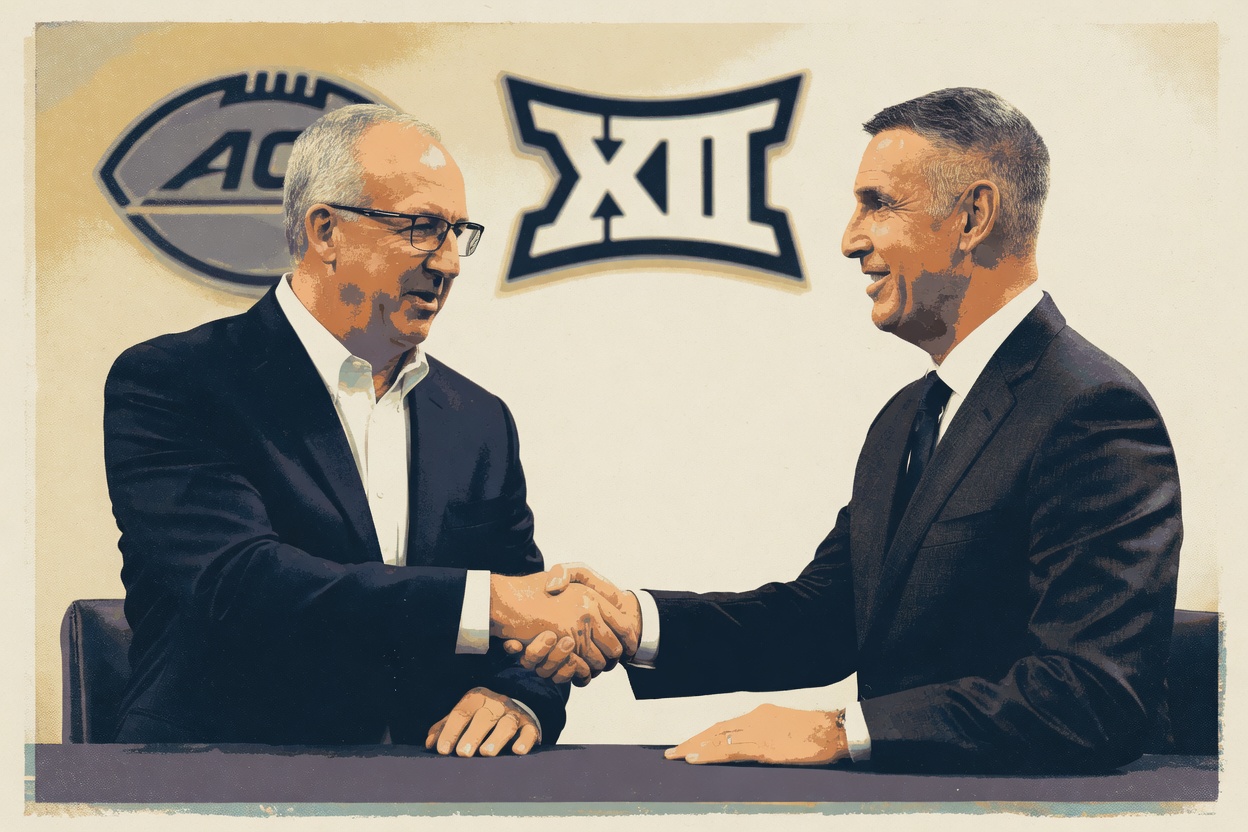
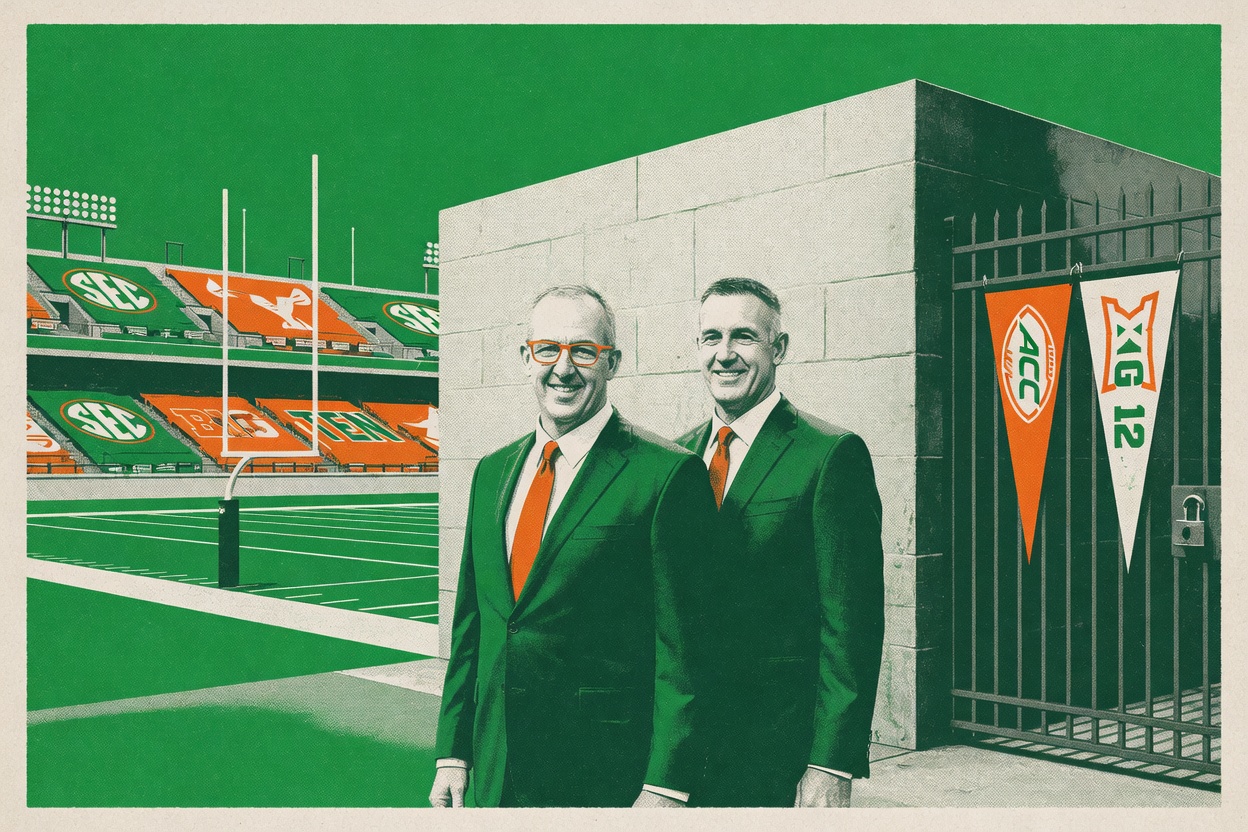
This is Greg Sankey and Tony Petitti. They run the two leagues steering the expansion, and they're the ones behind the pact riding on its back. Two men who already hold the most leverage in the sport are using it to grab more, then selling it to fans as a gift. The ACC and the Big 12 can watch the walls go up or they can start screaming now. Either way, the people laying the bricks already know what they're building.