The SEC-Big Ten scheduling agreement is step one toward squeezing the ACC and Big 12 out. What's already on the table makes the case plainly.
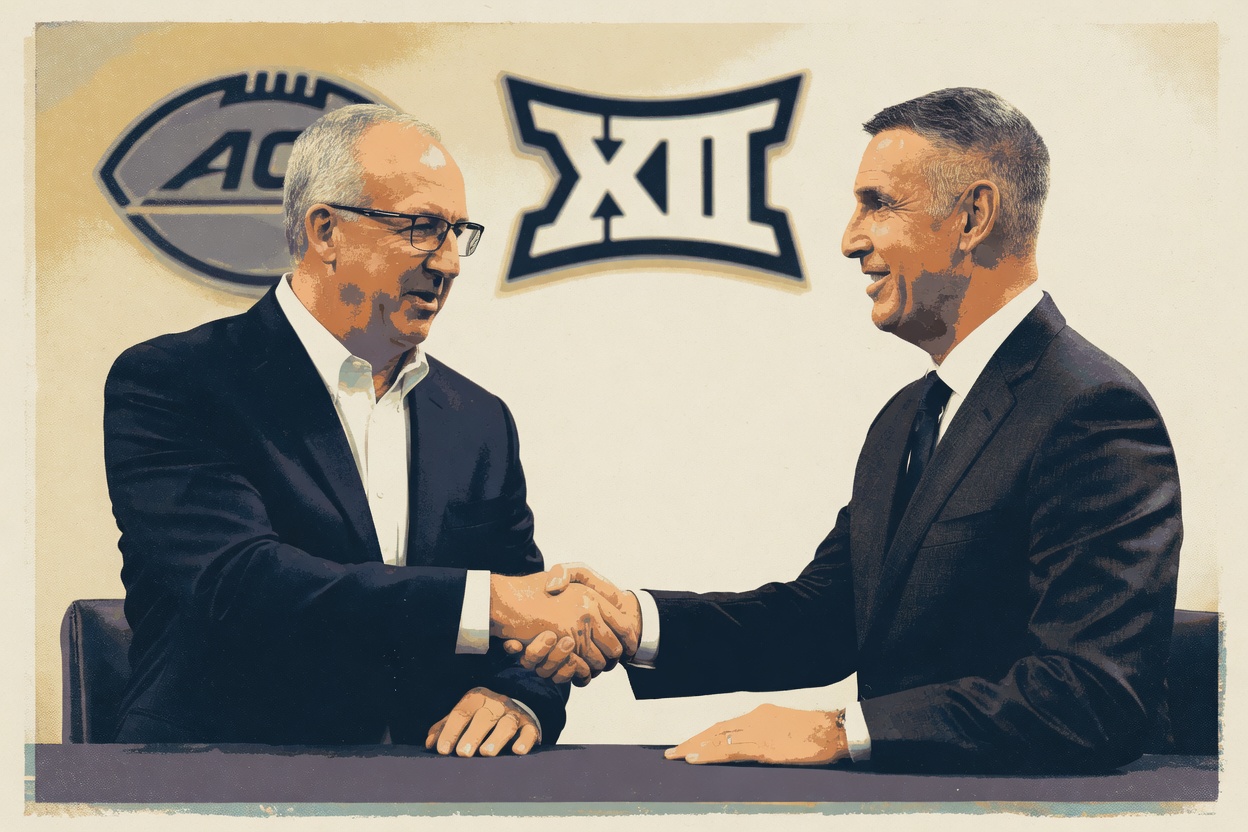
Start with who actually decides anything. The playoff is reportedly nearing a deal with ESPN to expand to 24 teams in 2027, and the two conferences holding authority over the format are the Big Ten and the SEC. Nobody else gets a vote that matters. The ACC and Big 12 can send representatives and letters, Jim Phillips can stand at a microphone and voice his worry, and none of it changes the math. Two leagues control the format and the television money. Everyone else is furniture.
Joel Klatt said this week on 96.7 The Ticket in Dallas that he expects the two leagues to pair off the second the deal is official: "The next thing that will happen almost immediately is we're going to get scheduling agreements between the SEC and the Big Ten," he said, with the goal of "far surpassing what we have now." The ink isn't even dry on expansion, and the richest two conferences are already planning to fill their calendars with each other.
The mechanism is simple. Both leagues now play nine conference games. The emerging standard requires power programs to play ten games against power opponents to make the playoff, meaning one non-conference game against the ACC, Big Ten, Big 12 or SEC. The rule only specifies a Power Four opponent, leaving each league free to pick the other every time. Klatt's forecast is obvious: the two leagues will spend that slot on each other, because that's where the money and the ratings are. When they do, they stop handing marquee dates to the ACC and Big 12. The best inventory stays in-house.
Now the money, which is the whole engine. Sources peg the SEC and Big Ten at somewhere between a quarter and 30 percent of playoff revenue each. The ACC and Big 12 land in the 15-to-20 range. Everybody else fights over single digits, and Notre Dame sits near one percent. That's a controlling stake.
The Big Ten is the more culpable party, and it isn't close. Go back to 2021, when Texas and Oklahoma bolted for the SEC and the panicked response was the "Alliance" between the ACC, Big Ten and Pac-12, announced with the word "historic" attached to it. It had no teeth. Its own architects admitted a formal scheduling component was going to be difficult, the Pac-12 said it would only move if the Big Ten moved, the Big Ten didn't commit, and the thing evaporated. The Pac-12 itself later collapsed. The last time the have-nots tried to band together against a power grab, they produced a press release and a funeral.
The Big Ten took the lesson: solidarity means nothing once a check is involved, and you can always find a bigger partner.
Through this past year the Big Ten dragged the format from the SEC's preferred 16 all the way up to 24, at one point floating 24-to-28, parking itself on the number that maximizes its own access. The SEC wanted 16 and folded. Columnists in SEC country are already calling that a capitulation, and they're right. Greg Sankey signed off on it, so he owns it too. But the fingerprints on the whole decade-long project, expand the field, pile on at-large bids, hollow out the value of a conference title, then quietly wire up bespoke schedules with your one real rival, trace back to the Big Ten.
A fairer answer exists. A rotating round-robin that puts all four power leagues in the same scheduling pool would protect access without crowning two kings. It won't happen: the two leagues with the leverage have no reason to share it. This is about control.
A caveat: nobody has reported an actual secession, a new legal entity, or an SEC-Big Ten governance body sitting outside the current playoff committee. A literal super league tomorrow is speculation, and the expansion deal itself is still "nearing" and "pending final approval"; nothing is signed yet. Treat the breakaway-this-week talk as what it is: a guess.
This was never going to look like a formal secession with a banner and a trumpet. It's a slow squeeze, already happening. The revenue split and the scheduling leverage point the same direction. The ACC and Big 12 are being reminded they were never really in the room.