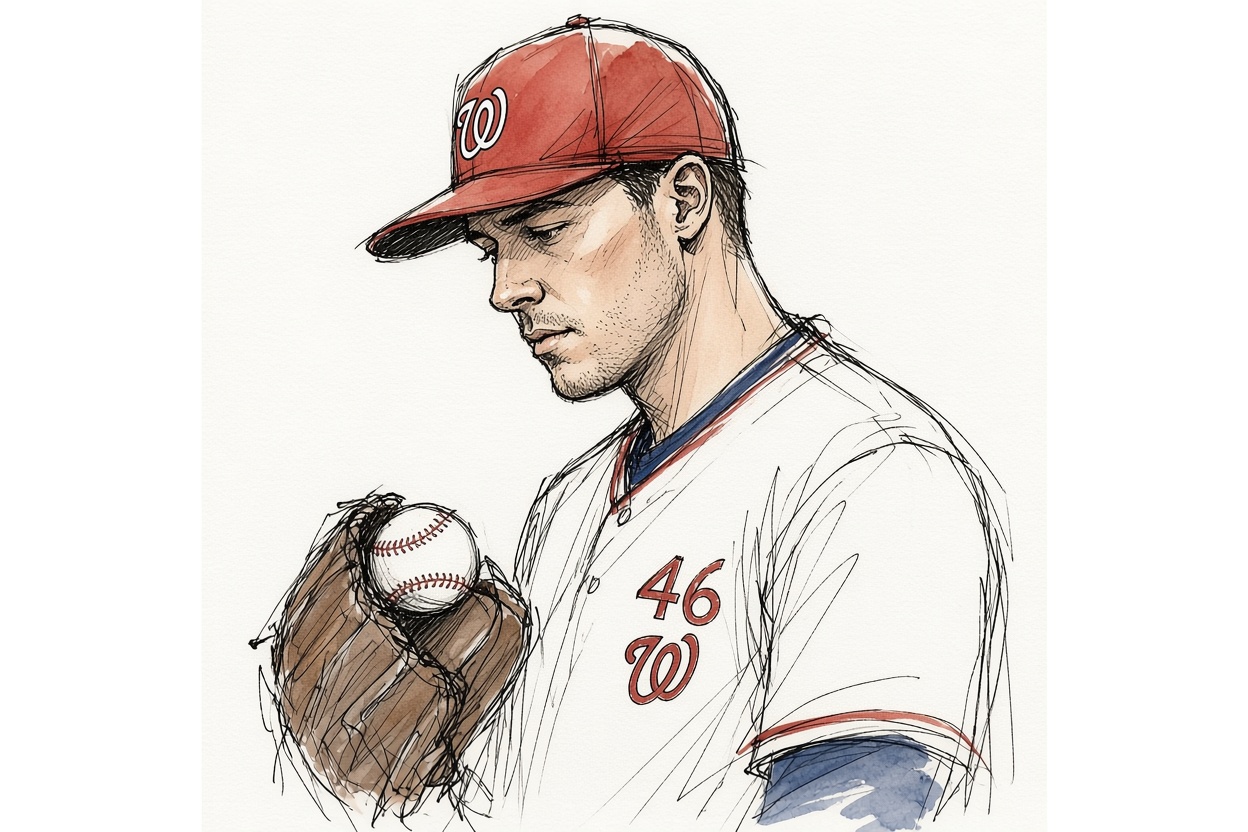

Tarik Skubal's nine-year, $450 million deal is going to work. The pitcher is the safest part of this investment. If it turns into a cautionary tale, the blame will belong to the executives who signed him and then failed to build a team worth his time.
Line up the biggest contracts in baseball history: Juan Soto's $765 million with the Mets, Shohei Ohtani's $700 million with the Dodgers, Vladimir Guerrero Jr.'s $500 million with Toronto, Skubal's $450 million and Mike Trout's $426.5 million with the Angels. Skubal's is the fourth-largest ever and the richest a pitcher has ever signed, at $50 million a year, with no opt-outs and no-trade protection. As of November 24, the two-time Cy Young winner's deal is agreed and waiting on the formal announcement.
One success, one wreck, two still loading
Ohtani is the gold standard, and he set it fast. In the first two years of his 10-year deal, the Dodgers won the World Series in 2024 and again in 2025, and he took home MVP awards in both seasons. Nobody needs a spreadsheet to grade that.
Calling everything else on the list a bust is lazy. Soto put up 6.2 bWAR in his first Mets season, right in line with his career rate of 6.1 WAR per 162 games. That's the player the Mets paid for. Guerrero's extension covers 2026 through 2039, so he's one season into 14. Anyone calling that deal a hit or a miss already is guessing.
That leaves one genuine wreck, and it's Trout's.
The Angels did that
The Angels had Trout and Ohtani in the same clubhouse for six years and never played a single postseason game with both of them on the roster. In the games both men played over those six years, the Angels went 194-211. The franchise's last playoff trip came in 2014, before Ohtani ever threw a pitch in Anaheim.
Think about those numbers next to Ohtani's last two Octobers. Same player, different employer, two rings in his first two years there. The Angels' ownership and front office took two of the best players alive and surrounded them with a losing team year after year. That's organizational failure, and it's the single most embarrassing stretch of roster-building in the sport.
Trout is 35 now, with four years and $141.8 million left on his deal, running through his age-38 season in 2030. His body has made those late years a grind. Every long contract has ugly late years. What makes Trout's hurt is that the Angels have nothing from the great ones to show for it.
Yes, pitchers break
The loudest objection to Skubal is the obvious one: nine years is a long time to bet on a pitcher's arm, and some kind of arm trouble somewhere in that window is close to a sure thing. Correct. Skubal will be 38 for the entire final year of this deal, and 2035 might be a mess. Everyone who signed off on this contract knows that. They aren't paying $450 million for 2035. They're paying for the next handful of seasons, when Skubal is the best pitcher on the planet and every fifth day is close to a guaranteed win.
That's where this deal lives or dies. If the front office pairs him with a real lineup and a bullpen that doesn't torch his starts, this becomes the next Ohtani story. If it pays the ace and then goes cheap everywhere else, it becomes the next Trout story, and Skubal will spend his prime throwing gems for a team that goes home in September.
There's an extra clock running, too. The collective bargaining agreement expires in a little more than a week as of this writing, and the league is pushing for a salary cap and limits on free-agent contracts. Spending room around a $50 million ace could get tighter fast, and the front office has zero excuse for building slowly.
Skubal will hold up his end. If this contract ends up next to Trout's on the list of regrets, it'll be because the people who wrote the check got comfortable, and they'll deserve every ounce of the abuse that follows.