The umpires got this right, and the outcome's still a disgrace. Both things are true, and if you only hold one of them, you're arguing with the wrong people.
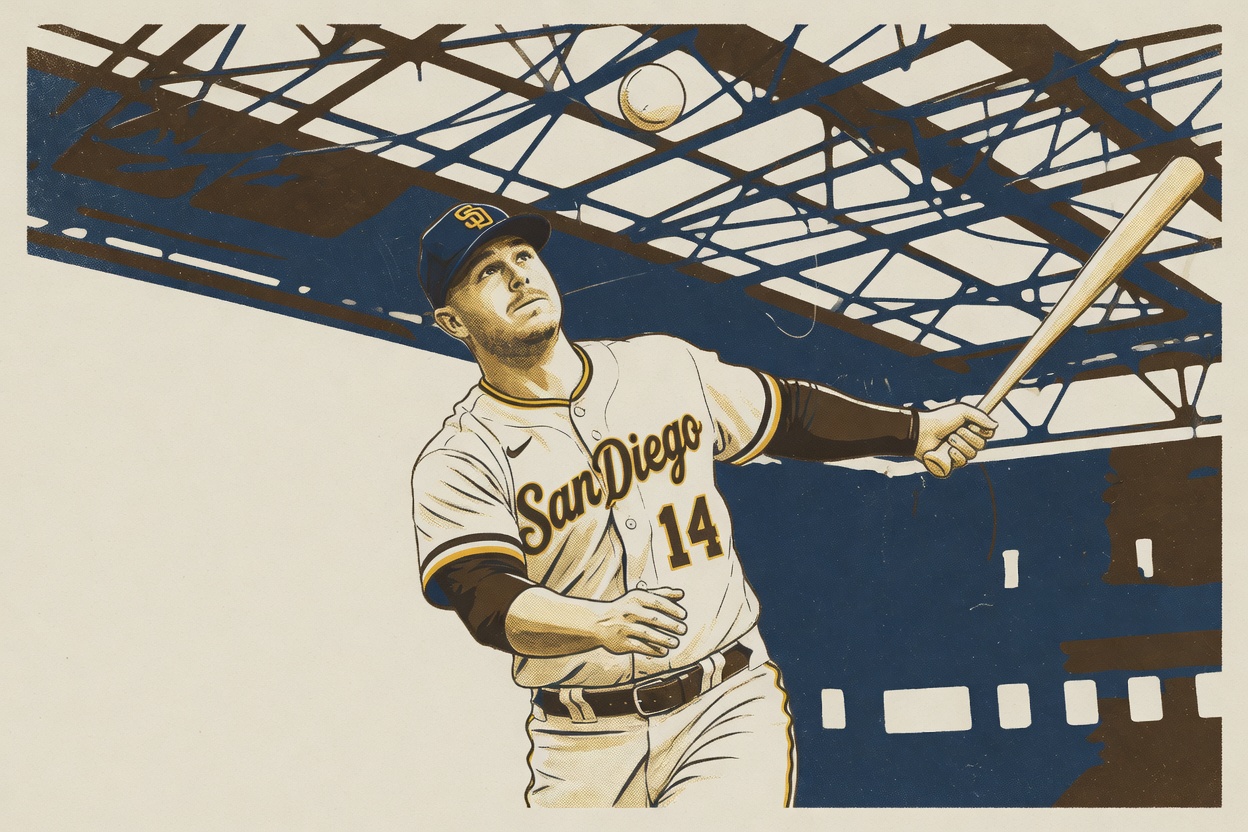
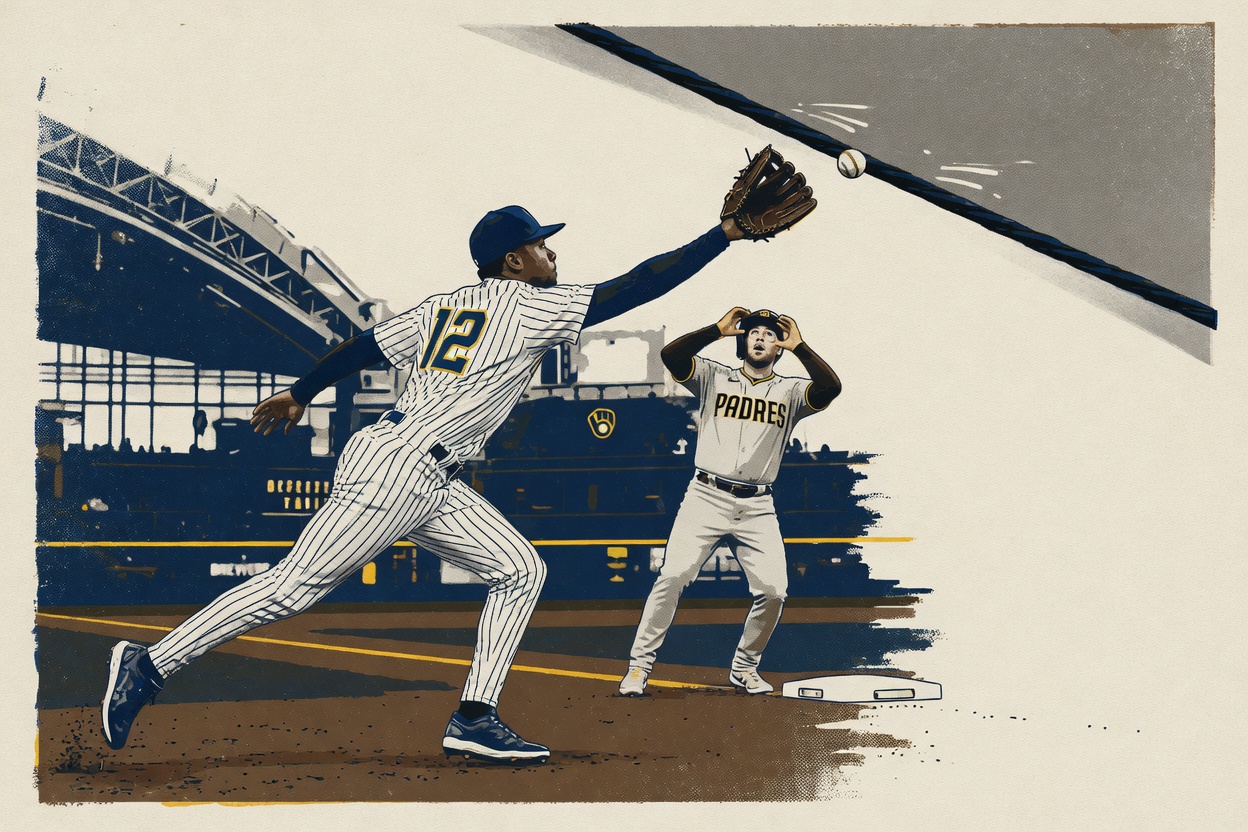
Brewers up 3-2 in the top of the ninth, one out, Dustin Harris on first. Ty France turns around a 100 mph Trevor Megill fastball and launches it to left. The ball clips a roof cable, drops onto the warning track, and Jackson Chourio catches it 325 feet from home plate. Padres manager Craig Stammen challenged, the ball was confirmed to have struck the roof over fair territory, and France was out. Milwaukee held on to win 3-2 and lead the best-of-five NLDS 1-0.
The ground rule at American Family Field is clear. A batted ball that hits the roof, truss or cable over fair territory stays in play, and if a fielder catches it, the batter's out. Over foul territory, it's dead. So the only question on review was fair or foul, nothing else. The crew read the rule, watched the replay, and called it the way the text demands. Chourio made a heads-up play on a ball that changed direction in midair. The rule itself is the problem.
It lets a fixed piece of the building knock down a ball the hitter crushed, then hands the defense a free out for catching the deflection. A ceiling got an assist. In what universe is that baseball? A batted ball that strikes a permanent part of the stadium should be dead, or a do-over, anything but a gift to the pitcher. Letting the architecture record an out is the single dumbest possible resolution, and it's the one Milwaukee wrote into its own rulebook.
The home run robbery framing doesn't hold up, though. France's ball came off the bat at 105.3 mph with a 49-degree launch angle, a combination that clears the fence in exactly one major league park: Houston's. There's never been a home run at American Family Field with a launch angle above 46 degrees since Statcast started tracking in 2015. Pat Murphy, standing on the line, swears it was drifting foul anyway. France is just as sure it was staying fair: "It hit a wire, took a right and the guy caught it." Nobody will ever know, because a cable decided it. The real theft is that the ball never got the chance to finish its own flight.
Nobody rigged this, either. The rule was written by the franchise for its own home games, long before anyone imagined this ninth inning. The umpires weren't picking sides. The anger belongs on the rule. The crew just enforced it. You can follow a bad rule perfectly and still get an outcome that embarrasses the sport.
Two things need fixing before next October. MLB should kill the "in play, catch it for an out" language and make a roof-struck ball dead at minimum. And someone should explain how a ceiling got to audition for MVP in the first place.
A playoff game turned on a wire. Clean it up.