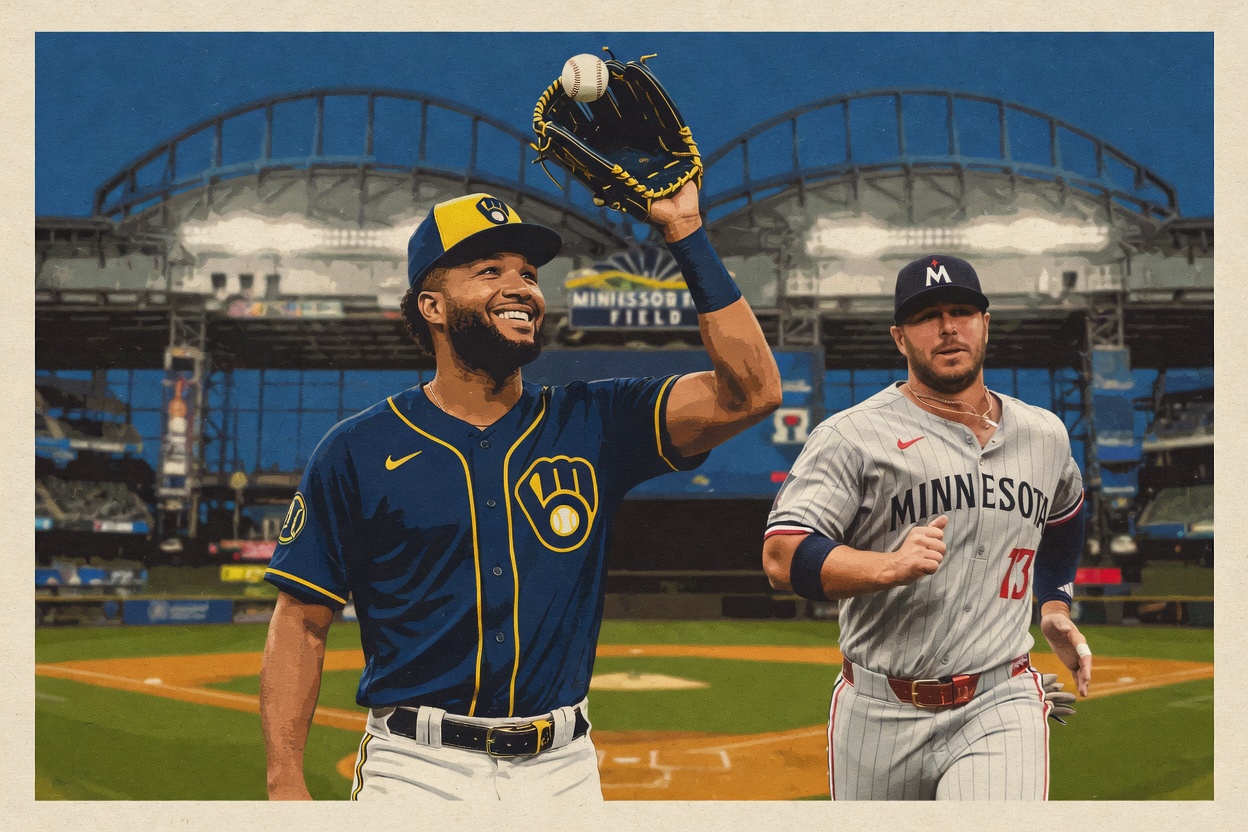
Stop calling it a robbery. The Brewers beat the Padres 3-2 in Game 1 of the NLDS on Saturday night because a ninth-inning fly ball off Ty France's bat struck a cable on the American Family Field roof in fair territory and dropped into Jackson Chourio's glove for an out. The umpires looked at it, the Padres challenged it, and the call held up. Every part of that process worked exactly the way it's supposed to.
The best evidence says that ball wasn't leaving the yard anyway. France crushed it, 105.3 mph off the bat, but at a 49-degree launch angle it was a towering pop fly, and it came down 325 feet from home plate even after clipping the roof. No home run at American Family Field has been hit above a 46-degree launch angle since tracking began in 2008. Statcast estimates it would have been a homer in exactly one major league park, Daikin Park in Houston. A ball hit at 105 mph and 49 degrees has never gone out anywhere in the Statcast era. It was a can-of-corn fly ball that happened to clip a cable on the way down.
The outrage is aimed at the wrong thing. France hit a fly ball to left that Chourio was camped under well before it ever touched the roof.
The rule did its job. The rule is still the problem.
Craig Stammen said it plainly after the game: "It's unlikely, but it happened. The rule is if they deem the ball to be fair and it comes down, you can catch it. If it hits off the roof foul, then it's a foul ball. They ruled that it hit the roof fair, and the outfielder caught it." That's the whole rule. A batted ball that hits the roof, a truss, or a cable over fair territory stays live, and if a fielder catches it, the batter is out. Over foul territory, it's a dead ball. San Diego challenged that the ball struck the roof in foul territory. Replay couldn't confirm that, so the out stood.
A playoff game shouldn't come down to whether a fly ball nicks a wire bolted to a ceiling. It feels like backyard rules, and it is unnatural: baseball under a roof is baseball with an extra wall nobody can see from the batter's box. The answer is to change the rule. The crew got this one right. Trevor Megill, who gave up the drive, admitted he had no idea what the ruling was until the home plate umpire walked over and explained it. If the closer who threw the pitch doesn't know the rule, the rule is broken.
France and Machado want a fix that would have hurt them
France leaned into the modern-metrics argument afterward. "You would think with all the technology and data that we have now, we'd be able to make a clear call on that," he said. "We've got exit velo. We've got projected distances." Manny Machado backed him up, pointing at the same idea: if the board can tell you a given exit velocity and launch angle combination is a homer in all 30 parks, there should be a better way to make this call.
It's a fine idea in the abstract. It also would have buried France on this specific swing. Run his ball through that machine and it doesn't clear the fence in Milwaukee, or in most of the league. The technology he's demanding would have confirmed the out. There is no current rule that requires umpires to judge whether a roof ball had the trajectory to be a home run, and France and Machado aren't citing one. They're asking for a brand-new standard, and on this ball, that standard says the same thing the roof did.
William Contreras, whose seventh-inning homer was the winning run, said he thought France's drive was gone. He had a good view and he was wrong, which is exactly why you don't legislate by eye test in the ninth inning of a playoff game. The ball looked like a home run off the bat the way a lot of 49-degree fly balls do, right up until gravity got involved.
MLB should rewrite how roofs interact with live balls. Asking a steel cable to arbitrate October is indefensible. But that's a reform for the offseason. On Saturday night, the only thing that robbed Ty France of a home run was Ty France's launch angle.