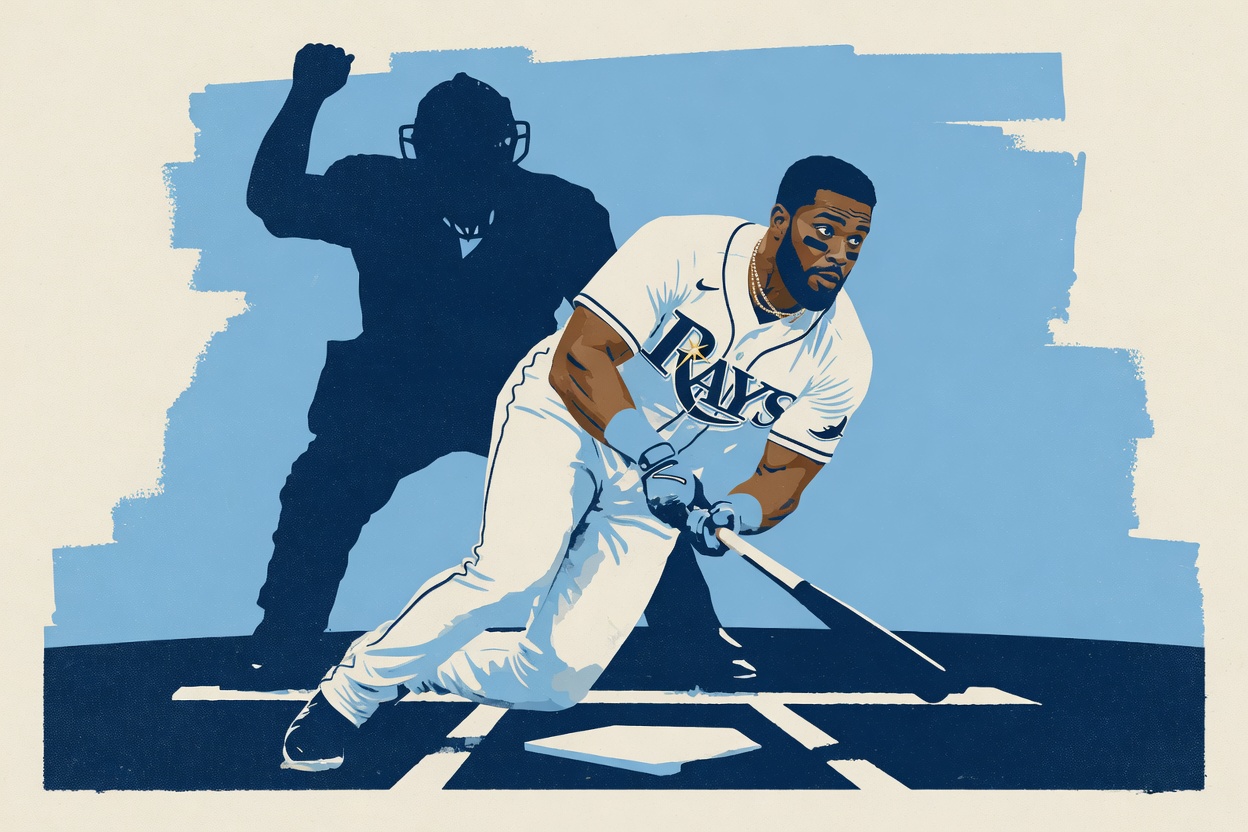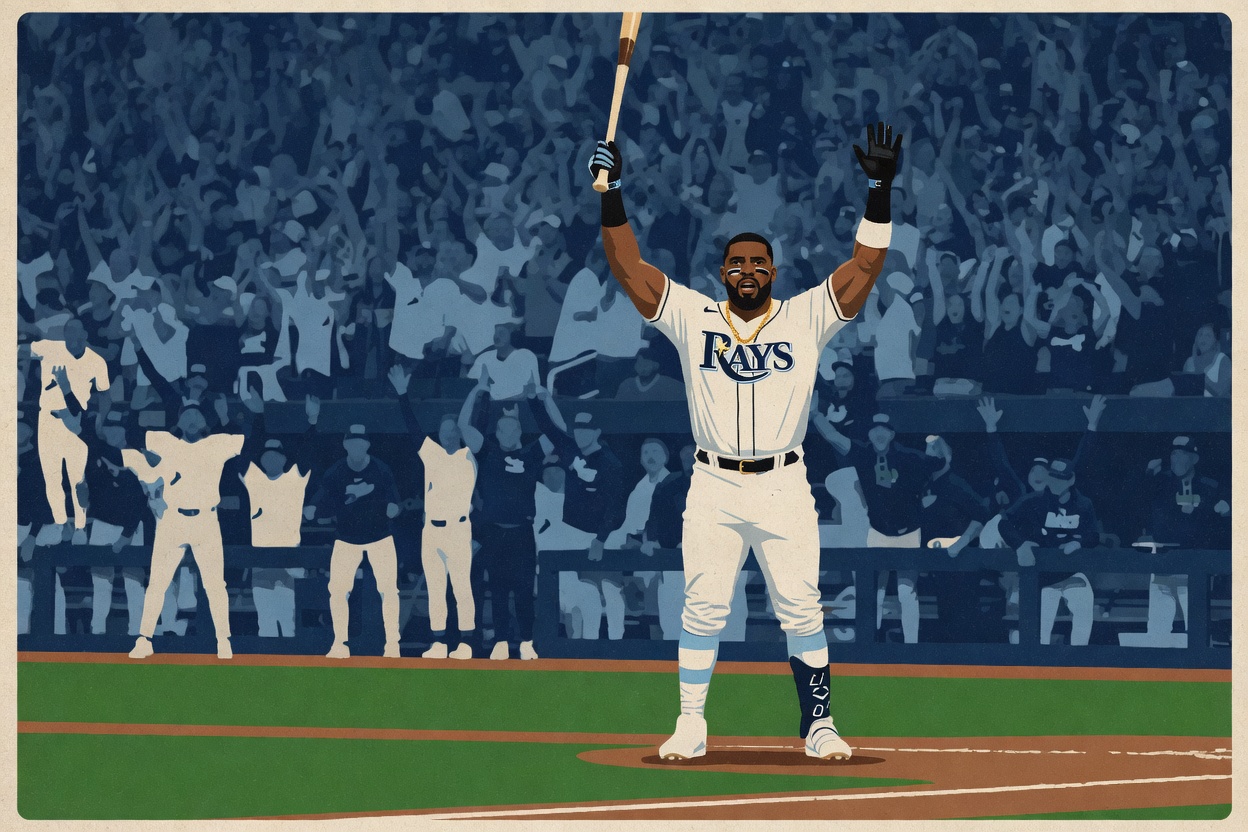
Everyone screaming about whether Yandy Díaz broke the plane is arguing over a rule that doesn't exist. There's no definition of a check swing anywhere in the MLB rulebook: no "breaking the wrists," no "barrel clearing the plate," no overhead-camera "plane" everyone keeps posting online. Fans and broadcasters invented those terms over the decades because they needed something that sounded like a standard. The actual legal test is whether the umpire believes the batter tried to hit the pitch. That's the entire rule.
So when Díaz checked his swing on a full-count curveball in the ninth inning of Game 2 on Saturday night at American Family Field, there was nothing to get right or wrong. Home plate umpire Jim Wolf didn't rule a swing. Brewers catcher William Contreras appealed to first base. James Hoye said he went. Díaz threw both arms up, the game ended 5-4, and Milwaukee took a 2-0 lead in a best-of-seven series that's nowhere close to settled.
The plane crowd and the "there's no rule, shut up" crowd keep missing that they're both right, and they cancel each other out. An overhead-angle clip can be read as Díaz going. It can also be read the other way, and the side angle is flat-out useless. The one place anyone has tried to build an objective test, the minor-league check-swing challenge that uses Hawk-Eye and a 45-degree bat threshold, points the opposite direction. People who ran this exact play against that standard concluded it probably wouldn't have been called a swing. So the "it obviously looked like a swing" crowd is overselling a replay that settled nothing.
 TB97-63

The real issue is that the ninth inning of a World Series game turned on a judgment call with no judgment criteria: one man's gut, in the biggest moment of the baseball calendar, with no document on earth he could have checked himself against.
That falls on MLB, and it's embarrassing. This is the same league that installed the automated ball-strike system in the majors this year. Balls and strikes, the most frequent judgment in the sport, now get a robot. The check swing, the single most argued human call in baseball, still runs on vibes handed down by word of mouth. The tech already exists. It's been running in the minors since the 2024 Arizona Fall League. Fox's Joe Davis said the quiet part on air: "We got ABS for the first time this year, getting the balls and strikes right; we need to get a system that can get [check-swings] right." He's right. A broadcaster had to say that live, in the middle of a collapse, because MLB still hasn't gotten around to fixing it.
Now the part Rays fans won't want to hear. You can be furious at the vacuum MLB created and still admit Tampa Bay didn't lose this game on one swing. The Rays jumped out 4-0 in the first inning and then went silent for eight, while Aaron Ashby kept rolling through a postseason in which he hadn't allowed a run across 15⅔ innings with 17 strikeouts. Díaz went 0 for 5 with three strikeouts on the night, a day after an 0-for-4 in Game 1 that also ended with him striking out and runners in scoring position. Sal Frelick tied it with his first home run in three months and Cooper Pratt singled Milwaukee ahead in the seventh. By the time the check swing came up, the Rays had already spent the lead that should have made all of this a footnote.
Even Díaz wouldn't carry the grudge. "In the moment, yeah, I disagreed, but the umpire said it was a swing and it is what it is," he said. His manager, Kevin Cash, hedged just as hard: "I didn't go look at it, but from my vantage point, it did look like that he swung." When the losing side can't commit to being robbed, you don't have a robbery.
What you have is a league that knows how to measure a swing and has the cameras pointed at the plate to do it, yet still leaves its biggest call of October to a shrug. The argument over whether Díaz went is unwinnable because MLB designed it that way. Fix the rule or stop acting surprised when it decides a World Series game.