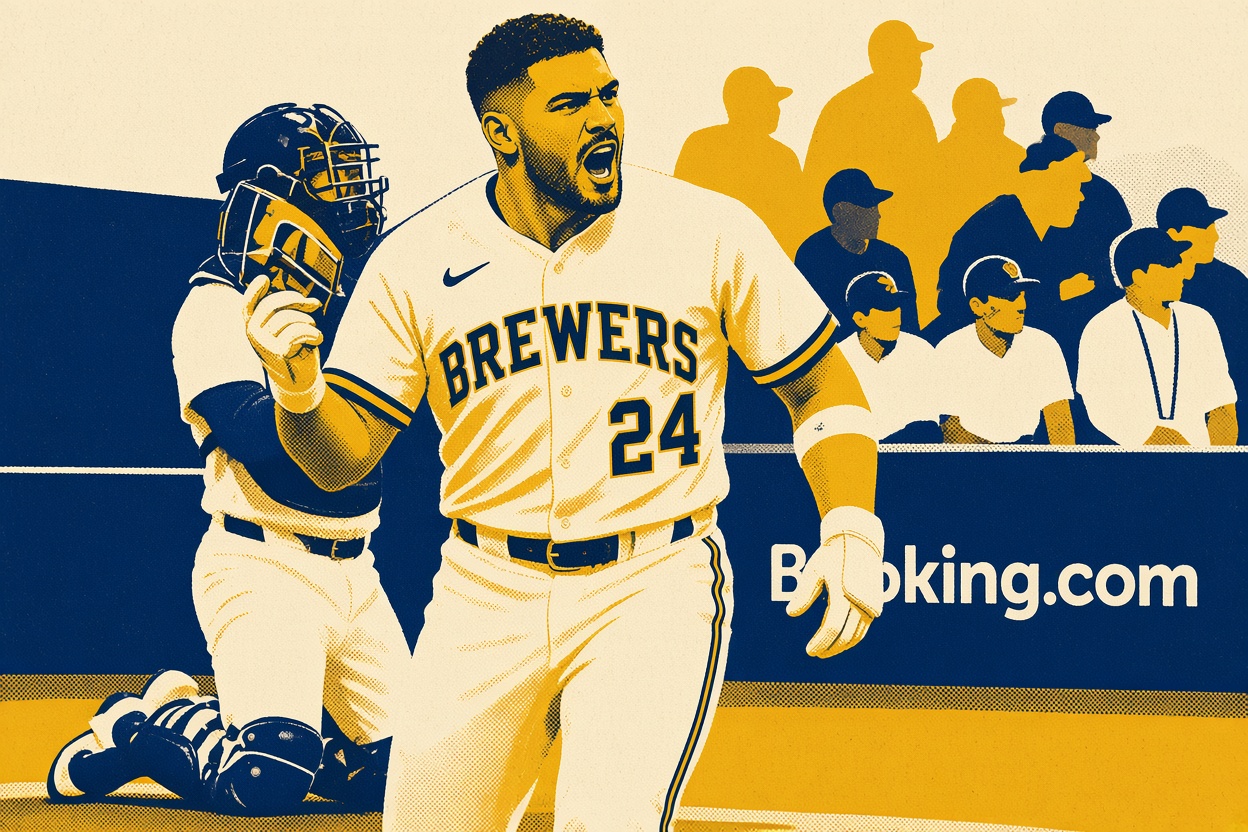
The 2026 World Series lost roughly a quarter of its audience from the past two years, and MLB has a tidy explanation ready: small markets. Milwaukee and Tampa Bay, the smallest media market in the league and one of its worst-drawing gates, don't move the needle like the Dodgers do. Convenient. It's also mostly wrong.
Look at how the series actually watched. Game 1, the cleanest read on whether anyone cared about Brewers-Rays, drew somewhere around 11.5 to 12 million, down only modestly from last year's Dodgers-Blue Jays opener. Game 5, the clincher, pulled about 14.2 million, one of the strongest non-Dodgers World Series audiences in years. Plenty of people tuned in to watch Milwaukee.
One night cratered. Game 3, a 10-1 blowout, drew 8.33 million, the only game of the series under 10 million. It was the single night MLB couldn't keep the World Series away from the NFL, and Monday Night Football averaged 18.73 million across its networks. A lopsided game against that is going to lose. That's a scheduling collision and a bad score. Milwaukee's population had nothing to do with it.
MLB saw the NFL problem coming and moved the Series to a Friday start, cutting the potential overlap from as many as four games to one. The league fixed the thing it could fix.
The season-over-season average fell a real 25%, from roughly 15 million last year to under 12 million this year. The people drifting away have lost the habit of finding baseball at all. MLB built the maze they got lost in.
Following this sport honestly in 2026 means dealing with six national platforms (NBC, Peacock, Netflix, ESPN, FOX/TBS, and Apple TV+), a stack that can run past $100 a month before you even touch your local team. Then come the blackouts, which still hit paying MLB.TV customers, and an in-market streaming fix that covers 22 of 30 clubs, leaving eight fan bases without it. You cannot build the casual, year-round viewing habit that fills a World Series audience when watching your own team is a part-time job with a subscription budget.
That's the engine of a ratings decline. Casual fans are the ones who show up in October regardless of who's playing, and they're exactly who a fragmented, overpriced system sheds first.
The strongest version of the small-market argument says population alone explains the gap: Los Angeles and Toronto are a combined audience of nearly 20 million people, Milwaukee and Tampa Bay a fraction of that. That moves some viewers. It doesn't explain why the number came in low even with Nielsen's expanded counting, the out-of-home and co-viewing measurements that should inflate the figure. The audience shrank despite the league's thumb on the scale, and an inaccessible product explains that better than population does.
Blame the people who signed the media-rights deals. Milwaukee being the smallest market in baseball and Tampa Bay drawing thin crowds didn't do this. The league spent years teaching fans that small markets can't compete on the field. Now it's recycling the same excuse to cover a ratings problem its own executives built in a boardroom. Milwaukee just won its first title in franchise history playing baseball. MLB's front office is the one that made it hard to watch.