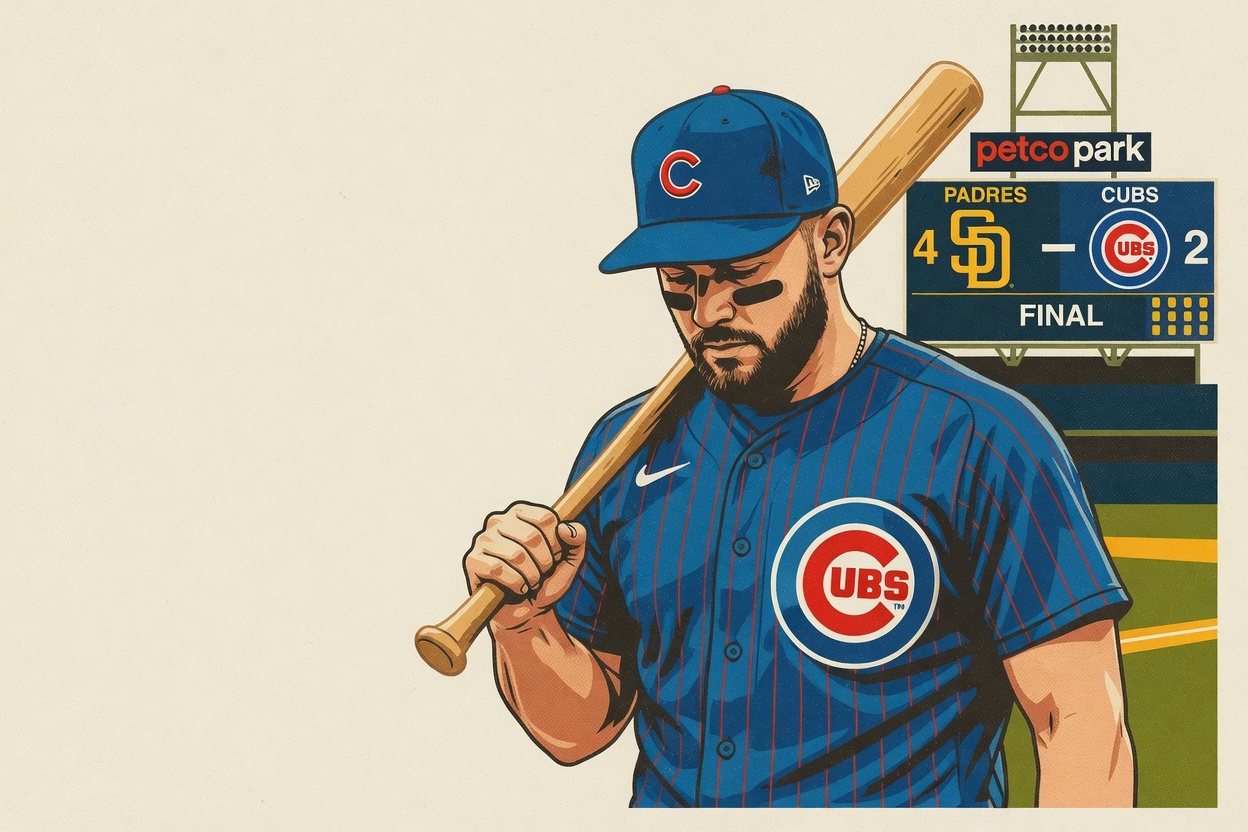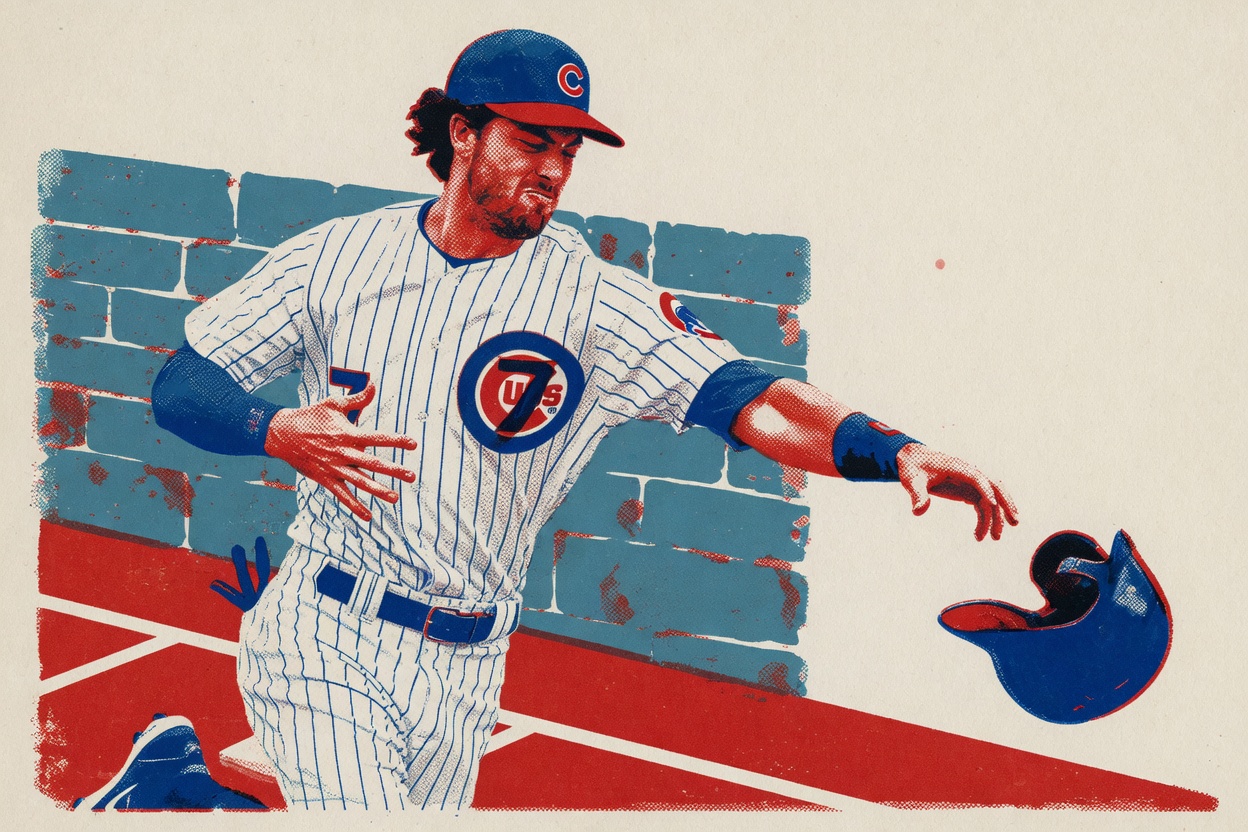
There are injuries that dent a lineup and injuries that reroute a season, and the Cubs won't know which kind Dansby Swanson's is until Monday's MRI results come back. As of this writing, they hadn't. What we do know is the picture from Sunday afternoon: Swanson swung and missed at a first-pitch fastball from St. Louis's Hunter Dobbins to open the home half of the third, pulled off his helmet, and threw it into the dirt on his way out of the box in Chicago's 11-4 loss at Wrigley Field.
"It just felt like my left side kind of tightened up on me," Swanson said afterward. "It obviously was enough where I didn't feel like I needed to keep going." Craig Counsell later clarified that the left-side discomfort was an oblique, and that the Cubs would place Swanson on the 10-day injured list, with the MRI set to sort out the extent of it.
Nobody's confirmed how bad it is yet. Reports frame the range as the standard four-to-six-week oblique recovery, which is why there's real concern this could eat into the rest of his regular season. But that's a prognosis, not a verdict, and it's worth treating it as the worry it is rather than a done deal.
Here's the part Chicago's standings are hiding pretty well. The Cubs entered the week holding the top spot in the NL Wild Card picture with a comfortable cushion over Philadelphia and San Diego, the other two teams occupying the non-division-winner slots. That cushion can absorb an ordinary cold streak. It doesn't cover a downgrade in run prevention, which is what losing Swanson risks.
The offense was never why you kept Swanson in the lineup. Across 119 games this season he's hitting .216/.300/.404 over 458 plate appearances, with 18 home runs, 66 RBIs and 17 steals in 18 attempts, good for a 95 wRC+ that lands him a touch below league average at the plate for a third straight year. Fine, replaceable even, in a vacuum.
The glove is a different conversation. Swanson has posted +16 Outs Above Average and +6 Defensive Runs Saved at shortstop this year, the kind of season that builds a case for a third Gold Glove and a second Fielding Bible Award. It's not a fluke, either. He was a Gold Glove finalist in 2024 with 18 OAA that ranked in the 99th percentile and led all shortstops, and he won his second NL Gold Glove at the position in 2023. His 2025 dipped to +4 OAA, which makes the jump back to +16 this year look less like coasting and more like one of the best defensive shortstop seasons in the sport. Analysts spent the spring arguing the Cubs had a top-five defense, some going further and calling the Hoerner-Swanson double-play combination up the middle elite. Pull one half of that combination out and you're testing the premise.
The reasonable rebuttal is Nico Hoerner, and it's a good one. He was drafted as a shortstop, he's a Gold Glover in his own right, and he'll slide over to cover the position. Counsell all but framed it as the safety net the Cubs kept in the closet: "Obviously, Dansby has been an incredibly durable player, and we have not needed to use it very much, but this is something else that Nico brings to the table." Swanson, for his part, wouldn't concede any drop-off at all, pointing to "the ability for guys to play multiple positions at Gold Glove level."
That's the clubhouse doing its job. It's the optimistic spin, and it's not wrong so much as incomplete. Moving Hoerner to short doesn't create defense out of nothing, it relocates it. His glove at second base was part of what made that infield special, and now a rookie inherits real innings there, with Pedro Ramirez the likely regular at the keystone going forward. You don't lose the Swanson glove cleanly. You lose it, then reshuffle everyone behind it, and every reshuffle introduces a seam that October tends to find.
The timing makes all of this sharper, because Swanson has been almost absurdly available. He'd played 955 of a possible 995 games since the start of 2020, and his only prior IL trips as a Cub were 10-day stints; this would be his first time on the list since May 2024. A team plans around a player it never has to plan around. The Cubs are about to find out how much of their profile was quietly propped up by a guy who simply never left the field.
So take the cushion for what it is. It's insurance against losing games here and there, and Chicago will likely keep winning enough of them to stay comfortable. What it can't insure is the thing that decides one-run playoff games: whether the ball hit into the hole in the ninth inning becomes an out. For most of this season, with Swanson at short, it did. My read is the standings will look fine for weeks while the real risk sits underneath them, and the bill, if it comes, arrives in October rather than now. If the MRI comes back kind, this is a footnote; if it doesn't, the Cubs are a worse defensive team than their record admits for a while.