There is a version of Monday night at Fenway that stays quiet. Ketel Marte, penciled in as Arizona's designated hitter, takes his at-bats, the Diamondbacks lose 11-1 to Boston anyway, and the whole thing becomes a forgettable road clunker in the middle of August. That is not the version that happened.
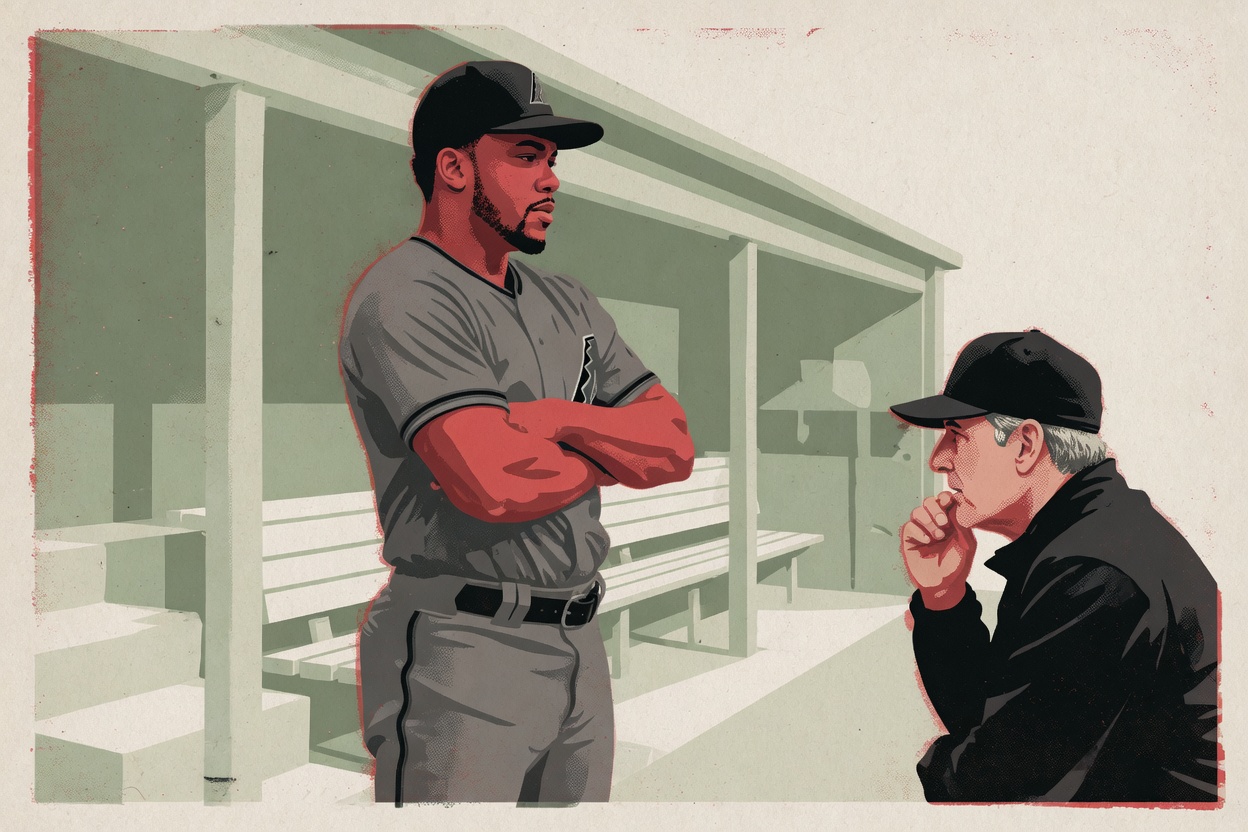
Instead, Arizona waited until roughly 20 minutes before first pitch to pull Marte from the lineup and place him on the restricted list. The team didn't post its lineup until about 15 minutes before the game, when it announced the move. Torey Lovullo, asked to explain, sounded like a manager doing his honest best with almost nothing to work with. "It's been a crazy day. All I know is that he's dealing with a personal issue; we're just trying to figure that out," he said. "He didn't show up today, and he was put on the restricted list. That's as much as I know right now. I'm sure in time, we'll start to uncover some information." Lovullo said he'd spoken to Marte on Monday morning and afternoon and gotten essentially nowhere: "There was very little coming back."
The part that should unsettle Arizona
The uncomfortable fact the Diamondbacks can't wave away is this: it's the second straight season Marte has ended up on the restricted list after an absence the club couldn't immediately explain. Last summer, his Arizona home was burglarized during the All-Star break, he flew back to the Dominican Republic, missed three games, and later apologized. That episode had a clear, verifiable cause, and it deserved every ounce of grace it got.
This one is murkier, and murkiness is exactly the problem for a team trying to decide how much to lean on a player. Marte had been pulled from Friday's game with left knee soreness, sat Saturday, returned Sunday, and was in Monday's lineup before he wasn't. Then, about a day after the restricted-list move, word came that he was heading back to Phoenix for an MRI on that left knee. As of this writing, the team hadn't confirmed it, and beat writers flagged the oddity themselves: an MRI, on its own, wouldn't normally require a restricted-list stint at all. So no, I'm not going to tell you Marte invented an injury or ran off. The sourcing doesn't support that, and anyone claiming certainty here is guessing. What I can say is that a restricted-list placement followed a day later by an injury report is unusual enough that national writers, not just message boards, noticed.
Why the timing stings
The context is what turns a strange week into a real question. Entering Tuesday's games, the Diamondbacks sat one game back of the Padres and two back of the Phillies for the final two National League wild-card spots, at 66-60. This is the point in the calendar where a contender needs its best players available and predictable. Marte, a three-time All-Star who was NLCS MVP on the 2023 team that reached the World Series, is supposed to be that guy. He leads the club with 21 home runs this season, even in a year that's been middling by his standards, with a .249/.314/.446 line across 519 plate appearances.
And the organization made its bet on him with eyes open. Marte drew trade interest over the winter; Arizona set a high asking price and stopped taking calls in early January to build around the 2026 roster. Then, by reaching 10 years of service time in early April, he gained full no-trade protection under the CBA. The Diamondbacks made him a foundational piece at the exact moment his ability to control his own future locked in. That decision looks fine when your second baseman is producing and present. It looks a lot heavier when he's neither.
The pattern, and the fairness it demands
There have been other flickers this season. Earlier, Marte cited lower back tightness to skip a game against the Dodgers with Shohei Ohtani on the mound; Lovullo denied that account. There were also reports of Marte frustrating parts of the organization by taking days off, and Lovullo defended him in June, calling him "an unbelievable player for the Arizona Diamondbacks for a long period of time." Stack the missed time together and you understand why the club's patience is being tested from the inside.
But a fair version of this argument has to hold two things at once. Marte has carried genuine hardship in public. In June 2025, a fan left him in tears on the field after yelling a derogatory comment about his late mother, who died in a car accident in the Dominican Republic in 2017; MLB banned the fan indefinitely the next day. A "personal issue," per Lovullo, could be a great many things, and none of us are owed the details. The clubhouse seems to grasp that instinctively. Geraldo Perdomo, one of Marte's closest friends on the team, sounded genuinely in the dark: "I don't know anything... I just came here to play, and I didn't see him here and we haven't talked yet. At the end of the day, we are a family and we're going to support everybody, no matter what."
The take
Where this leaves me, with things still moving, is simple: you can extend Marte every reasonable benefit of the doubt on the human side and still conclude that Arizona has a reliability problem it has to solve rather than keep defending. Two restricted-list absences in two seasons, layered on top of quieter grumbling about days off, is a pattern, and patterns are what front offices are paid to plan around. The no-trade rights mean the Diamondbacks can't simply move the problem; general manager Mike Hazen has stayed tight-lipped, which suggests he knows how delicate this is.
The honest answer to whether they can trust him as a centerpiece is that they don't know yet, and that uncertainty is itself the cost. When the MRI results and the fuller story arrive, this could read very differently, and I'll happily revisit it if it does. For now, a team fighting for a playoff spot found out its best power bat was gone 20 minutes before a game it went on to lose by 10. This isn't a scandal so much as a warning the Diamondbacks can't afford to keep filing under "personal issue."