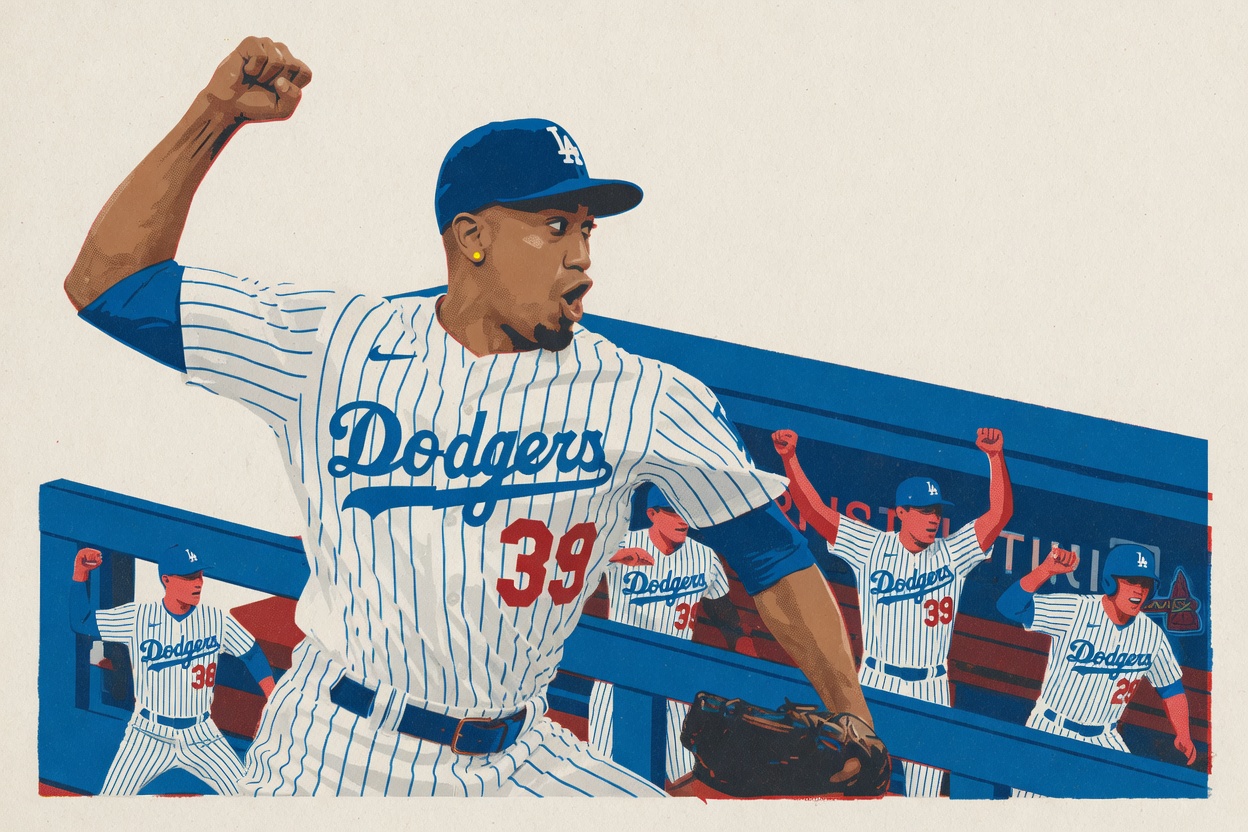
The Dodgers beat the Braves 4-1 on Wednesday night to take the NLDS 3-1 and reach their third straight NLCS. Edwin Díaz got the final three outs for his second save in two nights, and by Thursday morning a chunk of the baseball internet had decided he was back, repaired, ready to anchor a run at a third straight World Series. Two clean October innings don't erase five months of a man who couldn't find the strike zone.
Start with who was standing in the box. Atlanta finished the series 1-for-23 with runners in scoring position and drew 18 walks without a single one coming around to score. That's a lineup giving outs away. Getting three quick outs against a team that can't cash in a baserunner isn't a referendum on anybody's mechanics. It's the easy part of the job, handed to him.
Give him this much: the work he did is real, and it's documented. His season was a wreck. Loose bodies in his right elbow needed surgery in April, neck inflammation put him down again in August, and in between he posted an ERA north of 11 and blew saves like it was a reflex. When he got healthy in late September, he worked on his delivery at Triple-A with Oklahoma City's pitching coaches, retooling how his hips move, and the Dodgers' staff zeroed in on his arm angle, which had drifted to 15 degrees this year from 19 last year. "I wasn't moving my hips the right way, so we started working on that," Díaz said. That's a concrete fix to a concrete problem. His command looked like it came back.
But "looked like" is doing the heavy lifting. His five scoreless regular-season outings came in low leverage. The two postseason saves came against a lineup that spent the week swinging through everything with men on. Show me Díaz holding a lead against a competent offense in a tie game, and then we can talk about fixed. Until then, calling this a turnaround means deciding the ending before the story happens.
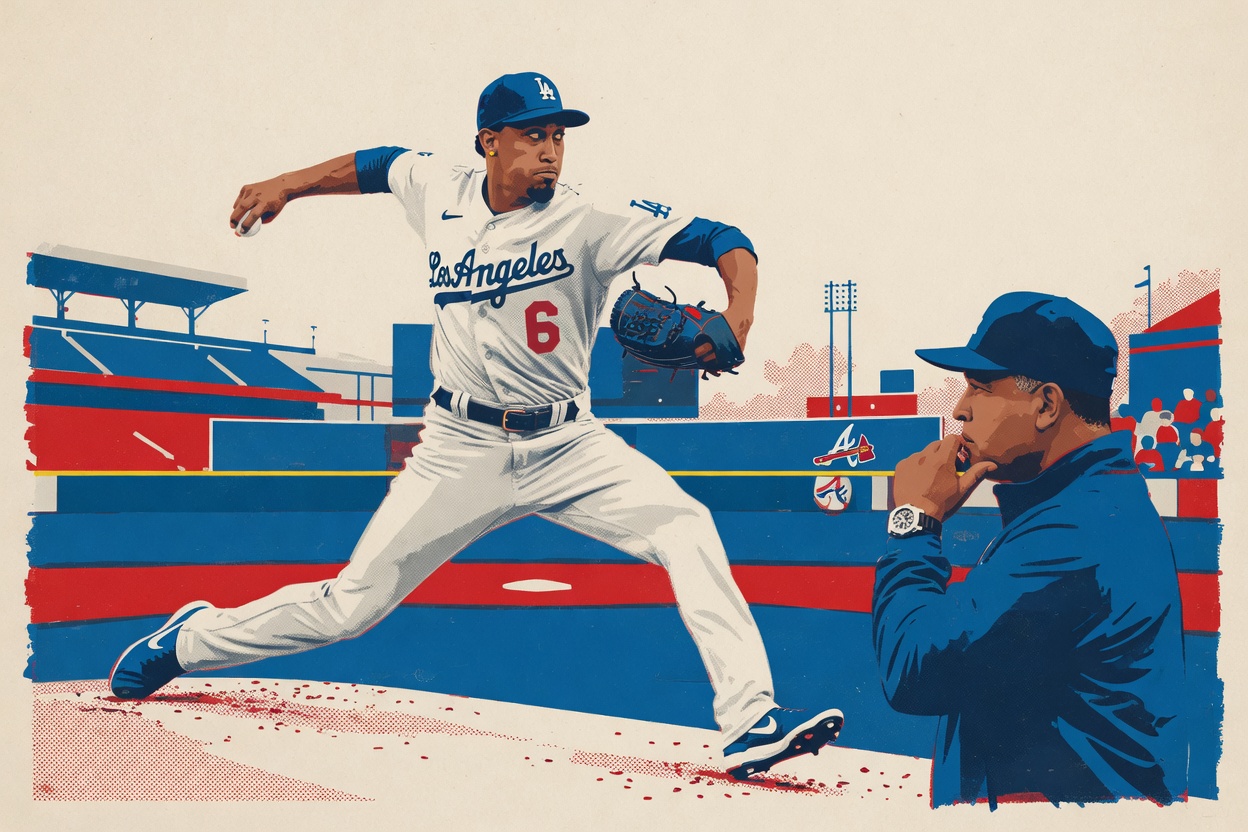
Dave Roberts won this series. He managed the close-out like a man who knew his bats were asleep. The Dodgers had exactly one hit in the series with a runner in scoring position before Andy Pages lined a bases-loaded single in the seventh, and no team in a best-of-five or longer had ever gone hitless in those spots and still won the round. Roberts worked around it: he pulled Tyler Glasnow after five walks in 4⅔ innings before it blew up, then pinch-hit Josue De Paula to help load the bases, squeezing the game down to one swing from Pages. Roberts is now alone in second place on the all-time postseason wins list with 72, behind only Joe Torre. That's the number that earned its credit this week.
The Braves were never much of a test anyway: their earlier win over the Phillies said more about Philadelphia falling apart than about Atlanta being good. Atlanta's rotation was in pieces before this series started, with Spencer Strider, Spencer Schwellenbach, Reynaldo López, Bryce Elder and Hurston Waldrep all hurt. But that undercuts the Díaz hype. If the opponent was that compromised, surviving it tells you even less about whether the closer can be trusted when the opponent isn't.
And the Dodgers are about to find out, because this gets harder fast. Their NLCS opponent wasn't settled yet, either Milwaukee on the road or San Diego at home, with the series starting Sunday. Both can hit. Neither is going to go 1-for-23 and mail you the save. That's the stage where we learn whether Díaz actually reclaimed the ninth inning or just borrowed it from a team that quit on the basepaths.
The Dodgers are a real threat. Eight straight series won and a 27-10 postseason record since the start of 2024 says that plainly, and none of it depends on Edwin Díaz being whole. If he genuinely is, they're terrifying. Nobody knows yet, and the people treating six outs against Atlanta as proof are grading on the softest possible curve.