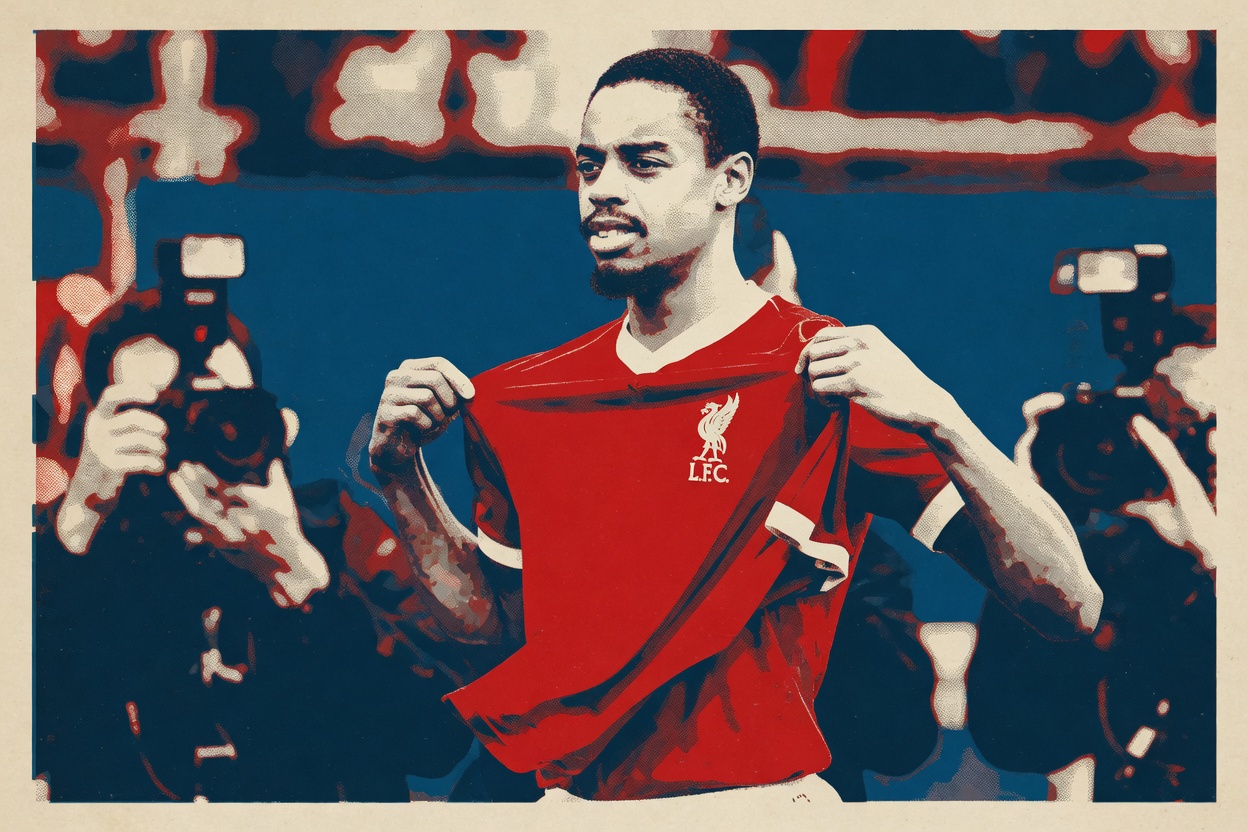
Start with the number, because the number is the whole conversation: £123m. That's what Liverpool committed, in a package rising up to that figure, to bring Bradley Barcola from PSG on a contract running to 2031. It got done on deadline day, the finishing touch after a £120m agreement in principle a few days earlier.
Now the part nobody at Anfield wants to dwell on. Barcola is 23, a France winger with real gifts, and at PSG he was a very good option rather than an automatic pick. That's not a slight. In a forward line that deep, plenty of talented players rotate in and out. But clubs don't usually spend £123m on a player his own team treated as one of several, not the one.
Be honest about what this is: a bet on potential over proven output. Liverpool are paying elite-starter money for a player they're projecting into an elite starter, not one who arrives with the résumé already written. The upside is obvious. He's young, he's fast, and if the ceiling is real, £123m looks smart in three years. The risk is just as obvious. If Barcola turns out to be what he was at PSG, a strong rotation attacker rather than a week-in, week-out difference-maker, this is the kind of fee that follows a club around.
Credit the sellers here. This didn't play like a fire sale. PSG drove a hard bargain, and Liverpool are the ones who blinked toward the top of the market.
The bigger story outlasts whatever Barcola does on the pitch. This is not the Liverpool that FSG built their reputation on. For years the model was famous for its discipline: buy smart, sell high, let the net spend tell a flattering story, win by being cleverer than the clubs throwing money around. That version of the club is gone, at least for now. This summer Liverpool pushed their transfer outlay to a club record, led by Alexander Isak and Florian Wirtz, and Barcola lands on top of it. This is a club spending like one of the biggest players in a Premier League window that's reportedly closing in on £3bn.
You can read the shift two ways. Generously: the owners looked at the squad, decided the title window is open, and chose to attack it with the checkbook instead of clinging to a philosophy for its own sake. Cynically: a group that sold itself on financial restraint has quietly dropped the thing that made it distinctive and is now just another rich club buying names.
I lean toward the first read, with a warning attached. Spending big isn't a sin. Spending big on projection is where it gets dangerous. Isak and Wirtz you can argue arrive as established quality. Barcola is the one where the club is buying the idea of what he becomes at Anfield, not the finished article.
His debut is lined up for September 4 against newly promoted Ipswich Town, and nobody knows yet whether this works. Not me, not the people who signed off on it. What happens on the pitch is still unwritten.
What's already decided is the financial verdict. Liverpool have decided that being the shrewd operator in the room matters less than winning the auction. For a club that spent a decade telling everyone the opposite, that's the real headline. The winger is just the price tag.