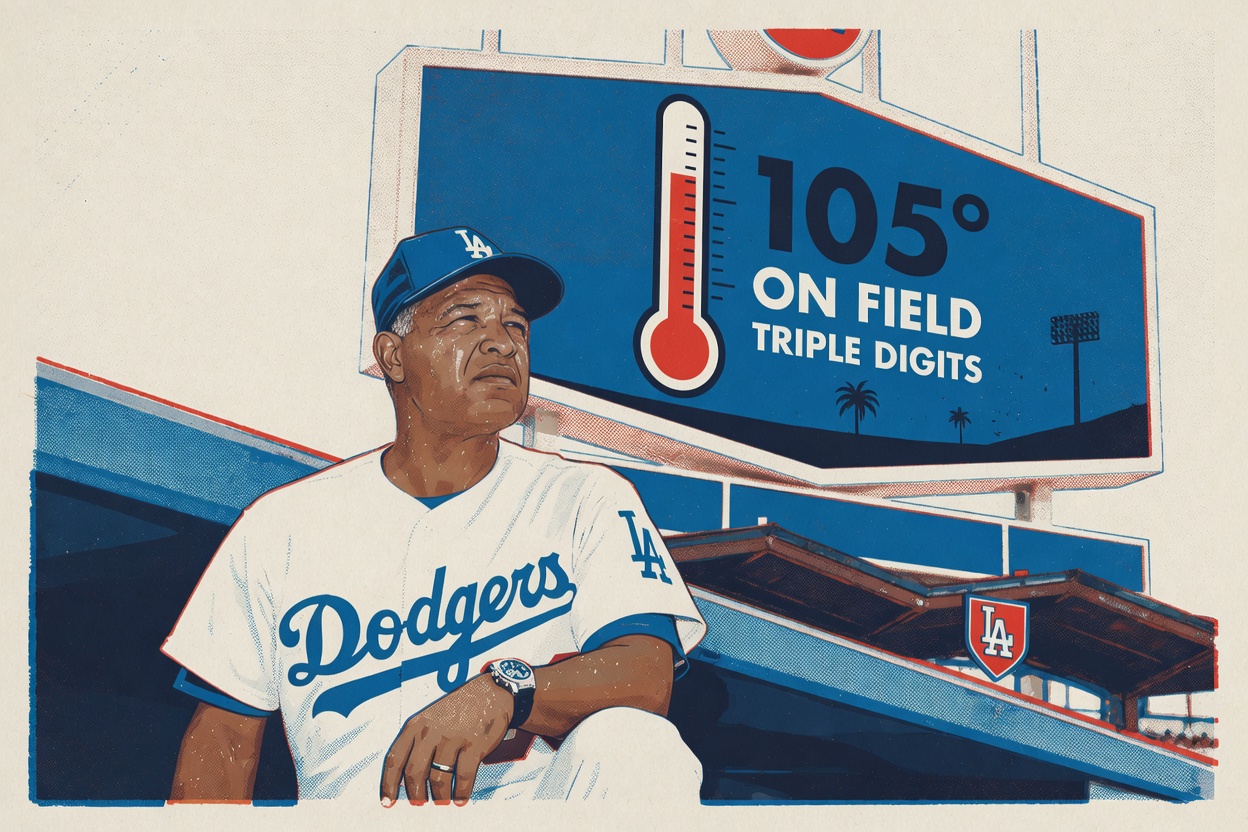
MLB sent the Braves and Dodgers out to play Game 1 of the NLDS at 1 p.m. with the temperature sitting at 100 degrees and forecast to hit 101. This was a decision made for the broadcast booth, and it's indefensible.
Forecasters had flagged this heat days in advance. By the time first pitch locked in, an extreme heat warning had been active across the region for days. Los Angeles and coastal San Diego were headed for more than six straight days under that warning, over 150 consecutive hours, the longest October heat alert either city has seen since records began in 2005. The league set the schedule knowing all of that.
The window could have been moved to the evening. Instead the game kicked off in the hottest part of the afternoon, with a game-time reading of 100 degrees that made it one of the warmest postseason games in Dodgers history. The average early-October high in Los Angeles is 81. This was about 20 degrees over that. The hottest game-time temperature on record at Dodger Stadium is 103, set for Game 1 of the 2017 World Series and matched in September 2024. Saturday's opener landed right in that neighborhood, in a round of baseball built to be seen by the largest possible audience.
That audience is the whole point. An afternoon start in the Pacific time zone is prime real estate for a national broadcast, and the people who sell those broadcasts aren't the ones sweating in the loge level. Fans showed what they thought of it by staying home. Seats went for around $56 and still sat empty, which at a Dodgers playoff game on a Saturday means people made the rational call the league wouldn't make for them.
This same round of the playoffs is being played in Milwaukee, in a ballpark with a retractable roof, where the Padres and Brewers get whatever climate the building gives them. The sport can protect a division series game from the weather. It just chose which one mattered enough.
Triple-digit afternoons aren't unusual for Southern California, but the numbers show this one was extreme. Downtown LA hit a record 102 as the heat wave arrived, and the region was living under the longest October extreme heat warning on the books for two decades. Calling that routine just excuses a choice nobody should want to defend.
MLB had the forecast and a cooler window available, plus proof a few states away that the problem is solvable. It picked the afternoon anyway. The people who run this sport decided the view from a couch was worth more than the people in the seats and the players on the grass, and no ratings number makes that a defensible call.