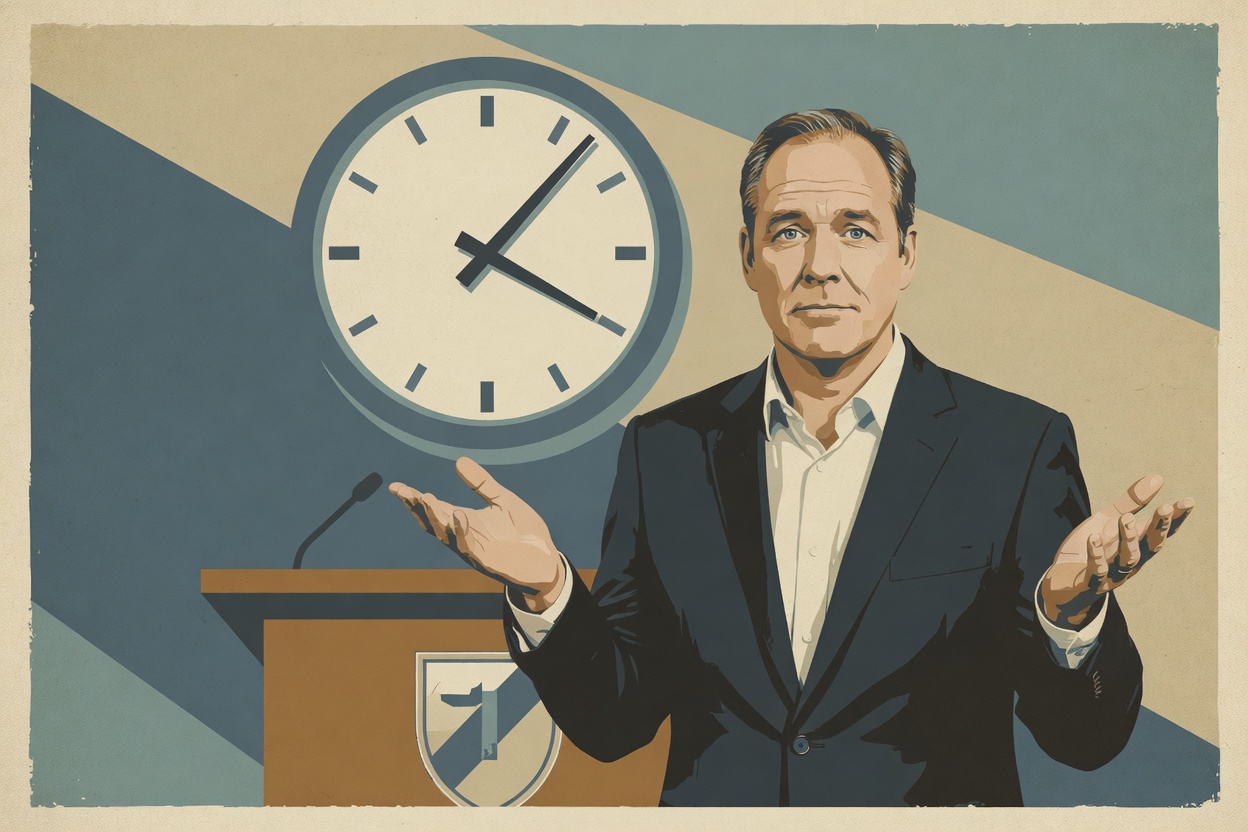
Richard Masters finally said something. Not much, but something.
Ahead of the 2026/27 season, the Premier League chief executive did a round of broadcast interviews and cracked open the door he's kept bolted shut on Manchester City's financial charges. "I do accept it's taking longer than expected, and I understand that people want to find out as soon as possible what's going on, but I simply can't provide that," he told Sky News. He repeated the theme everywhere: "It has taken longer than expected, and I do understand the frustrations."
An admission without a timeline isn't transparency, though. It's a shrug with better PR.
Masters was clear that he won't offer anything more. "Our rules are very clear about that," he said. "I have to keep everything confidential until we're ready to hand down a decision and be clear about it. I can't give any update on timing or what's happening." And on the wider process: "There's only one available route through this, which is to allow the process to take its course."
Fine. But look at what that route has actually delivered.
City were referred to an independent commission back in February 2023, over alleged breaches tied to a period running from 2009 to 2018. The number everyone still uses, 115, has since grown to around 130 accusations, so treat the famous figure as shorthand rather than gospel. The hearing itself ran roughly twelve weeks in front of a three-person panel and wrapped in December 2024. As of Masters' comments, that's around nineteen to twenty months of silence since the panel finished its work, and more than three years since the charges landed. City deny all of it and have done throughout.
And this is the part that turns "be patient" into a punchline: patience has been asked for, and burned, again and again. When the hearing was set up, a verdict including any appeal was floated for the end of the 2024/25 season. Then it was spring 2025. Then reporting pointed at October 2025. Then the story became a ruling before the 2026 World Cup got underway in mid-June. Every one of those windows came and went with nothing. Much of that was anonymous speculation rather than anything the league or the commission confirmed, which is exactly the point. Nobody in charge would put a date on it, so the vacuum filled with guesses, and every guess was wrong.
So when Masters says the process needs time and space, my honest reaction is: whose time, and at whose expense?
The cost isn't hypothetical. The league spent, by its own officials' account, £45m on legal bills in the 2023/24 season on disputes over its financial rules. Four clubs, Arsenal, Manchester United, Liverpool and Tottenham, served legal notices on City in 2024 reserving the right to seek compensation if the charges stick. Those figures are contested, with one estimate putting aggregate potential losses well north of $136m and another floating around £100m per club, so treat the exact numbers as unsettled. What isn't unsettled is that real money is now riding on a decision nobody will schedule.
There's precedent that these claims can succeed, too. In June, Burnley won more than $47.6 million in compensation from Everton after a commission decided Everton had gained a sporting advantage by breaching profit and sustainability rules. Which raises the obvious, uncomfortable question every rival club is quietly asking: how can smaller cases get charged, heard, ruled on and monetized while the biggest one of all sits in a drawer?
Masters and the league would say City's case is a different animal, and that's a fair defense. It's bigger, older, denser: nine years of financial records fought over for months. I take that seriously. But complexity explains delay. It doesn't explain the refusal to say anything about when the delay ends. Masters keeps collapsing those two things into one.
Listen to the rivals and you hear people biting their tongues. Arsenal chief executive Richard Garlick told BBC Sport: "It has gone on for a while... Everybody, the league and the teams, would want the clarity around what's going to happen next. But it's not something that I can control. It's not something that I can speculate on." That's a diplomat's version of a scream. Privately, officials at other clubs went further, with one saying the league should be "actively seeking to put in place a better system" for faster resolutions.
That's the real story here, not City's guilt or innocence, which only the commission can rule on, and I'm not pretending to know the answer. What's actually on trial right now is the Premier League's own competence. A regulator that can charge a club, hold a marathon hearing, and then go silent for the better part of two years while rival owners lawyer up and legal bills pile up has lost the standing to lecture anyone about patience.
Masters was asked if he's angry at the commission. "No," he said, insisting the panel needs "the time and the space to do their job," and that the process "shouldn't be qualified by the amount of time it takes to get there." Independence matters, and I'd defend the commission's right to work without political pressure. But independence and accountability aren't the same thing. City could, if found guilty, face sanctions as severe as being stripped of titles or even expulsion, all speculative until a verdict exists. A punishment that heavy demands a process people can trust. Right now the process is a black box, and the chief executive standing outside it can't even tell you when it opens.
You can't run the most-watched league on earth on "trust us, it's coming," not when "it's coming" has already been said, in effect, four times, and been wrong every time.
Masters broke his silence. He just forgot to say anything worth waiting for.