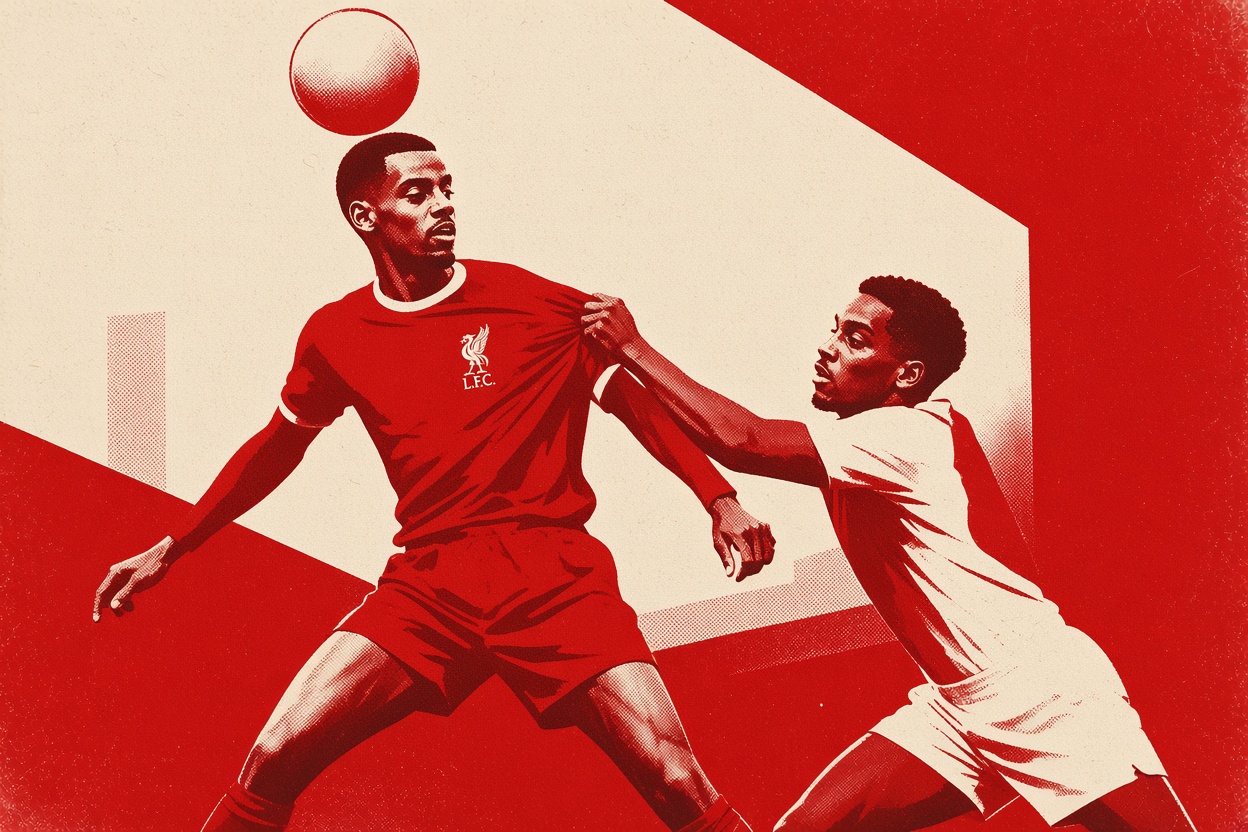
Nobody needs to debate whether Jurriën Timber fouled Alexander Isak. Everyone with eyes saw Timber grab a fistful of shirt as Isak climbed to meet a Bradley Barcola cross in the first half at Anfield. The real question is how a sport that spent years and fortunes installing video review to catch exactly this looked at it from every angle and decided it was fine. That falls on Stuart Attwell.
With the scores level before Kai Havertz turned home Declan Rice's low cross on 16 minutes, Isak had a free header coming his way and got his shirt pulled almost off his back. Referee Andy Madley, with bodies in front of him and the worst angle in the ground, waved play on. Then came the part that actually matters: Attwell in the VAR booth, with time, replays and the same pictures the pundits were using, chose not to recommend a look. Liverpool got nothing. They lost 1-0.
Madley can be half-excused. He had a bad view of a grab hidden behind shoulders. Attwell had everything and still did nothing. Jamie Carragher called it live at half-time with a demand aimed straight at the officials: "VAR do your job." If a man in a TV gallery can say that in real time, a trained official with the authority to stop the game and walk to the screen has no excuse for leaving it alone. It's a problem of nerve.




The reason it went unpunished is simple: Isak didn't go down. He didn't throw his arms up or hit the turf. Daniel Sturridge put the perversity plainly: "Unfortunately, he has not fallen over. You're supposed to fall over, put your arms in the air and show the referee you're mad about it." Gary Neville called Isak's reaction "very odd." So the striker who stayed on his feet and tried to play it straight got robbed, while a dive would have bought him the penalty. That's the incentive English officiating has built, and it's indefensible.
Liverpool's own manager showed what he took from it. Andoni Iraola said he will "definitely" tell Isak to go down if he's fouled in the box in future. When a coach walks away from a match concluding that the lesson is to coach his players into cheating the cheat-detection system, the system has failed. The player did nothing wrong. The officials did.
Van Dijk, who picked up a booking of his own late on, didn't bother being diplomatic about it, and he was right not to be. "I think it was a clear penalty," he said, before the line that'll follow Attwell around: "We have 50 cameras. Why does he have to complain when there are so many cameras? Everyone has seen it." Round that number down to whatever the actual figure is. The point survives. Everyone saw it. The one person paid to see it, and empowered to do something about it, didn't act.
This penalty was Liverpool's best moment of the afternoon. Arsenal controlled the game, took their chance, and ended a 14-year wait for a win at Anfield to go three points clear at the top, with Liverpool sitting in fifth. A side that created that little doesn't get much room to complain about three points. But that has nothing to do with the officiating. A team can be the worse side on the day and still be owed a clear decision. Those are two separate ledgers, and conflating them is how bad calls get laundered into "well, they didn't deserve it anyway."
Arsenal did nothing wrong. They committed the foul and kept playing, which is what you do when the whistle stays in the referee's pocket. The scandal sits with Andy Madley, who had an excuse, and Stuart Attwell, who had none. Until the Premier League is willing to say so out loud, and it hasn't, every "trust the process" line about VAR deserves to be met with a replay of Isak's shirt leaving his body.