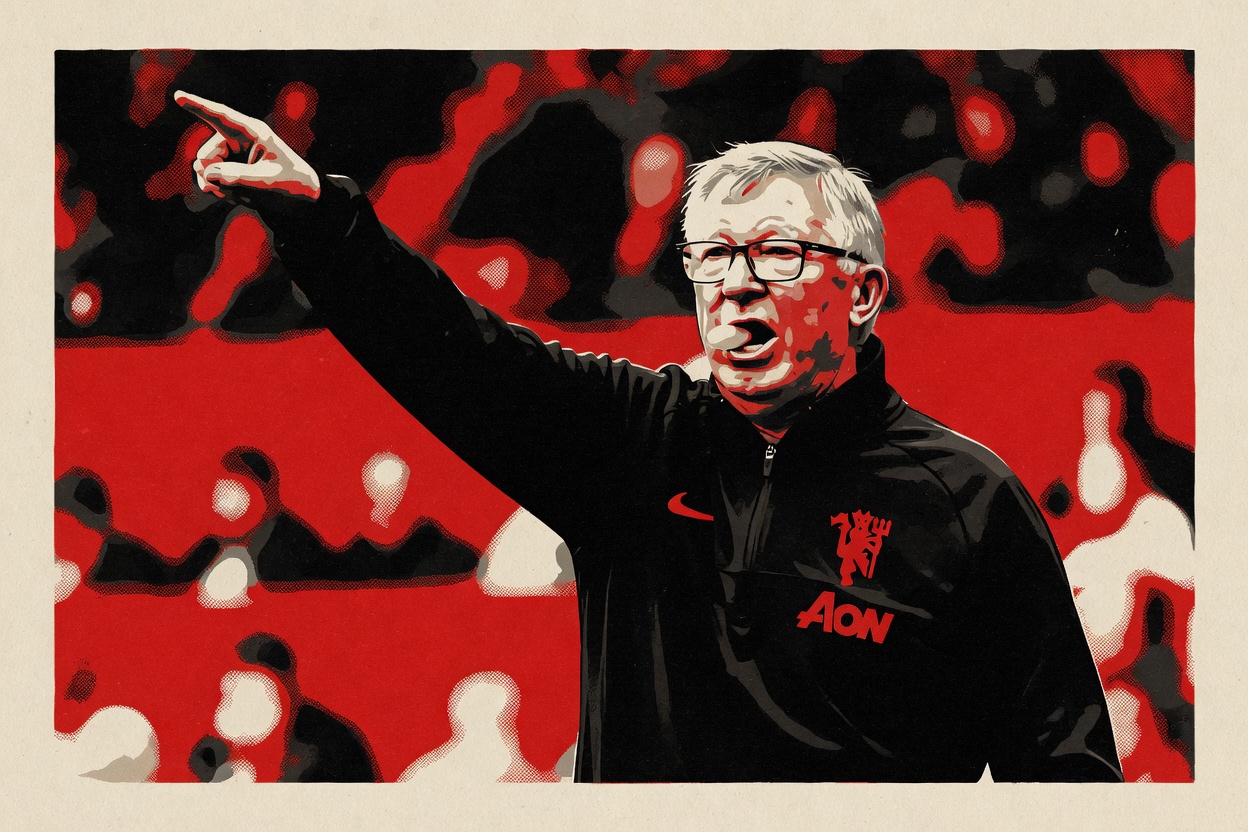
There's a theory going around that credits money for Sir Alex Ferguson's success at Manchester United, as if his coaching barely mattered. It's lazy and wrong, and it mostly comes from people who spent the 1990s and 2000s losing to him and have decided, twenty years late, that the fix was in.
The premise has an obvious hole in it. For a huge chunk of Ferguson's time at United, the thing people are now counting, the transfer window, didn't exist. The current system only started with the 2002/03 season. Before that, clubs could sign players right through the season, up until the end of March. Ranking Ferguson against rivals per window over his whole career measures him with a ruler that wasn't invented for most of the job.
What the revisionists skip is what happened the moment he left. United haven't won the league since Ferguson walked out in 2013. In the years after, the club spent money he could only have dreamed of, poured it into player after player, cycled through manager after manager, and finished with nothing at the top of the table. If spending wins titles, United should have a trophy case groaning under the Glazer years. They don't. Same club, same global pull, far more money, and zero league titles. The cleanest test of the buy-it theory is the fifteen-odd years United spent actually trying to buy it, and failing.
Ferguson won while Chelsea and later City showed up with the kind of wealth that rewrites a league. He beat them anyway, again and again, without matching them pound for pound, using a core he developed and a handful of signings a season that actually worked. That's the job. Pep Guardiola, who finished his ten years at City in 2026, had a squad built with resources no English manager had ever had. Judge all of them by trophies if you like: Ferguson still ends up on top, and he got there without the chequebook the others leaned on.
Ferguson caught a golden run of homegrown talent and managed before the richest owners arrived, so maybe his thrift was luck rather than brilliance. Maybe. But developing that generation and keeping it together for a decade is a skill. So is spotting which cheap signing fits and which expensive one doesn't. Luck doesn't repeat that for twenty-odd years. And the prestige-of-United argument cuts the other way: his successors had that same pull, plus the money, and still couldn't do it.
He wasn't infallible with a wallet, and he'd admit it. In a 39-year managerial career, there was exactly one time he okayed signing a player he'd never seen, Bébé, for a fee of around £7.4 million, meeting the lad a day before the deal was announced. One gamble, one dud, across four decades. That's supposed to be the scandal, the proof he bought his way to glory?
The people behind this myth take United's reckless post-2013 spending, which was real and enormous, and smear it backward over the Ferguson era as if the two were the same thing. They weren't. Ferguson won everything through judgment. His successors won nothing despite the money. His genius was picking the right eight or nine players a decade and building a culture that squeezed everything out of them. You can resent that, but the record stands.