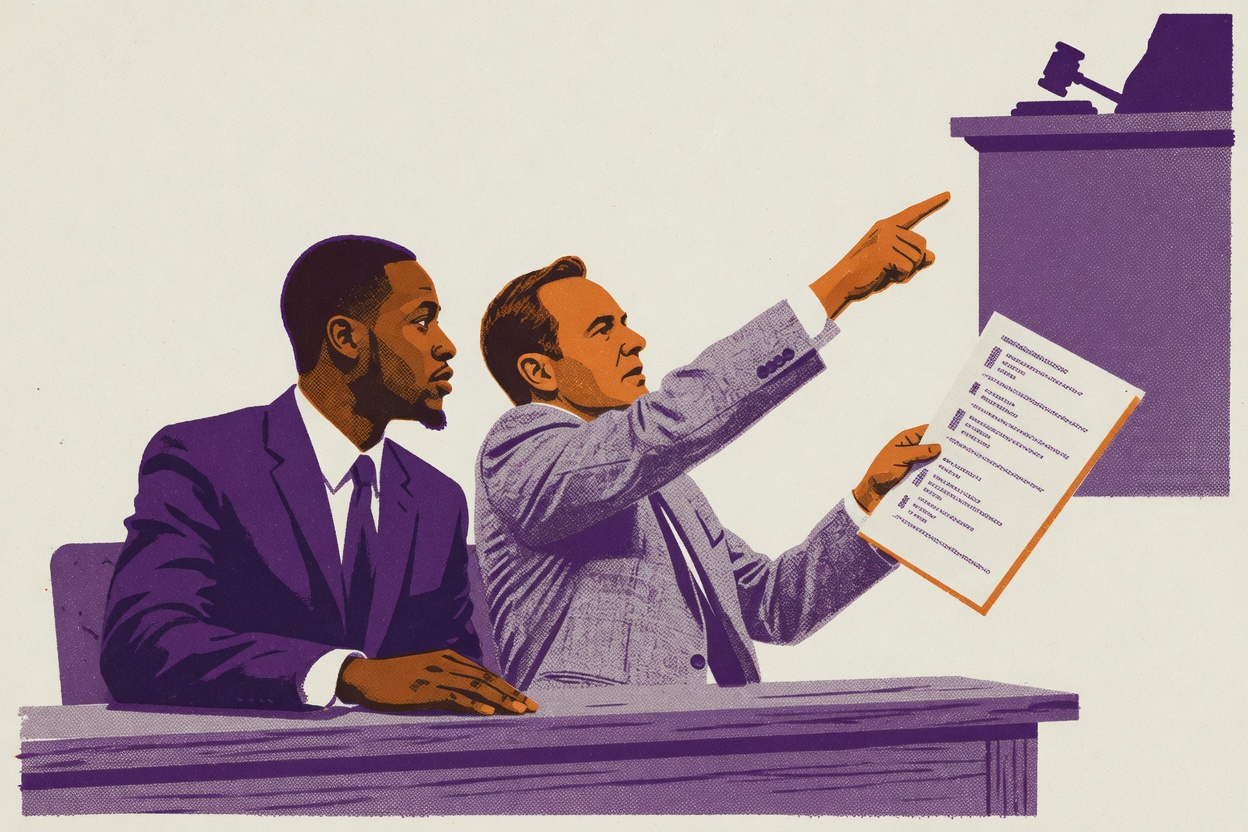
A strong case doesn't hinge on two sides arguing over what a single text message means.
On Friday, July 31, 2026, Terry Rozier's lead attorney David Markus filed a motion to dismiss two of the charges against him, pointing to a message sent by co-defendant Deniro Laster, Rozier's childhood friend. "Dont tell chum bout the bet," Laster wrote, according to the filing. "Chum" is Rozier's nickname. The person on the other end answered, "Hell no." Markus's argument is clean and quotable: "One does not hide a bet from the person who supposedly sold it." He says the texts "should end the case."
They won't. Judges don't toss federal indictments because a defense lawyer wrote a good line. But the government's response is worth staring at.
Prosecutors didn't fire back that the text proves Rozier's guilt. They filed to have his request denied and said they've "developed evidence from multiple sources that this text chain does not relate to sports gambling." Read that carefully. Their position isn't that the message shows Rozier was in on it. It's that the message is about something else entirely.
That's a strange place for the prosecution to stand. The defense holds up a text and says, this is about the bet, and it shows Rozier was kept in the dark. The government says, no, that text isn't even about the bet. So a message with the words "bet" and Rozier's nickname in it, dated March 29, 2023, six days after Rozier played just nine minutes and left the March 23 Hornets game with an apparent injury, is being read two completely opposite ways by the two sides who know this case best. When the raw evidence is that open to interpretation, the government's story starts to feel less like a paper trail and more like a theory.
Now the fair part, because a case this serious deserves one. This isn't a slam dunk for Rozier, and anyone telling you otherwise is skipping the ugly pages. Co-defendant Marves Fairley pleaded guilty in May, and during his hearing he admitted he agreed to pay Rozier "to change their game performance." That's a man under oath putting Rozier's name in the scheme. Damon Jones, the former NBA player and assistant coach, has also pleaded guilty. And the judge overseeing this, LaShann DeArcy Hall, has already shown she isn't charmed by Rozier's texting habits. In July she denied a request to loosen his bail and scolded him for violating the no-contact terms of his $3 million bond by texting someone he was told to avoid. "He violated the court's trust with that text message," she said. Different text, different context, but a judge has already caught Rozier's phone doing something it shouldn't.
So one message doesn't wipe the slate. It doesn't have to. The point isn't that the "chum" text proves innocence. The point is that if the government's response to the defense's strongest piece of evidence amounts to "that text means something we won't fully spell out yet," the case may be thinner than the headlines from last October suggested. The underlying allegation, that Rozier took a payoff (reported as $100,000 by several outlets, though ESPN's account of the bail hearing put it at $70,000) to leave a game early so friends could cash "under" prop bets totaling roughly $200,000, is serious. It's also still just an allegation, and Rozier has pleaded not guilty.
Which brings us to the second motion Markus filed Friday, and the one I'd actually plant a flag on.
Markus wants the trial moved out of the Eastern District of New York, in Brooklyn, and down to the Southern District of Florida, where Rozier lives. His reasoning is simple: none of Rozier's alleged actions took place in New York, and forcing him to stand trial in Brooklyn would cause "unfairness and hardship." The government opposes the move, though current reporting doesn't spell out why.
On this one, the defense is right. The alleged bribe, the alleged early exit, the March 2023 game, none of it happened anywhere near Brooklyn. Rozier's four federal charges (conspiracy to commit wire fraud, sports bribery, conspiracy to commit money laundering, and honest services fraud) could be tried anywhere with jurisdiction, but "can" isn't "should." If the conduct didn't happen in New York and the defendant doesn't live in New York, the burden should be on the government to explain why New York, not on the defendant to explain why not.
The trial is set for February 8, 2027, so this is far from over. Two dismissal motions are now pending: the December filing still undecided, and this new one fresh off the docket. Rozier has already lost plenty regardless of the verdict. He was waived by the Heat and never played a game while forfeiting much of a $26.6 million salary. The basketball damage is done.
But the legal fight is just getting loud, and the government told us something by how it answered. When your best move against the defense's key text is to argue about what the text is even about, you don't sound like a prosecutor holding a smoking gun. You sound like one hoping the jury reads it your way.